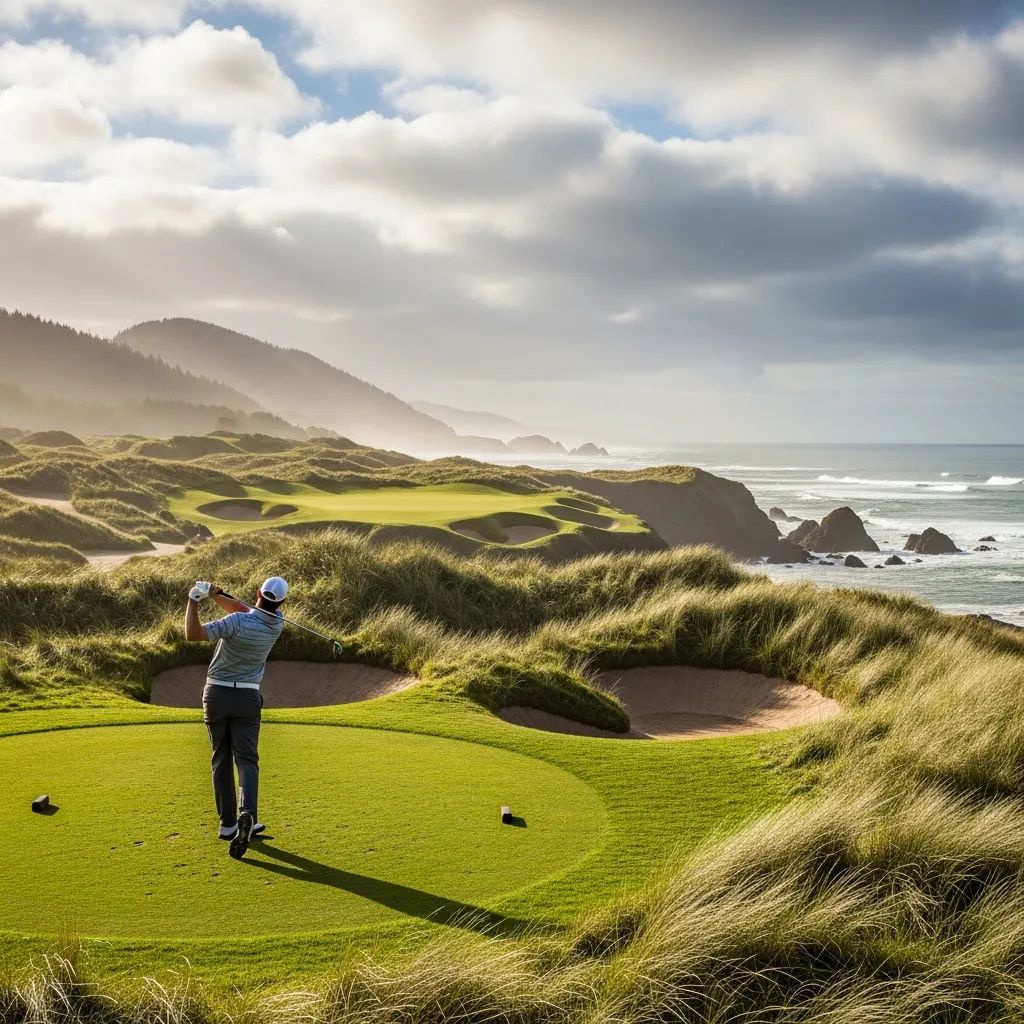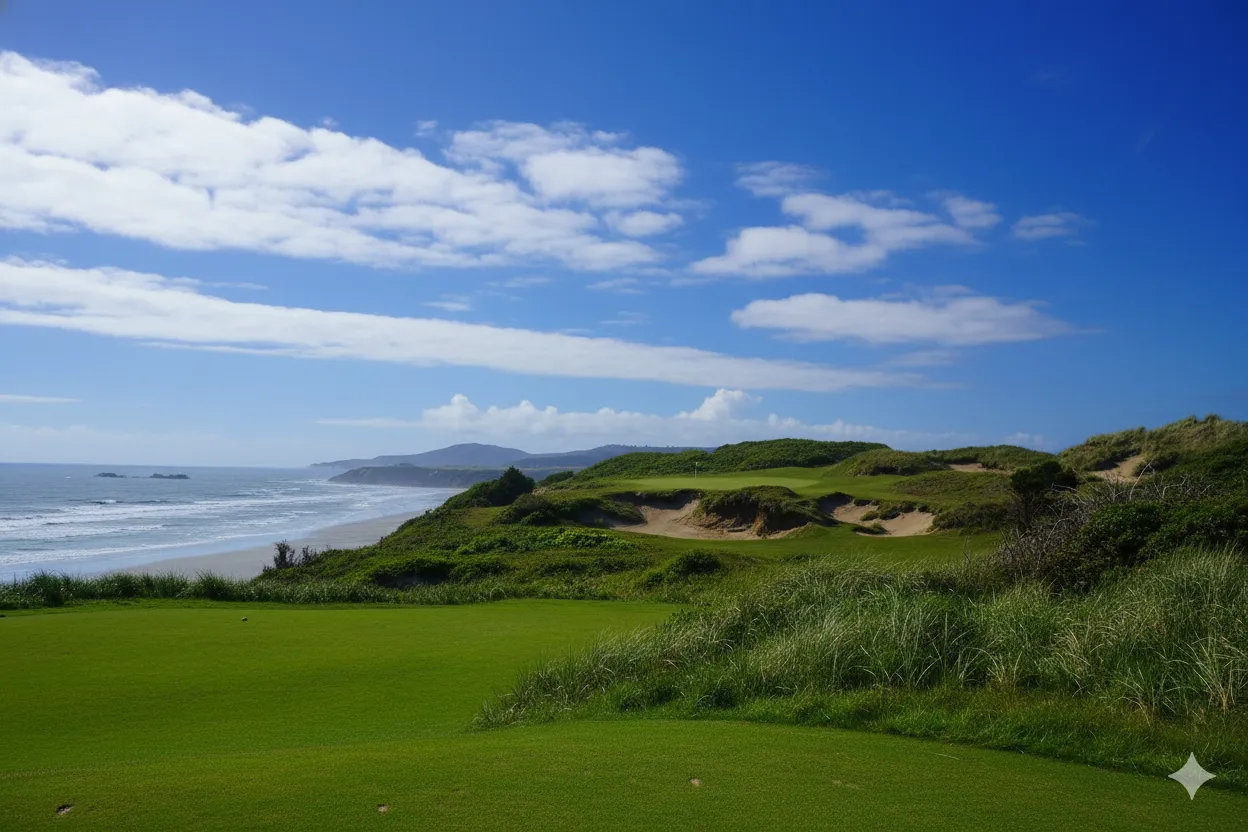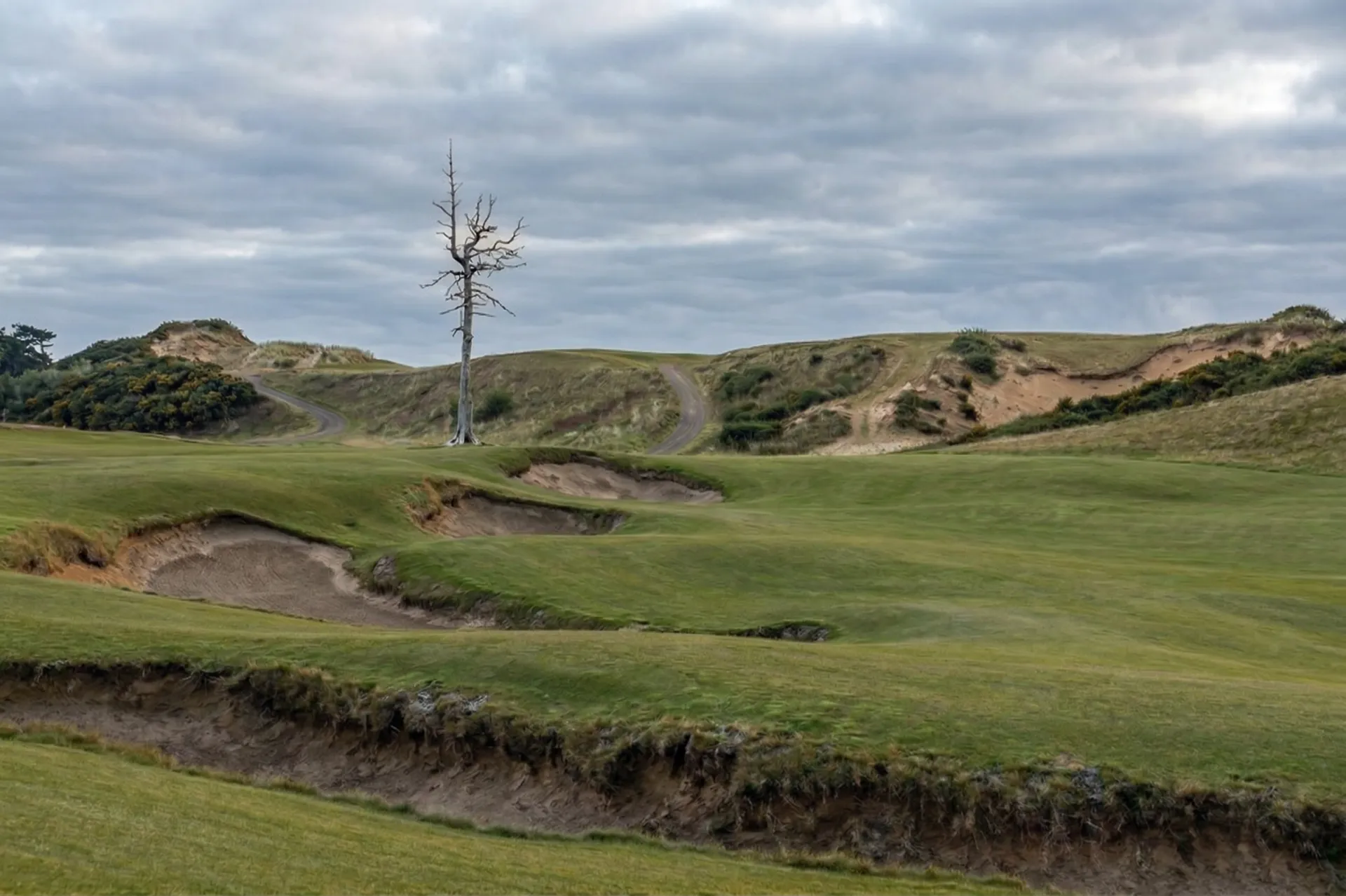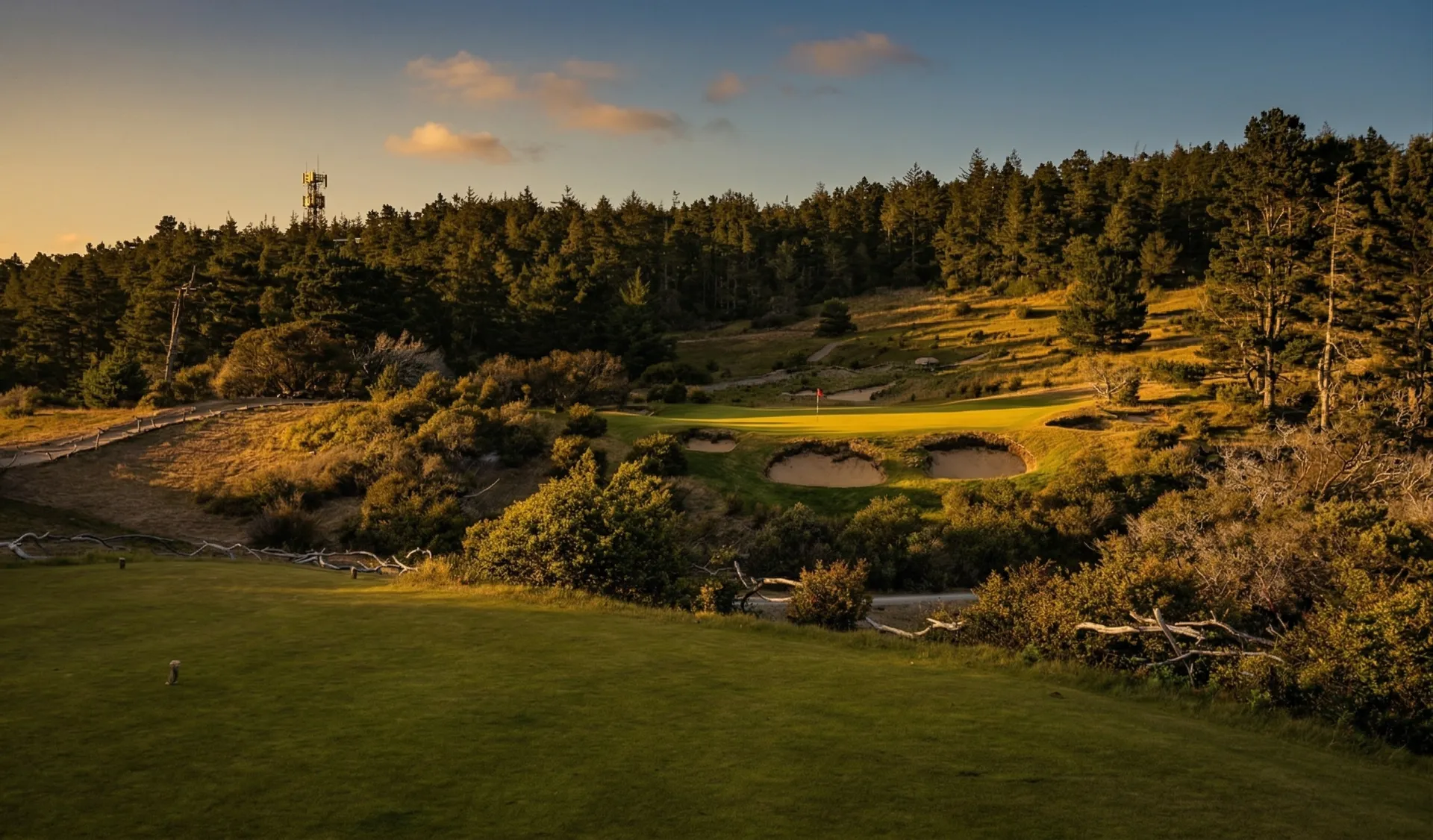
Mike Keiser, a Chicago greeting card magnate with no architectural credentials and a deep obsession with Scottish links, bet his fortune on the opposite of everything the American golf resort model stood for: that golfers would fly to one of the most remote stretches of the Oregon coast, walk 36 holes a day in sideways rain, and come back for more.
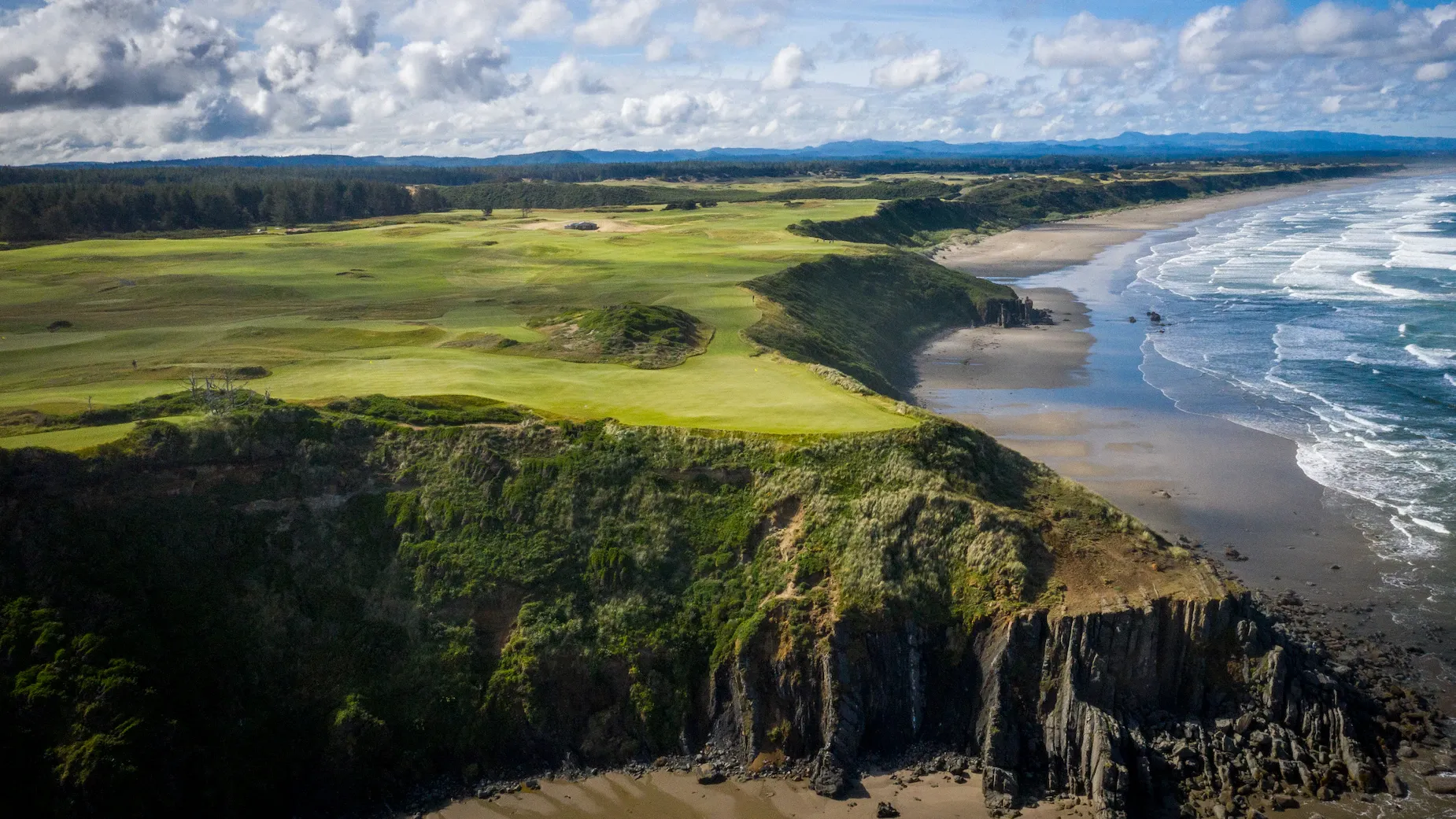
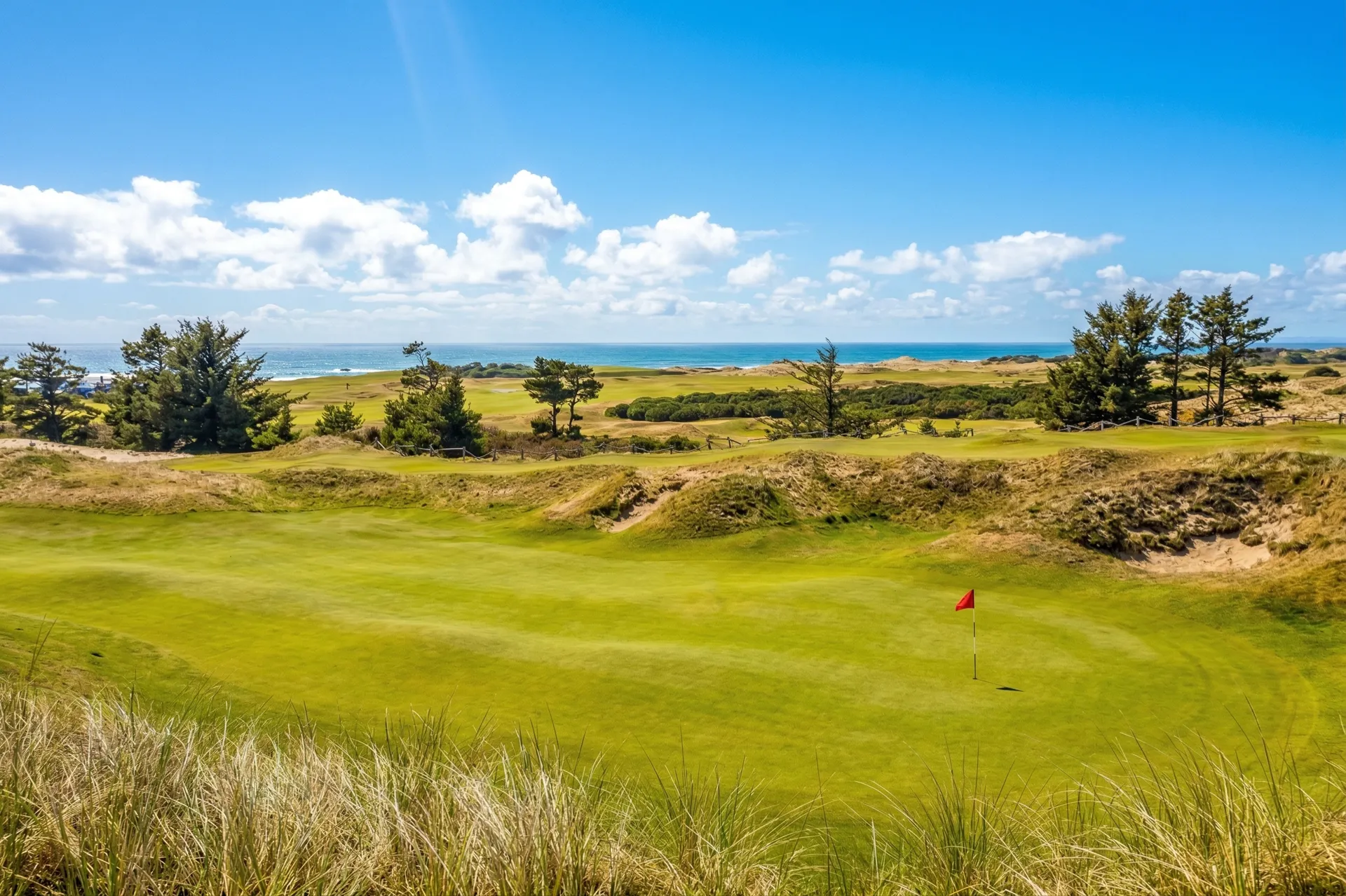
The land made the argument. The southern Oregon coast sits on ancient sand dunes where sandy soil, coastal wind, and fescue turf produce firm, fast playing conditions otherwise found only on the links of Scotland. Keiser hired David McLay Kidd, a Scotsman barely 27 when he first surveyed the site, to build the first course. It opened in 1999. When it succeeded beyond anyone’s projections, he brought in the world’s leading minimalist architects to build across different stretches of the coastal topography. Twenty-five years later, Bandon Dunes Golf Resort holds five championship courses ranked among the top 20 public layouts in the United States, 122 total holes across seven distinct designs, and demand so overwhelming the resort moved to a lottery system for 2026. The courses are walking-only. The turf rewards the ground game over the aerial assault. The Pacific wind decides whether today’s round will be a meditation or a survival exercise.
A 20-year USGA agreement brings 13 national championships to Bandon through 2045, including the 2028 Walker Cup and the 2032 U.S. Amateur. This is not a vacation with golf attached. It is the destination that proved the old way of playing works on this continent too.
The Courses: What to Know Before Booking
| Course | Green Fee | Access | Booking Window | One-Line Take |
|---|---|---|---|---|
| Pacific Dunes | $170–$420 | Resort | 2026 Lottery | Organic routing through chaotic dunes, penal gorse, back-to-back oceanfront par 3s |
| Sheep Ranch | $170–$420 | Resort | 2026 Lottery | A mile of ocean frontage, zero bunkers, the wind as sole defender |
| Bandon Dunes | $170–$420 | Resort | 2026 Lottery | The original: wide fairways, iconic cliffside finishing stretch, most playable of the five |
| Old Macdonald | $170–$420 | Resort | 2026 Lottery | C.B. Macdonald tribute with colossal greens and the purest strategic test |
| Bandon Trails | $170–$420 | Resort | 2026 Lottery | No ocean views: forest, meadow, dramatic elevation, the hardest walk on property |
| Bandon Preserve (13) | $60–$125 | Resort | 2026 Lottery | Par-3 joy ride cascading down a massive dune toward the Pacific |
| Shorty’s (19) | $60–$125 | Resort | 2026 Lottery | Wildly undulating inland par 3s; exceptional short-game practice |
| Bandon Crossings | $70–$120 | Public | 30 days | Heathland alternative 10 miles south; carts available, excellent conditioning |
Green fees reflect the peak-to-off-peak range. Resort courses require on-site lodging or day-guest booking at a $50–$100 premium per round.
Pacific Dunes is the course that justifies the ranking arguments. Doak’s 2001 routing follows the natural chaos of the dune ridges rather than imposing a predetermined par structure, producing a sequence of holes that feels discovered rather than designed. The back-to-back oceanfront par 3s at 10 and 11 deliver the most photographed views on property, and the 13th clings to the cliff edge with a conviction that borders on reckless. It is the most demanding of the five championship courses, heavily penalizing missed fairways with gorse that swallows golf balls permanently. A caddie is not optional here; it is the difference between navigating the blind shots intelligently and losing a sleeve of balls per hole.
Sheep Ranch, the newest championship layout, occupies the most spectacular piece of coastal real estate on the property. Coore and Crenshaw’s 2020 design contains zero sand bunkers, relying entirely on wind, natural contours, and sheer cliff edges to defend the greens. The result is the most playable of the five championship courses on calm days and the most exposed on windy ones. Calm days are rare.
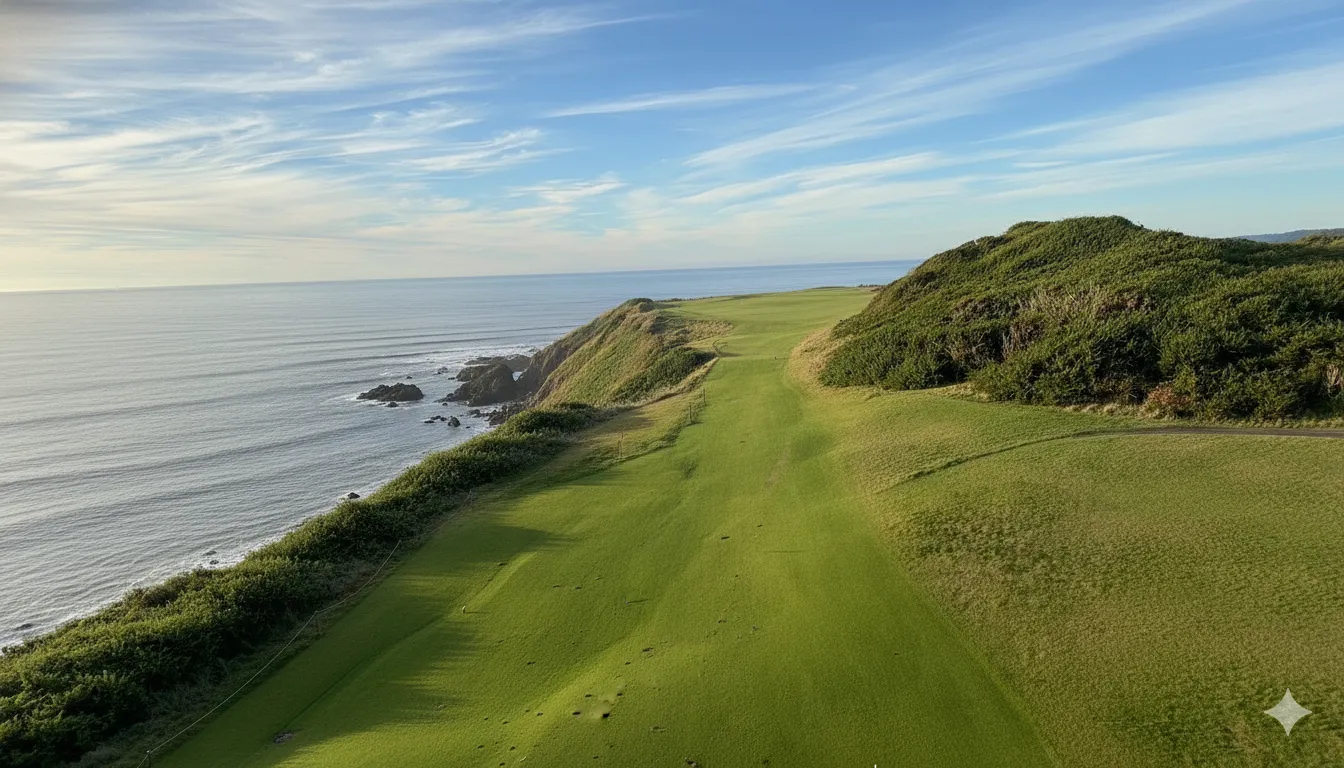
Bandon Dunes, Kidd’s 1999 original, remains the best course for a first round at the resort. Its wider fairways allow acclimatization to the coastal winds before the green complexes demand precision, and the finishing stretch from the 15th through the 18th delivers cliffside drama that still rivals anything built since. It is the best introduction to the resort.
Old Macdonald is the course that divides opinion. Doak and Urbina’s template holes (Redan, Biarritz, Alps) feature the largest greens on property, colossal putting surfaces with severe internal contours that some golfers find brilliant and others find maddening. The strategic test is pure: angles matter more than distance, and the wide-open layout exposes every shot to whatever the wind is doing. The flat walk is a welcome relief after Bandon Trails.
Bandon Trails is the course that non-golfers understand least and serious architects respect most. Coore and Crenshaw routed it through three environments (coastal dunes, meadows, dense shore pine forest) without a single ocean view, trusting that the routing’s rhythm and the elevation changes would be compelling enough on their own. They were right. It is the hardest walk on property and arguably the most rewarding for players who value shot-making over scenery.
Bandon Preserve, the 13-hole par-3 course, cascades down a massive sand dune toward the Pacific with permanent ocean views from every tee. Several holes can be played with a putter from the tee box, using the steep slopes to funnel the ball toward the pin. It is the ideal late-afternoon round with a handful of clubs and something cold to drink.
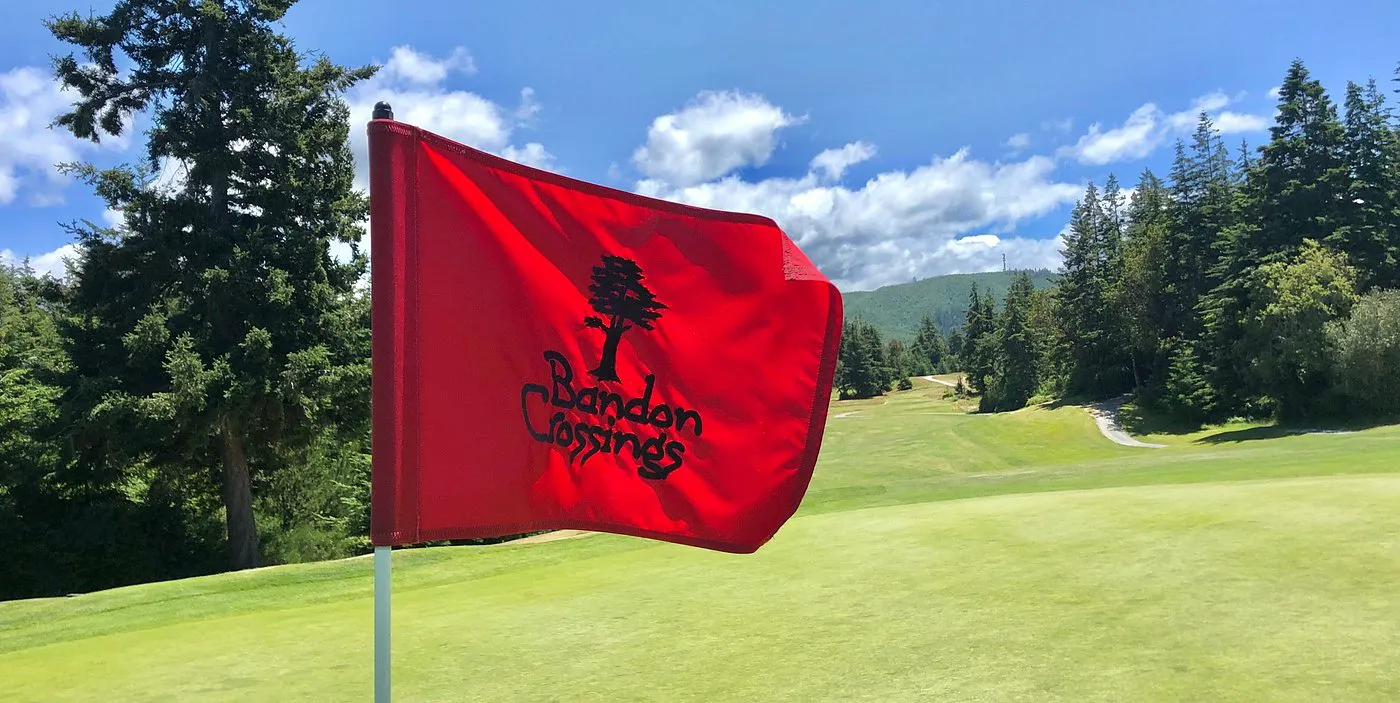
Bandon Crossings, ten miles south of the resort and designed by Dan Hixson in 2007, serves as an excellent calibration round. The heathland-style layout features dramatic elevation drops and forced carries over canyons, with conditioning that rivals the resort courses at a fraction of the price. Unlike the resort, carts are available, making it the right choice for golfers whose legs need a break from 36-hole walking days.
The dining scene reinforces the resort’s no-frills philosophy. McKee’s Pub anchors the social calendar with Scottish pub fare, single-malt scotch, and fire pits that become the real 19th hole after dark. Off-site, Lord Bennett’s in Bandon delivers the best sunset dinner on the coast, with views over Face Rock and pan-seared scallops worth the 15-minute drive. Alloro Wine Bar offers coastal Italian and a curated Oregon Pinot Noir list for evenings when pub fare loses its appeal. The Bandon Fish Market, a blue shack on the Old Town boardwalk, serves halibut fish and chips that locals defend with genuine passion.
Planning the Trip
When to Go
| Window | Why |
|---|---|
| Dec–Feb 🌧️ Avoid | Pacific storms, heavy rain, limited daylight; only for budget-conscious diehards chasing winter rates |
| Mar–Apr 🌤️ Good | Shoulder season begins with blooming gorse and extending daylight, but lingering winter gales remain a real possibility |
| May–Jun ☀️ Prime | Turf firms up, longest days allow 36-hole marathons, excellent value before peak pricing arrives |
| Jul–Aug ☀️ Prime | Best weather, driest fairways, warmest temperatures (67°F highs); peak pricing and maximum crowds; fierce afternoon winds |
| Sep ☀️ Prime | Often the perfect month: ocean temps peak, air stays warm, winds soften; widely considered the best window |
| Oct 🌤️ Good | Crisp fall golf with beautiful light, but rain probability rises sharply toward month’s end |
| Nov 🌧️ Avoid | Statistically the wettest month; severely limited daylight makes 36-hole days impossible |
The PGA Professional Championship occupies Bandon Dunes and Pacific Dunes from April 26–29, 2026, restricting course availability and filling regional lodging.
Getting There and Getting Around
The airport decision shapes the entire trip. Southwest Oregon Regional (OTH) in North Bend puts the resort 35 minutes away, but flights are limited (United from SFO and DEN), expensive, and vulnerable to coastal fog cancellations that can derail travel plans entirely. Eugene (EUG), 2.5 hours north through the coastal mountains, offers far more carriers (United, Delta, Alaska, American), better reliability, and competitive pricing at the cost of a scenic but lengthy drive. Portland (PDX) is 5 hours away and only makes sense for golfers combining Bandon with other Oregon destinations. EUG is the smart play for most travelers.
On property, a rental car is unnecessary. The resort operates a complimentary shuttle system that runs on demand between lodges, courses, and restaurants. Off property, whether staying in Bandon or playing Bandon Crossings, a rental car is essential. Ride-shares are effectively nonexistent on this part of the coast.
A half-day arrival is best spent at The Punchbowl, a 100,000-square-foot putting course next to Pacific Dunes, or on a late-afternoon tee time at Bandon Preserve or Shorty’s.
Five Days at Bandon
| Day | Morning | Afternoon | Evening |
|---|---|---|---|
| 1 — Arrival | Fly into OTH or drive from EUG | Bandon Crossings (calibration round with carts) or Bandon Preserve | McKee’s Pub on resort; settle in at the fire pit |
| 2 — The Walk | Bandon Trails (tackle the hardest walk while legs are fresh) | Shorty’s (19 short-game holes in the inland dunes) | Dinner in Old Town: Wheelhouse & Crowsnest overlooking the harbor |
| 3 — The Masterpiece | Pacific Dunes (the architectural crown jewel) | Rest, resort spa, or Coquille Point Wildlife Refuge (puffins, seals, free access) | Sunset dinner at Lord Bennett’s overlooking Face Rock |
| 4 — The Double | Old Macdonald (strategic template holes, flat walk) | Bandon Dunes (the cliffside finishing stretch earns its afternoon slot) | Celebratory dinner at The Forge on resort |
| 5 — Departure | Sheep Ranch (clifftop views for the final round) | Depart for airport (schedule late-afternoon flights) | — |
This sequencing is deliberate. Bandon Crossings on arrival day eases the transition to links conditions with cart availability. Bandon Trails on Day 2 tackles the most strenuous walk before fatigue accumulates. Pacific Dunes earns the Day 3 morning slot, the freshest tee time after a rest afternoon. The Old Macdonald and Bandon Dunes double on Day 4 pairs the flattest walk with the most dramatic finish. Sheep Ranch closes the trip with ocean views on every hole.
Budget Tiers
| Category | Smart Play ($2,500–$3,200) | Full Experience ($4,500–$5,500) |
|---|---|---|
| Lodging | Off-site Airbnb in Bandon ($100–$150/night) | The Lodge or Grove Cottages ($300–$500+/night) |
| Golf | Bandon Crossings + 3 resort courses + 1 par-3 (shoulder rates) | All 5 championship courses + both par-3s (peak summer) |
| Dining | $75/day (pub fare, Bandon Fish Market, groceries) | $150/day (The Forge, Lord Bennett’s, Alloro) |
| Caddies | Self-carry (yardage books provided) | Caddie on Pacific Dunes + Sheep Ranch ($125 + tip each) |
| Transport | Shared rental car from EUG ($60/day) | OTH flights + resort shuttle |
The Smart Play tier sacrifices peak summer weather for shoulder-season rates and uses off-site lodging, which requires a rental car and means paying the $50–$100 day-guest premium on green fees. The Full Experience secures on-site lodging, priority tee-time access, and lower per-round rates. The lodging decision is not just about comfort; it directly affects golf pricing.
Booking Timeline
| When | Action |
|---|---|
| 18+ months out | Monitor Bandon Dunes website for lottery registration window openings |
| 12–18 months out | Register for specific lottery windows (Jan–Apr closes December prior; May–Sept closes January prior) |
| 6–12 months out | If selected, pay deposit immediately; book flights to OTH or EUG |
| 3–6 months out | Book off-site lodging if not selected for resort lottery; reserve Alloro and Lord Bennett’s |
| 1–3 months out | Book day-guest tee times if staying off-site (restricted availability, $50–$100 premium) |
| 1–2 weeks out | Request caddies (independent contractors; requests not guaranteed); check weather forecasts |
The 2026 lottery system fundamentally changes trip planning. Traditional call-ahead booking is gone. Registration for seasonal draws is now the only path to guaranteed on-site lodging and priority tee times.
For Non-Golfers
Honesty first: Bandon is an isolated golf destination, not a full-service resort. The town itself is a community of roughly 3,000 people whose identity owes nothing to golf — it is the Cranberry Capital of Oregon, built on Dungeness crabbing and salmon fishing along the Coquille River, with a resilient working-class coastal culture that survived a devastating fire in the 1930s sparked by the very gorse that now lines the resort’s fairways. There is no sprawling spa complex, no beach club, no week’s worth of shopping. Companions who are not golfers need to enjoy solitude, coastal hiking, and reading by a fire.
The natural surroundings are genuinely beautiful. The Cape Arago Scenic Drive north of Bandon offers rugged cliff views and excellent tide pools. Fat-tire bike rentals allow rides on hard-packed sand among the sea stacks at low tide. The Circles in the Sand project rakes massive labyrinth patterns into Bandon Beach during spring and summer low tides, free and surprisingly meditative. Old Town Bandon fills a few hours with the Washed Ashore gallery, local boutiques, and cranberry sweets. But a week without golf here is a long week.
Why the Pilgrimage Keeps Working
Every great golf destination sells a version of the same promise: come here, and the game will feel different. Most deliver that feeling through luxury, exclusivity, or sheer scenic spectacle. Bandon delivers it through subtraction. No carts. No real estate. No pretense that the clubhouse matters more than the first tee. What remains after all that is stripped away is the game itself, played on land that was built for it, in weather that demands engagement with every shot.
Keiser’s original gamble was that subtraction would be enough. Twenty-five years and 122 holes later, the evidence is overwhelming. The architects who built these courses understood what the land was offering and had the restraint to accept it on its own terms. The golfers who make the trip to this remote stretch of Oregon coast understand something similar: that the best version of the game is the one where the course, the conditions, and the walk are the entire point.
The lottery is new. The wind is not. Neither is the reason people keep entering.