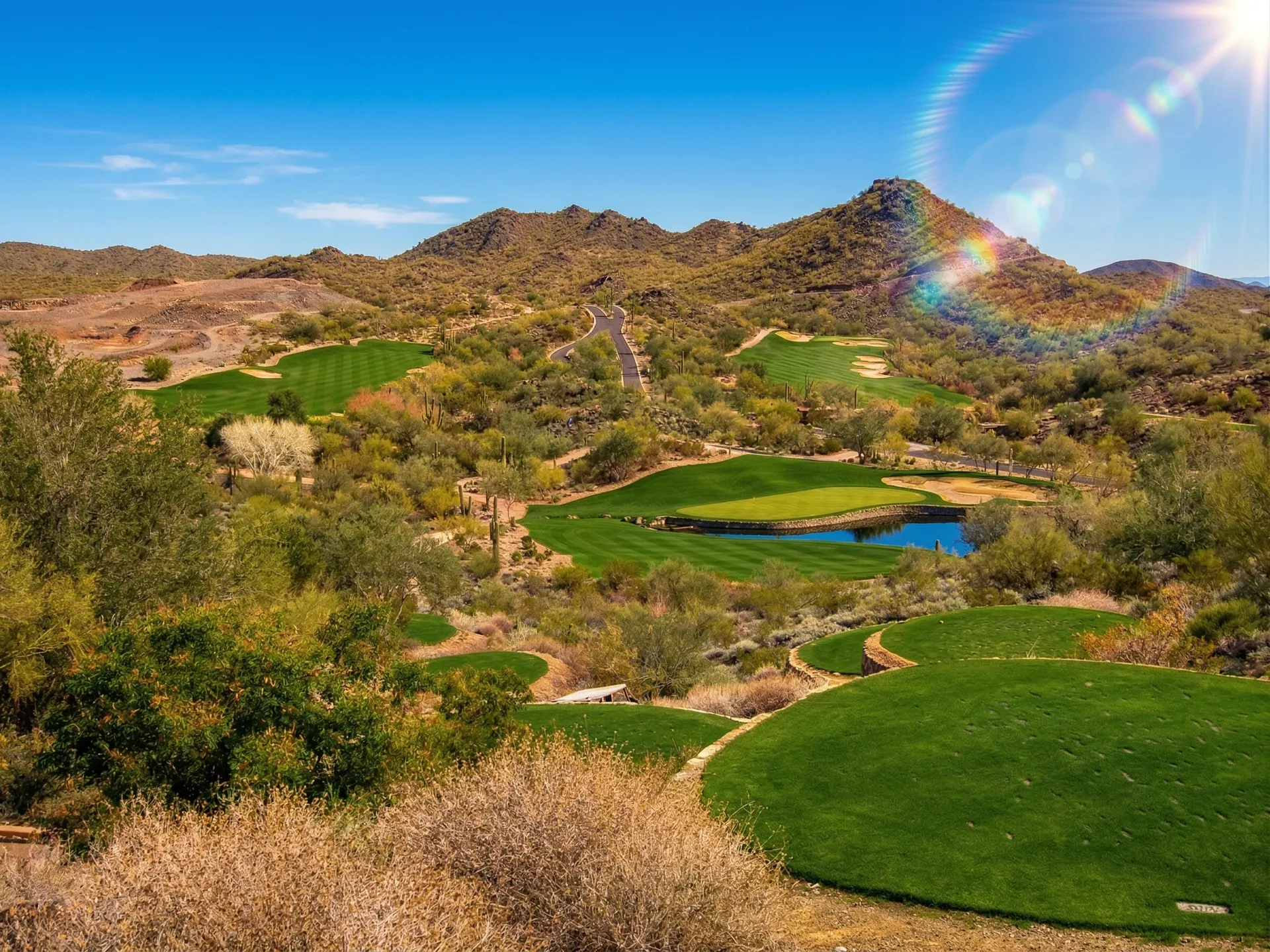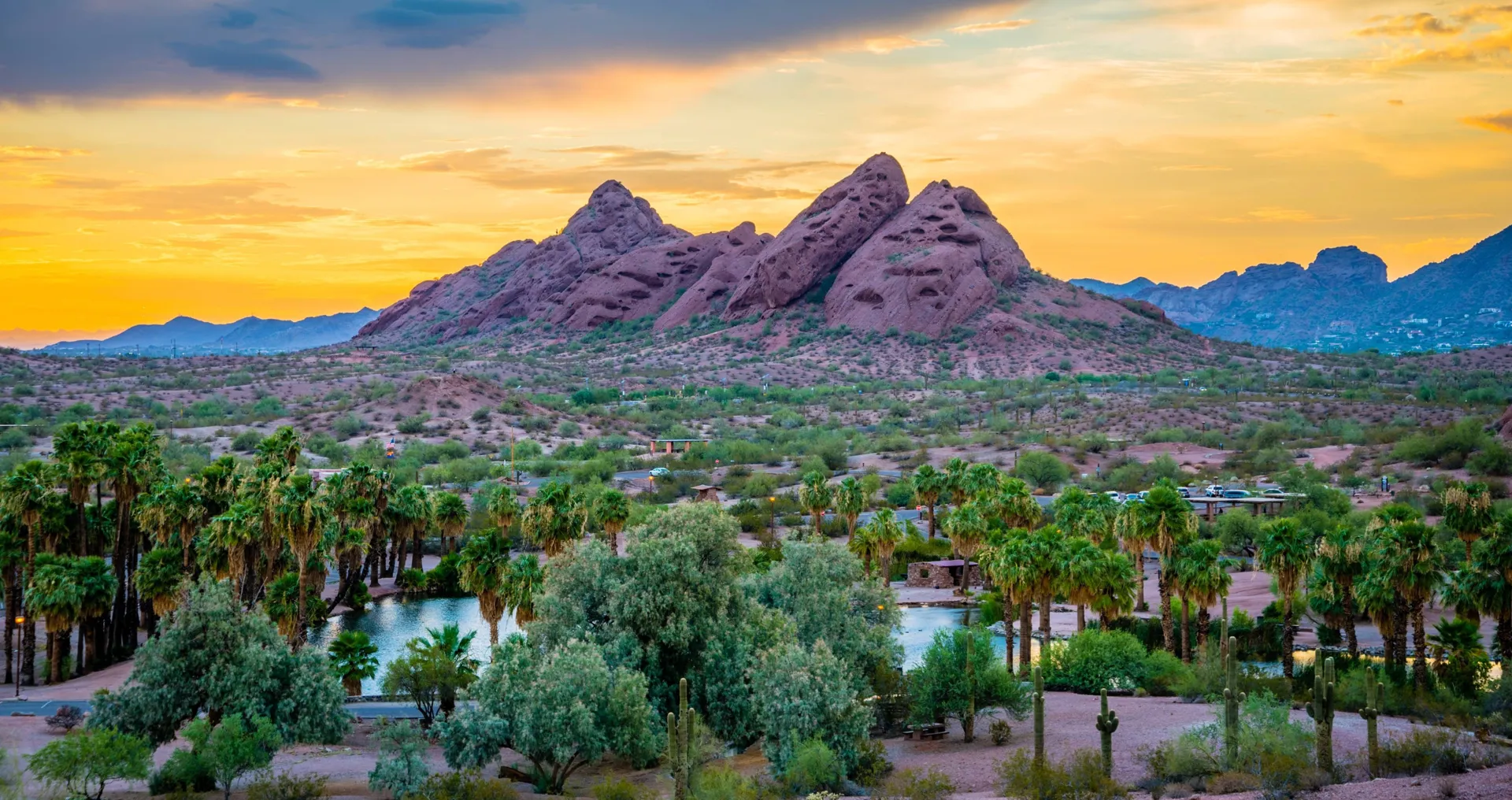
In 1983, a developer named Lyle Anderson convinced Jack Nicklaus, Arnold Palmer, Gary Player, and Tom Watson to play a televised Skins Game on an unfinished course carved from the rocky foothills north of Scottsdale. The gamble was simple: show America what golf looks like when fairways are emerald islands floating in a hundred million years of Sonoran Desert. Desert Highlands sold out within weeks. The modern luxury desert golf experience was born.
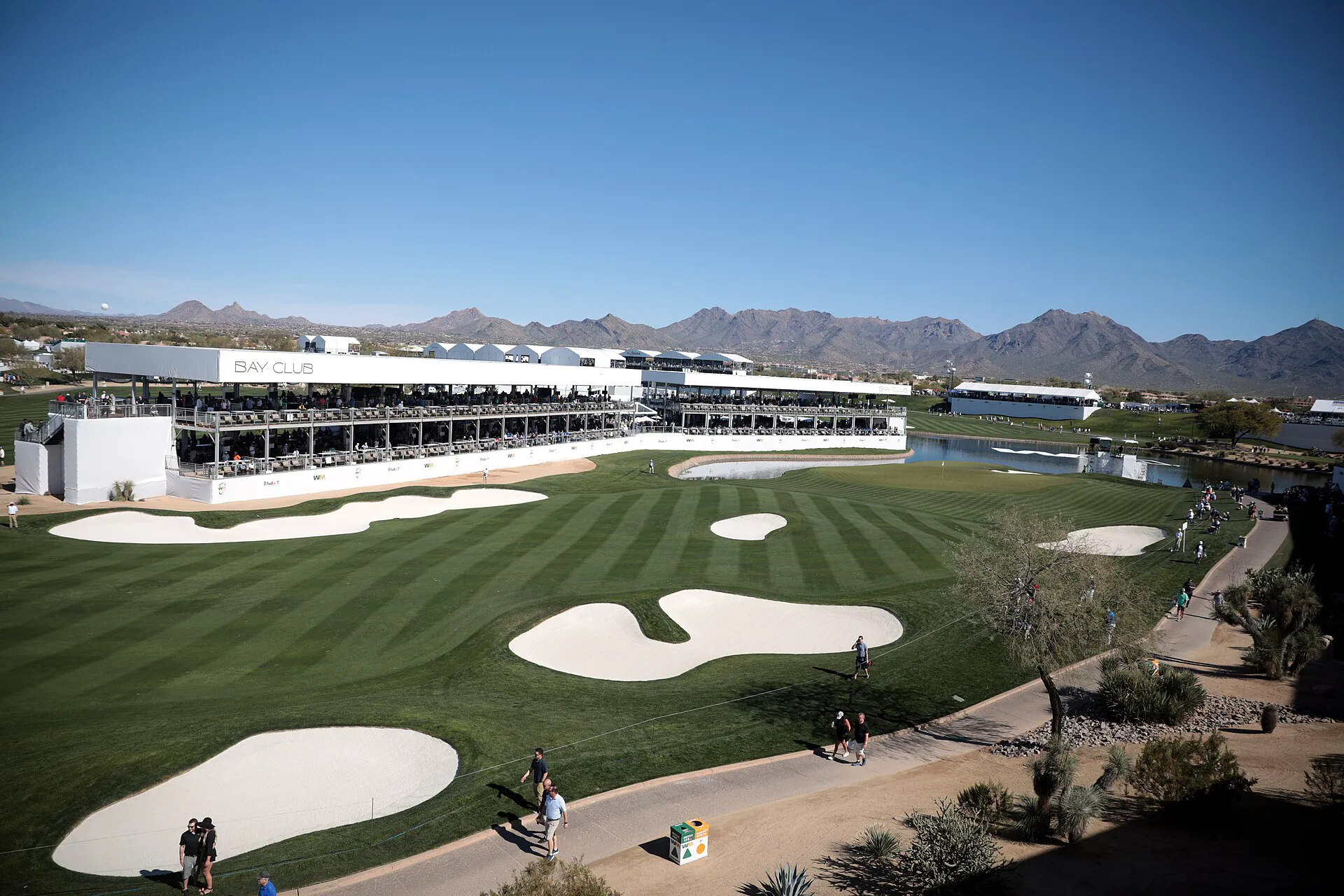
Four decades later, the Scottsdale-Phoenix corridor holds more than 200 courses across a metropolitan grid stretching 60 miles in every direction. The region hosts the WM Phoenix Open at TPC Scottsdale, the largest spectator event in golf, routinely drawing over 500,000 fans to a stadium par 3 that functions more like a rock concert than a golf hole. Twelve public and semi-private courses in the area rank among the best accessible rounds in the American Southwest, spanning everything from Coore and Crenshaw’s minimalist masterwork at We-Ko-Pa to Rees Jones’s mountain fortress at Quintero to an Australian Sand Belt anomaly at Ak-Chin Southern Dunes.
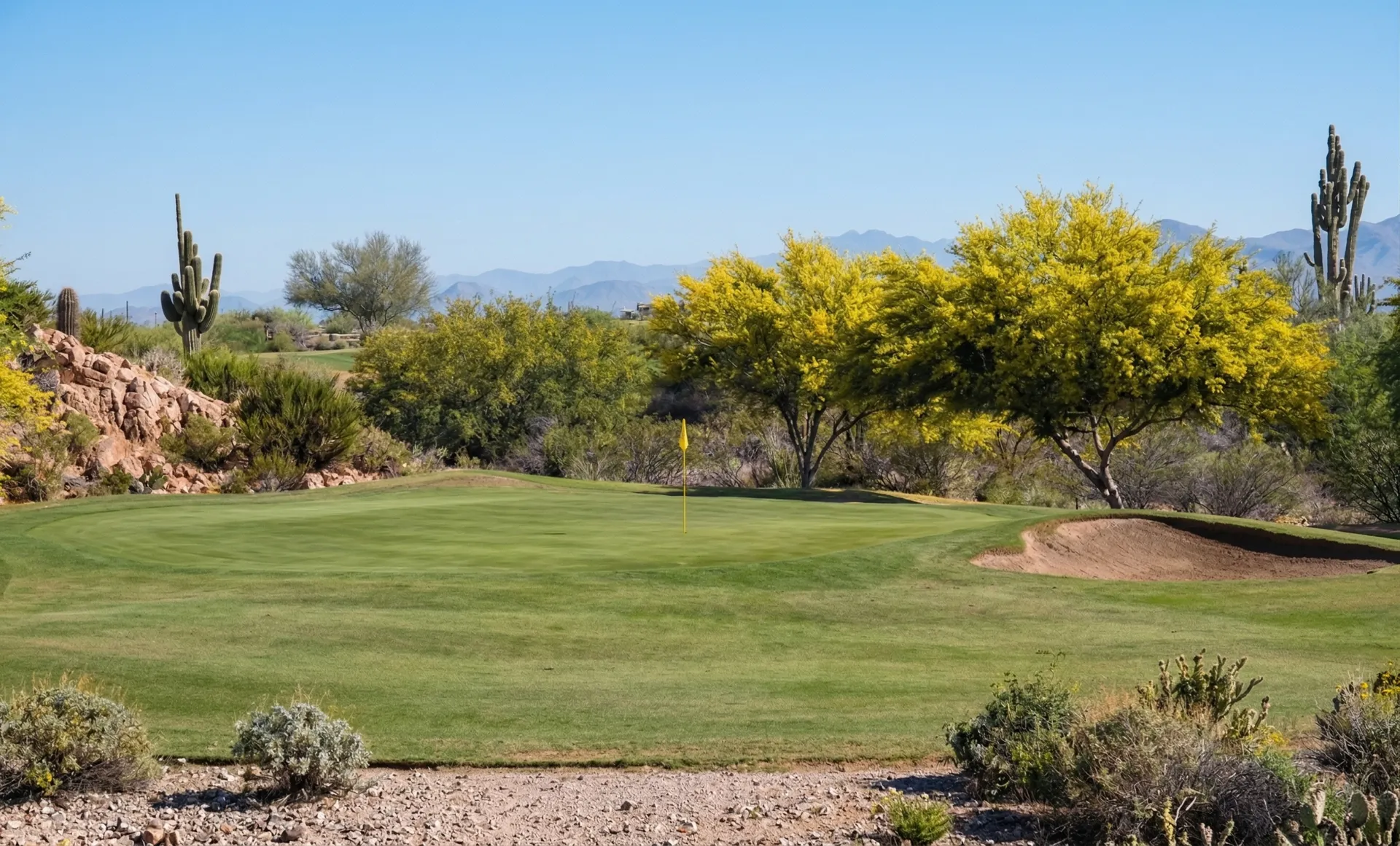
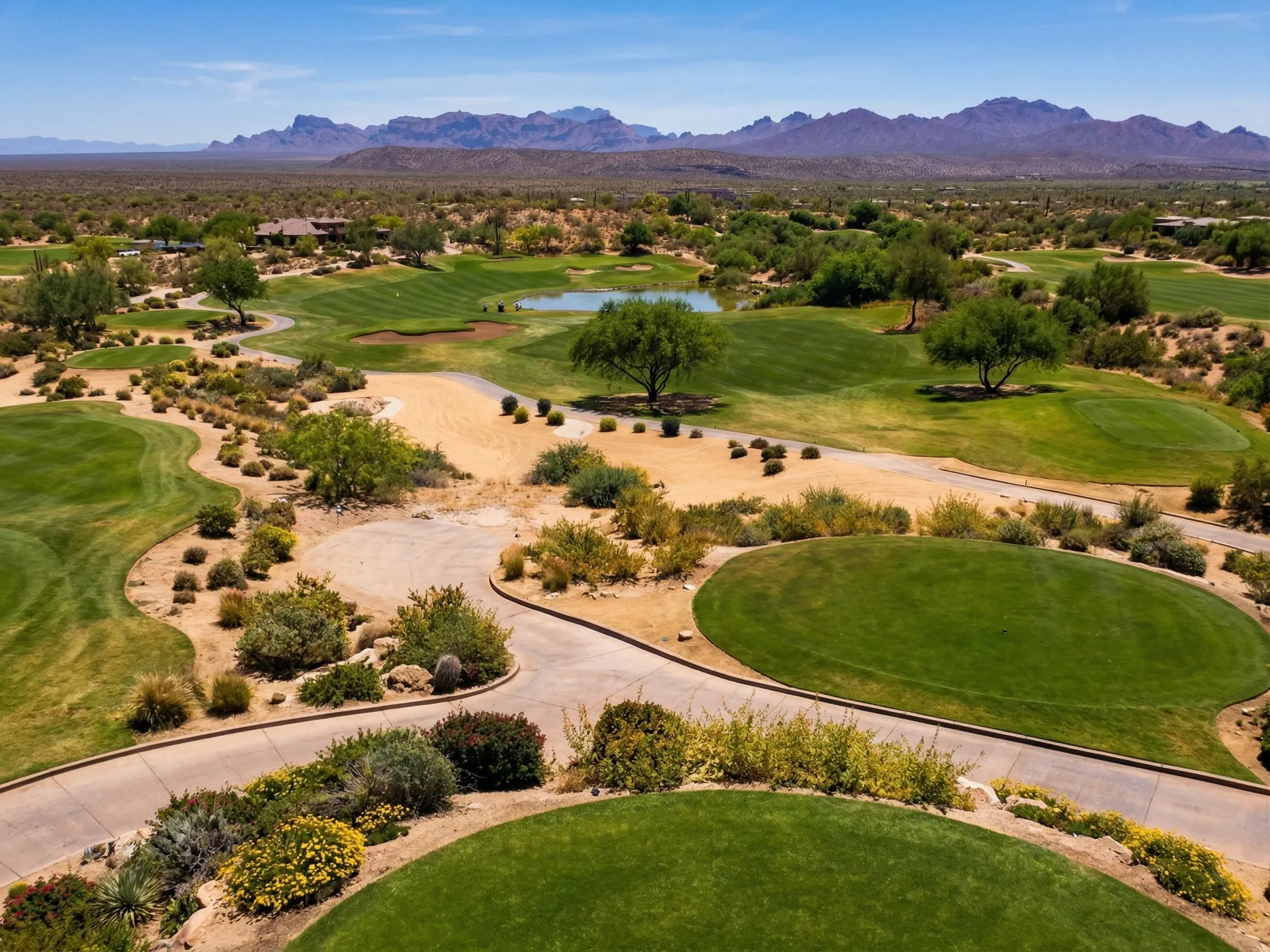
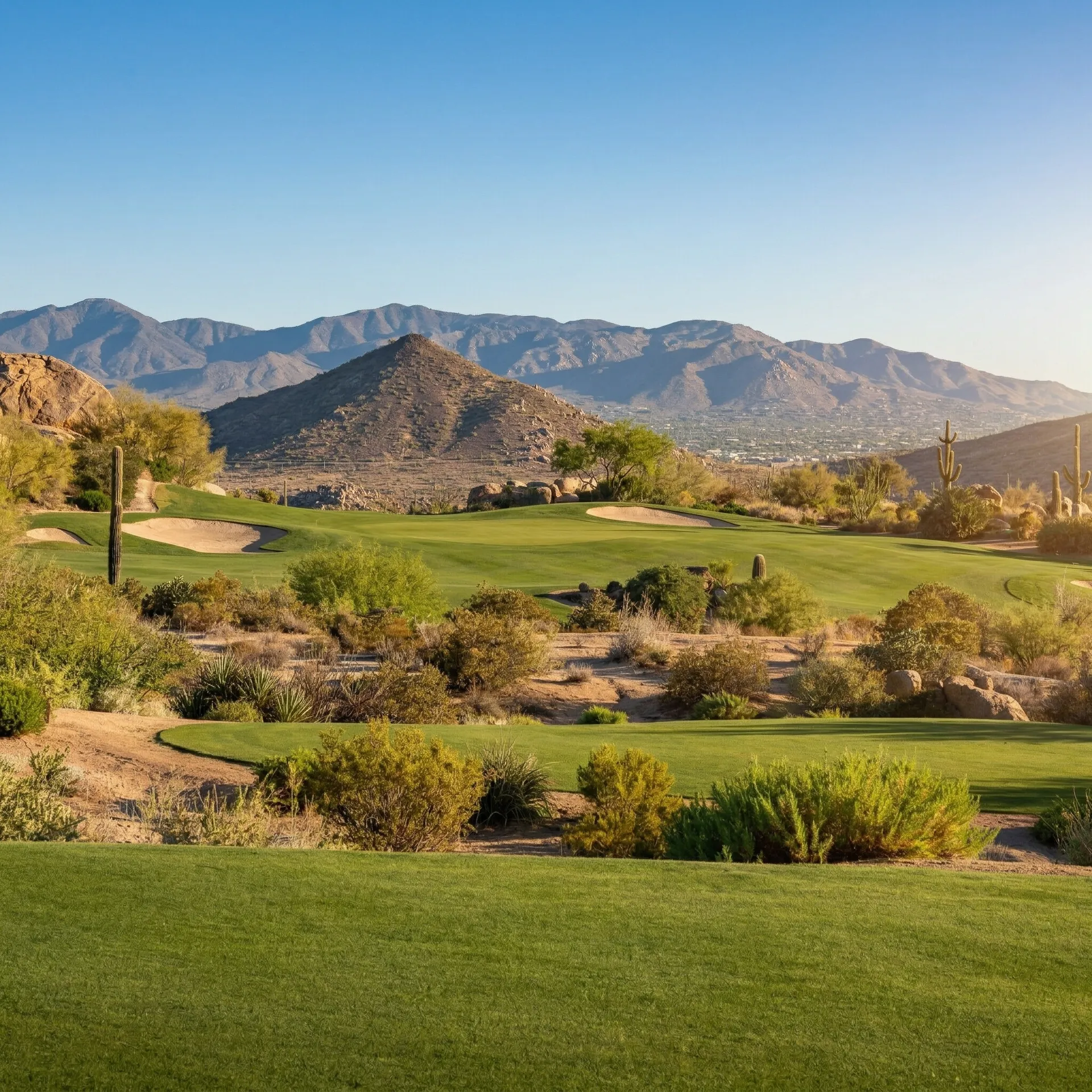
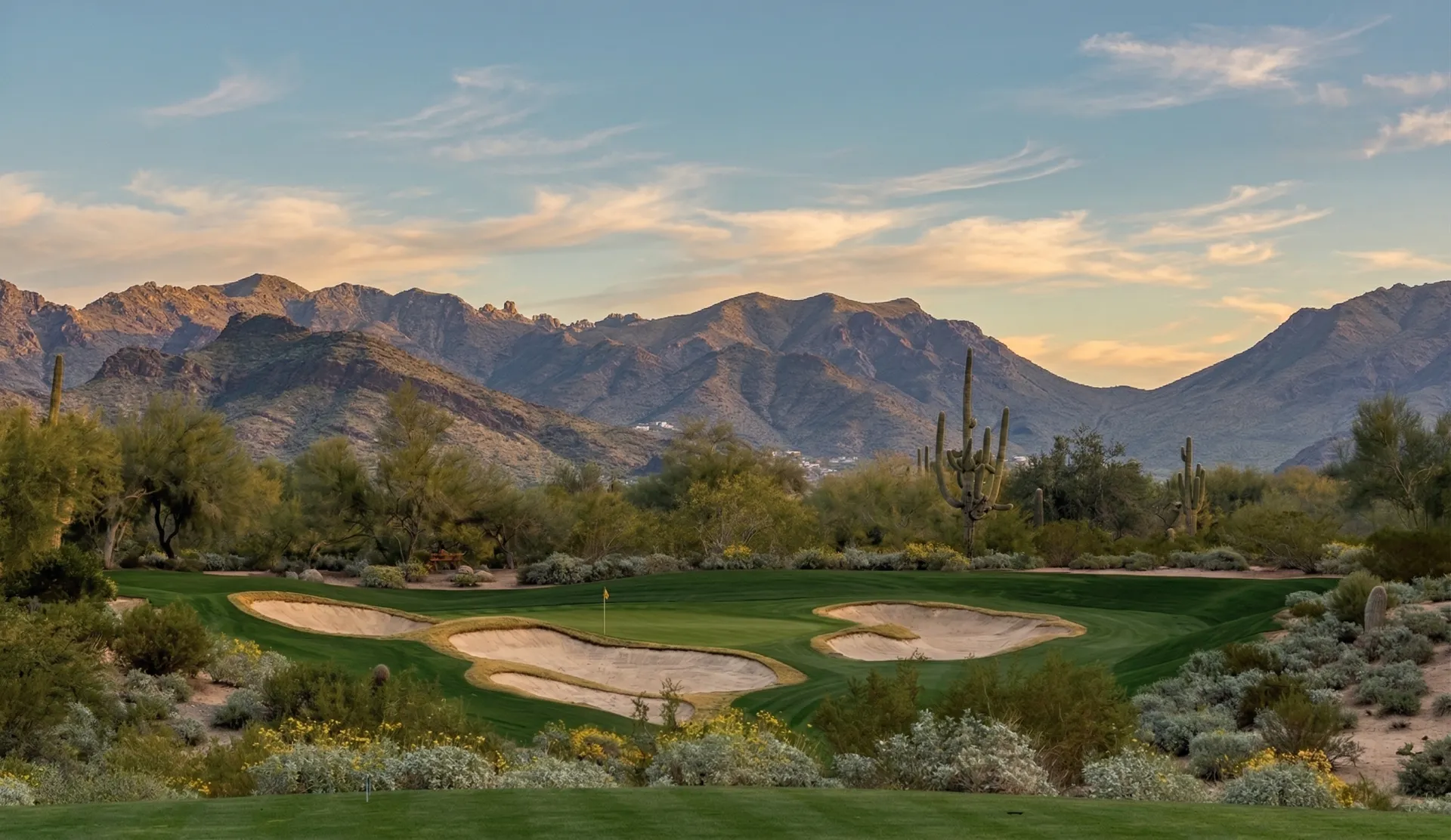
The Sonoran is the most biologically diverse desert in North America, and it dictates every design decision here. Saguaro cacti that take 75 years to grow a single arm frame fairways where the ball flies 5-10% farther in the dry air. The skies are piercingly blue for 300 days a year. Missing the short grass means a lost ball in impenetrable scrub or a recovery shot off hardpan dirt and rocks. This is target golf as philosophy: precision rewarded, aggression punished, and a James Beard Award-winning culinary scene waiting when the round is done.
The Courses Worth Playing
| Course | Green Fee | Access | Booking Window | One-Line Take |
|---|---|---|---|---|
| Quintero | $99–$300 | Public | 90 days | Remote mountain drama, 700-foot elevation changes, no housing in sight |
| We-Ko-Pa (Saguaro) | $109–$309 | Public/Resort | 90 days | Minimalist desert masterpiece; wide, walkable, strategically brilliant |
| We-Ko-Pa (Cholla) | $109–$309 | Public/Resort | 90 days | Quintessential target golf through deep arroyos and ridgelines |
| Troon North (Monument) | $300–$550 | Semi-Private | 90 days | The luxury desert blueprint, with a boulder in the 3rd fairway to prove it |
| Troon North (Pinnacle) | $300+ | Semi-Private | 90 days | Panoramic elevated tees, receptive greens, Monument’s more playable sibling |
| TPC Scottsdale (Stadium) | $303–$550 | Public/Resort | 90 days | The iconic 16th hole demands one visit; the price demands careful timing |
| Boulders (South) | $159–$329 | Public/Resort | 90 days | Visually intoxicating routing through billion-year-old granite formations |
| Boulders (North) | $329 | Semi-Private | 90 days | Newly renovated TifEagle greens, panoramic Black Mountain views |
| Grayhawk (Raptor) | $130–$400 | Public | 90 days | Tour-pedigree Fazio test with severe greens and NCAA credentials |
| Grayhawk (Talon) | $130–$400 | Public | 90 days | Canyon drama, island-green par 3, and the valley’s best post-round scene |
| Wickenburg Ranch | Members/Guests | Private | N/A | Creative high-desert routing; flawless bentgrass; worth the hour drive |
| Ak-Chin Southern Dunes | $126–$282 | Public/Resort | 90 days | Sand Belt anomaly with golden grasses, 100+ bunkers, and howling wind |
Green fees reflect the seasonal range. Dynamic pricing means a midweek tee time at $200 can climb to $450 on Saturday.
We-Ko-Pa (Saguaro) is the architectural crown jewel of the valley. Coore and Crenshaw moved minimal dirt across the Fort McDowell Yavapai Nation’s tribal land, draping wide fairways over natural contours and offering strategic bailout areas instead of forced carries over scrub. It is one of the few desert courses designed specifically for walking, with green-to-tee proximity prioritized throughout, and the transparent pricing (no dynamic algorithm) delivers the best value-to-quality ratio in the region. The par-4 14th, split by a central wash, is a masterclass in risk-reward angles. Cholla, Scott Miller’s older design on the same property, provides the quintessential target golf counterpoint: deep arroyos, forced carries, and a penalty structure that costs high handicappers a sleeve of balls per nine.
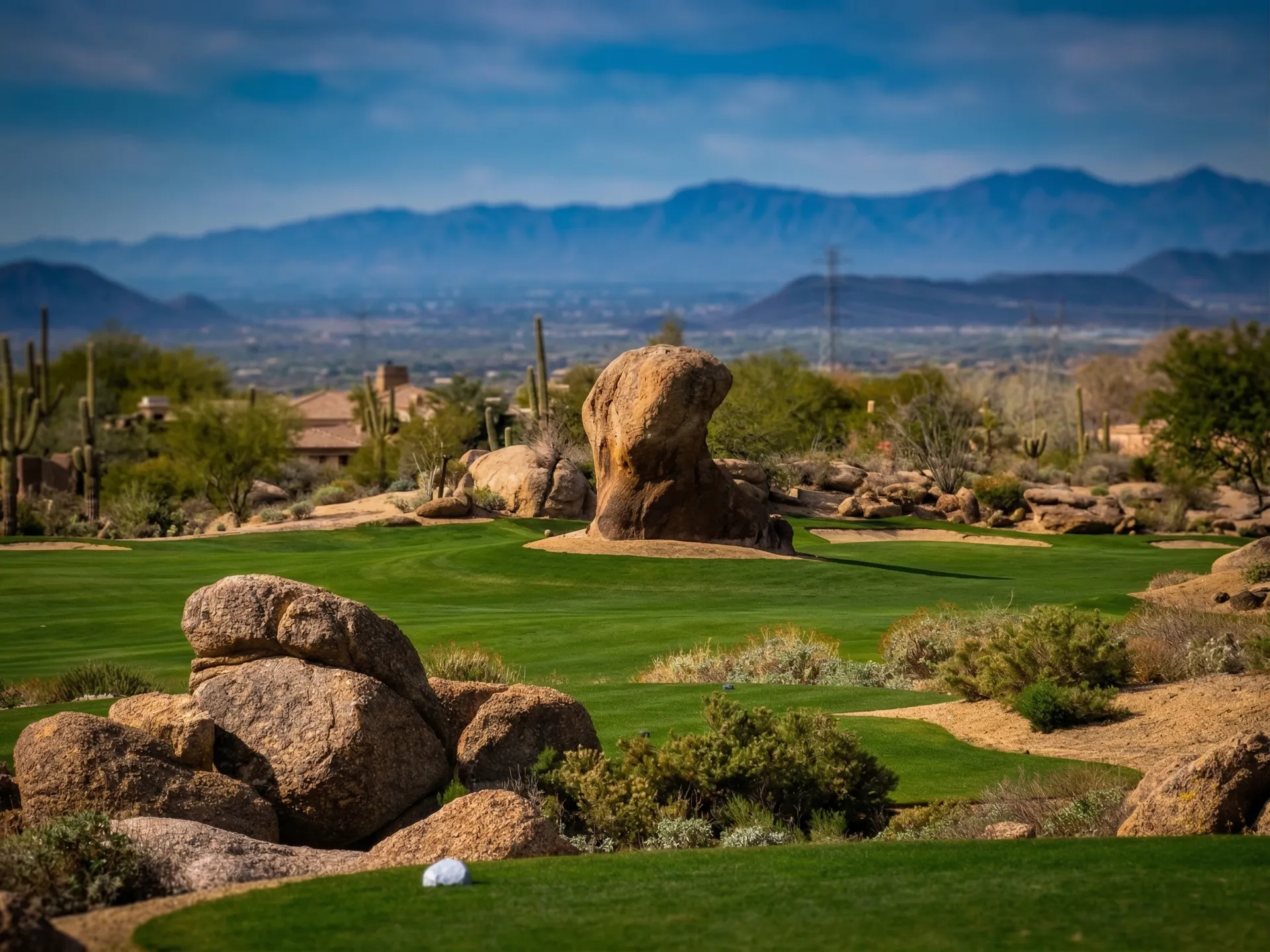
Troon North (Monument) defined the high-end daily-fee desert experience when Tom Weiskopf opened it in 1990. The routing threads through ancient granite boulders and dense saguaro forests, with a 35-foot boulder sitting dead center in the 3rd fairway, demanding strategic decisions from every angle (slope 145 from the Black tees). Peak-season forecaddies, included on select winter mornings, are invaluable for green reads and spotting balls in the brush. Pinnacle, built by Weiskopf and Jay Morrish five years later, plays from elevated tees with sweeping valley views and features more receptive greens, making it the better choice for mid-handicappers wanting the Troon experience without Monument’s punitive edge.
TPC Scottsdale (Stadium) is the course everyone has to play once. The entire routing builds toward the par-3 16th, and playing it with the grandstands erected during winter is a surreal, bucket-list experience. Honestly? Outside the closing stretch, the flat terrain through commercial landscape lacks the visual drama of the North Scottsdale tracks. It commands the valley’s highest dynamic pricing, and the value proposition depends entirely on how much the 16th hole spectacle matters to the golfer. The TPC Champions course next door, Randy Heckenkemper’s 2007 redesign, is firmer, faster, and authentically Sonoran at a fraction of the price; local scratch golfers quietly prefer it.
Quintero requires a 45-minute drive northwest into the Hieroglyphic Mountains, and the isolation is the point. Rees Jones used 700-foot elevation changes and a complete absence of housing development to create the most dramatic visual experience in the region. The collection of par 3s, particularly the sheer downhill drops on the 6th and 9th, is arguably the finest in the state. Recently renovated tee boxes (419 Bermuda) and new 007XL bentgrass greens have sharpened the conditioning to match the scenery.
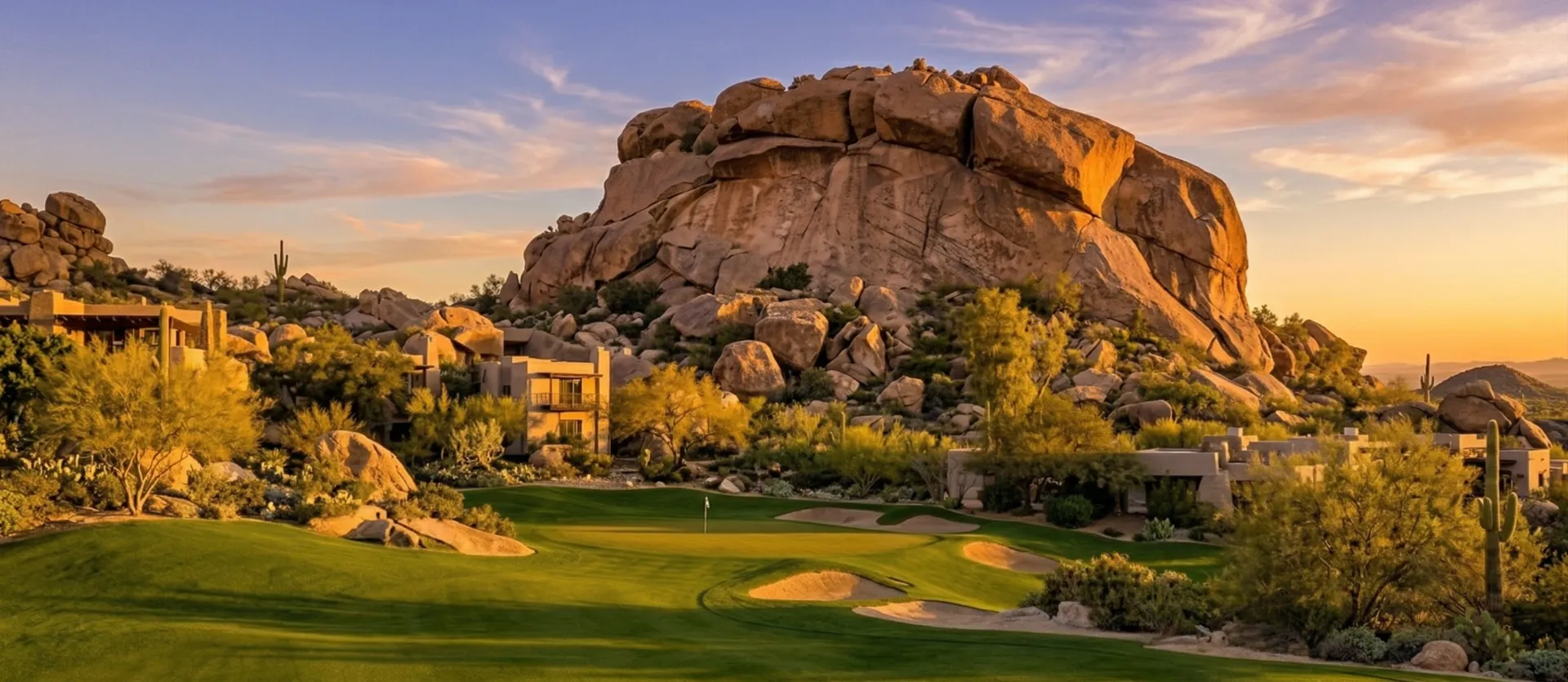
The Boulders (South) routes directly into billion-year-old granite formations that dwarf the golfer at every turn. Jay Morrish’s 1984 design prioritizes visual spectacle over architectural purism, but the tight fairways and strategic shot-making keep the round honest, and the wildlife encounters (bobcats, coyotes) are genuine. The North course, recently renovated with TifEagle bermudagrass greens that eliminate the need for October overseeding, is now restricted to resort guests and members, offering premium putting surfaces and panoramic Black Mountain views.
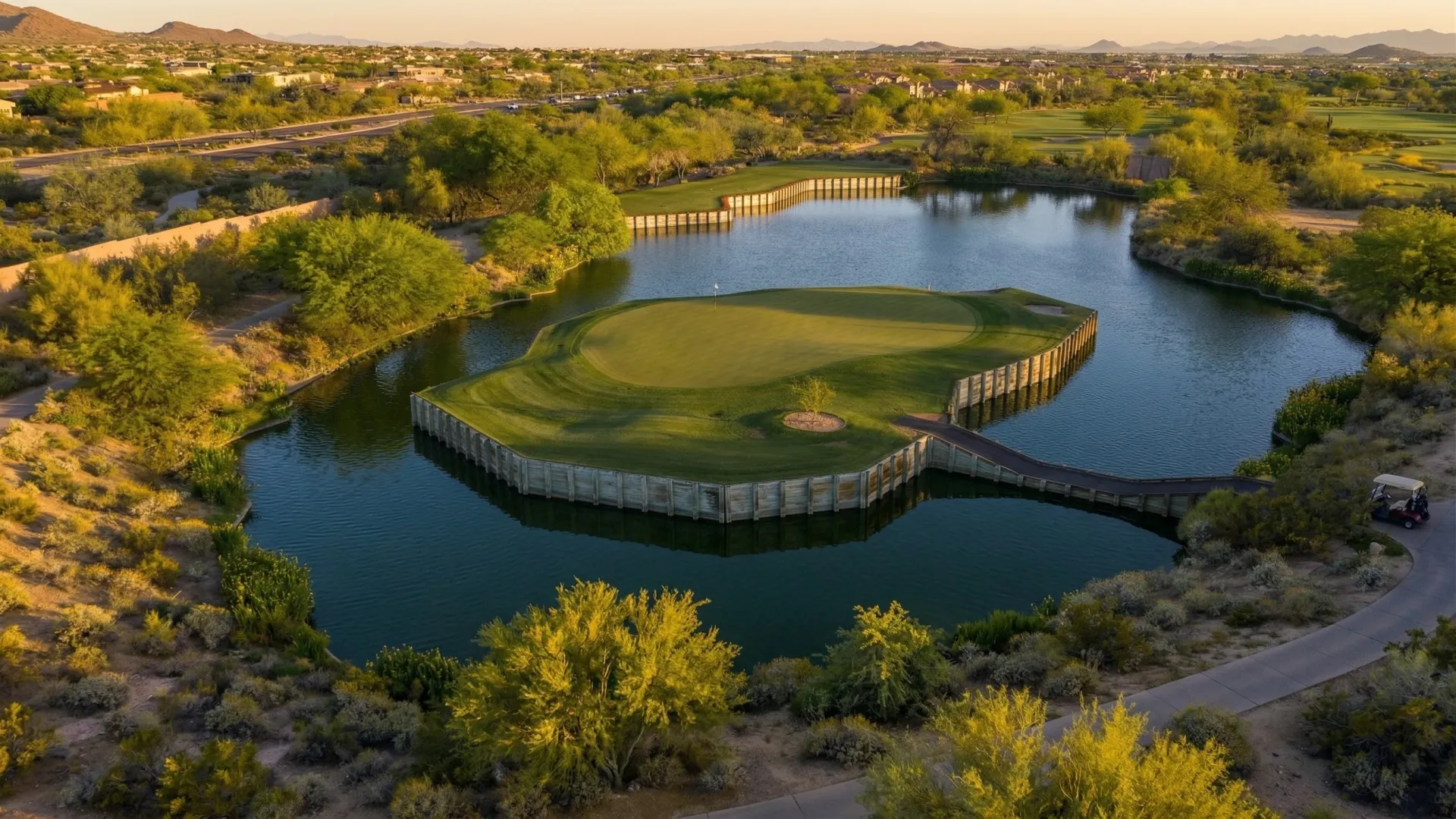
Grayhawk (Raptor) is where serious players test themselves. Tom Fazio’s 1995 design hosted the NCAA Championships, featuring deep fairway bunkers, severe green complexes, and a back nine that demands high, soft iron shots to hold firm putting surfaces. Talon, the David Graham and Gary Panks dramatic counterpart, delivers box canyon vistas, an island-green par 3 and a swinging-bridge tee box, and the valley’s best post-round dining scene at Phil’s Grill and Isabella’s Kitchen. Both courses maintain conditioning that rivals elite private clubs.
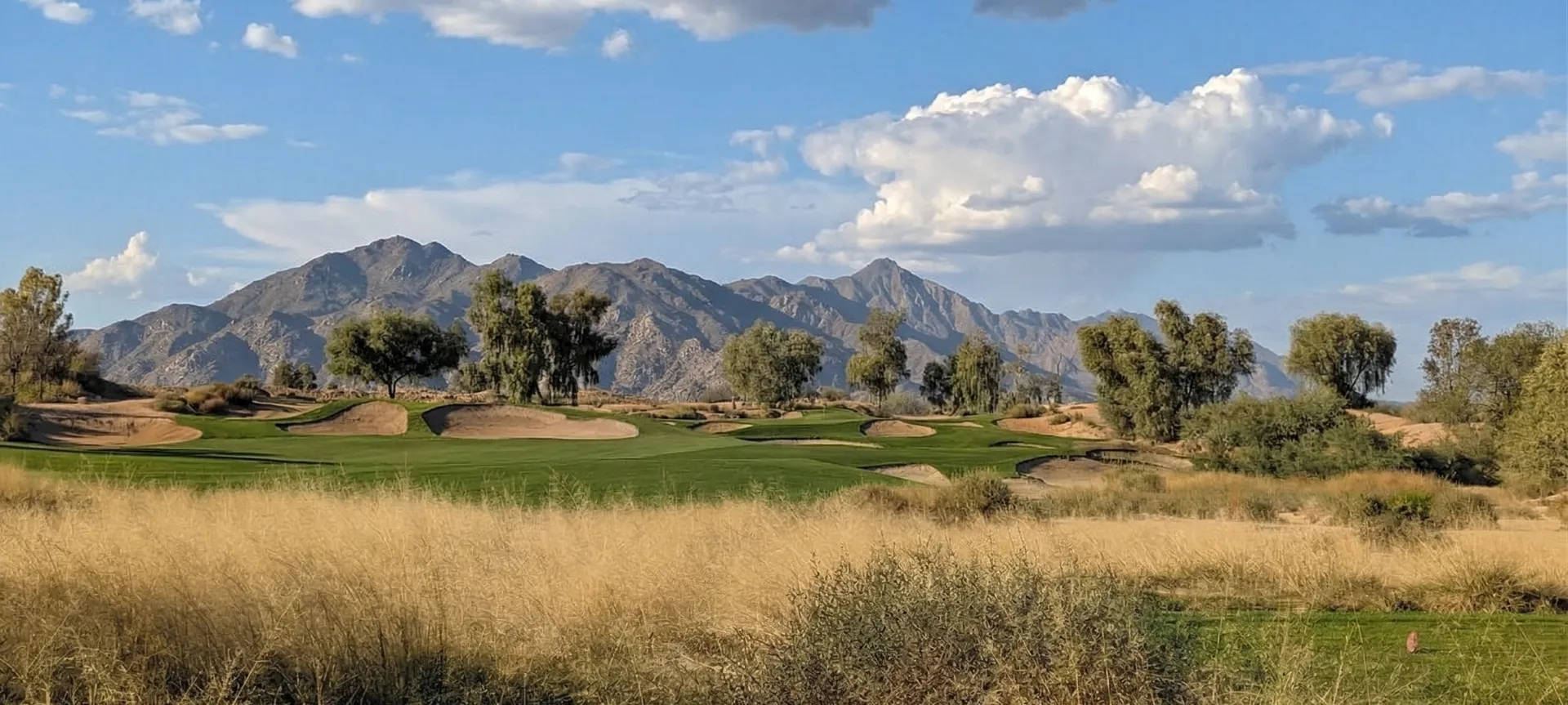
Wickenburg Ranch, an hour northwest of Phoenix, rewards the drive with a creative 2015 Brownlee and Pickett routing through rolling high-desert terrain and flawless bentgrass greens. Now fully private, access requires a member host or a reciprocal arrangement through the Troon Privé network. The “Li’l Wick” short course and music-filled social atmosphere make it an ideal day trip. Ak-Chin Southern Dunes breaks every Scottsdale convention: Schmidt, Curley, and Fred Couples built an Australian Sand Belt layout in the south valley with massive rolling fairways, golden native grasses, and more than 100 flashed-face bunkers. Wind is the primary defender, and the experience has more in common with Melbourne’s Sandbelt than anything in North Scottsdale.
The dining scene matches the golf’s ambition. FnB in Old Town, helmed by James Beard winner Charleen Badman, elevates Arizona produce into extraordinary, ever-changing dishes. Andreoli Italian Grocer in North Scottsdale serves unpretentious specials-board Italian that makes a perfect post-Grayhawk lunch. For celebratory evenings, Catch delivers see-and-be-seen seafood, and Isabella’s Kitchen on the Grayhawk property means dinner never requires leaving the course.
Planning the Trip
When to Go
| Window | Why |
|---|---|
| Jan 🌤️ Good | Cool mornings with occasional frost delays in North Scottsdale; excellent conditioning, shorter days, moderate pricing |
| Feb–Apr ☀️ Prime | Peak conditioning and flawless weather; WM Phoenix Open (early Feb) and Cactus League baseball (March) bring peak pricing and crowds |
| May 🌤️ Good | Shoulder season with rising heat; afternoon rounds get sweaty, but rates drop significantly from spring peaks |
| Jun–Sep ☀️ Avoid | Dangerous heat (104–107°F average highs June through August) requires pre-dawn tee times; rates slashed 70%, but survival is the challenge |
| Oct 🌤️ Avoid | The worst month for a golf trip: courses close 2-3 weeks for overseeding to plant winter ryegrass, and open courses are overcrowded |
| Nov ☀️ Prime | Courses reopen with vibrant, flawless winter grass; excellent weather, strong value before peak pricing returns in February |
| Dec 🌤️ Good | Comfortable temperatures and solid value; early morning frost delays are common in North Scottsdale but burn off by mid-morning |
Avoid the WM Phoenix Open week (early February) unless attending the event; hotel rates triple, traffic gridlocks, and surrounding tee times are scarce and inflated. Cactus League spring training in March creates similar lodging pressure.
Getting There and Getting Around
Phoenix Sky Harbor (PHX) is the primary hub, handling thousands of domestic and international flights daily. The drive to the North Scottsdale golf corridor takes 35-45 minutes. Phoenix-Mesa Gateway (AZA) serves budget carriers like Allegiant but adds 20-30 minutes to the drive.
A rental car is essential. The valley sprawls for miles, and courses like Quintero and Ak-Chin Southern Dunes sit 45-60 minutes from central Scottsdale hotels. Ride-shares work in a pinch for groups staying central, but transporting four players with clubs in UberXL vehicles gets expensive fast.
A half-day arrival is best spent at Papago, Phoenix’s premier municipal course ten minutes from the airport ($49-$90), or settling into Old Town Scottsdale with a long lunch at FnB.
Five Days in the Desert
| Day | Morning | Afternoon | Evening |
|---|---|---|---|
| 1 — Arrival | Arrive PHX; pick up rental car | Twilight round at Papago to calibrate for desert conditions | Old Town dinner at FnB for locally sourced Arizona cuisine |
| 2 — Desert Architecture | We-Ko-Pa (Saguaro) for minimalist desert golf at its purest | Lunch at the clubhouse; optional afternoon at We-Ko-Pa (Cholla) | Andreoli Italian Grocer for casual dinner near Grayhawk |
| 3 — The Excursion | Drive to Quintero for mountain golf in complete isolation | Late lunch back in Scottsdale; rest and reset | Explore Old Town Scottsdale nightlife and cocktails |
| 4 — The Showcase | Troon North (Monument) with a forecaddie | McDowell Sonoran hiking or Desert Wolf ATV tour | Upscale dinner at Catch |
| 5 — Departure | Early tee time at Grayhawk (Raptor) | Post-round lunch at Phil’s Grill on property | Depart PHX (schedule post-4 PM flights) |
This sequencing is deliberate. Papago on arrival day acclimates to the dry air and desert ball flight without burning a premium tee time. We-Ko-Pa on Day 2 showcases the region’s architectural best while legs are fresh, with the option to double up on Cholla for groups wanting the target golf contrast. Quintero earns the Day 3 slot because the drive demands a full morning commitment and the isolation rewards it. Troon North Monument on Day 4 pairs with afternoon adventures, and Grayhawk Raptor closes the trip with Tour-level conditioning and the best departure-day dining setup in the valley.
For groups with more days: add Boulders South for the rock-formation experience, TPC Stadium for the 16th hole bucket list, or make the hour drive to Wickenburg Ranch or Ak-Chin Southern Dunes for something outside the standard desert playbook.
Budget Tiers
| Category | Smart Play (~$1,500) | Full Experience (~$4,000) |
|---|---|---|
| Lodging (per night) | Meridian CondoResorts ($200–$400 shared condo) | Fairmont Princess or Boulders Resort ($700–$1,200 shared) |
| Golf (4 rounds) | We-Ko-Pa x2, Ak-Chin Southern Dunes, Papago ($550 total) | TPC Stadium, Troon North, Grayhawk, We-Ko-Pa ($1,400 total) |
| Dining (per day) | $80 (casual spots, clubhouse lunches) | $200 (chef-driven restaurants, premium drinks) |
| Transport | $150 (shared standard rental car) | $300 (shared luxury SUV or private transfers) |
The Smart Play tier sacrifices marquee Tour venues for excellent golf at half the cost. Condos with full kitchens cut dining costs further. The Full Experience includes peak-season forecaddies at Troon North and the Stadium 16th hole spectacle, but dynamic pricing means the same itinerary in March costs 40% more than November.
Booking Timeline
| When | Action |
|---|---|
| 12–18 months out | Finalize dates and group size; research dynamic pricing trends for target week |
| 6–12 months out | Book lodging; secure stay-and-play packages (We-Ko-Pa Casino Resort or Boulders) to lock in golf rates |
| 3–6 months out | Book flights and rental car; make dinner reservations at high-demand restaurants |
| 90 days out | Book tee times: TPC Scottsdale, Troon North, Quintero, and Grayhawk open books at 90 days |
| 1–2 weeks out | Confirm forecaddie requests; check weather forecast for extreme heat or rare cold fronts |
For Non-Golfers
Scottsdale is arguably the best domestic golf destination for companions who do not play. The region’s economy runs equally on wellness, outdoor adventure, and retail. The Golden Door Spa at the Boulders and the Well & Being Spa at the Fairmont offer holistic desert-inspired treatments worth a half-day ($200-$500). The McDowell Sonoran Preserve holds more than 225 miles of pristine hiking trails, including the strenuous Tom’s Thumb route with massive granite boulder payoffs, all free. Taliesin West, Frank Lloyd Wright’s desert laboratory, offers architectural tours that reveal how one genius harmonized building with landscape ($35-$50). Scottsdale Fashion Square is the largest luxury shopping center in the Southwest. Hot air balloon flights over the Sonoran at sunrise, culminating in a champagne breakfast, run roughly $200 per person and provide a perspective on the desert that no fairway can match.
Why the Desert Keeps Calling
Every great golf destination sells a version of the same promise: come here, and the game will feel different. Scottsdale delivers through contrast. The emerald against the beige. The precision of the fairway against the chaos of the desert floor. The 75-degree February afternoon against whatever the golfer’s home city is doing under three inches of snow.
The region has its honest drawbacks: dynamic pricing that punishes peak weekends, five-hour rounds during sold-out winter tee sheets, and an October overseeding shutdown that takes half the courses offline for weeks. But no other destination in the country matches this density of championship-caliber public golf, this reliably perfect winter climate, and this much to do when the clubs go back in the trunk.
The desert does not forgive a missed fairway. It does, however, offer 300 days of sunshine to try again.