Give Tom Doak 75 guesses as to where he was standing, and Florida might be his seventy-third answer. The terrain is that improbable.
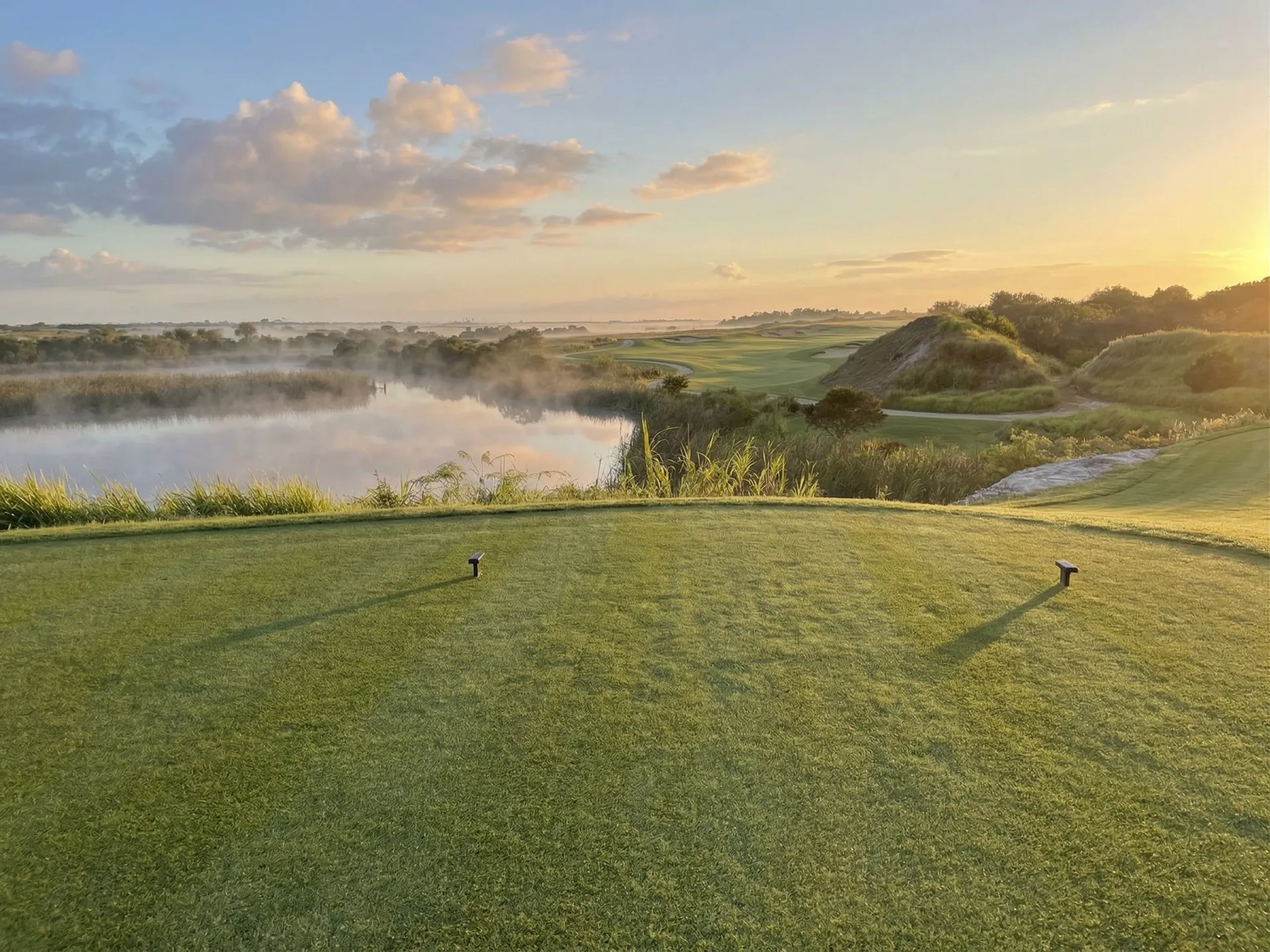
Sand dunes rising nearly a hundred feet. Rolling ridgelines. Not a tree in sight. The landscape looks more like Melbourne’s Sandbelt than anything else on the Florida peninsula, and the explanation is industrial: decades of phosphate strip mining in Bowling Green, ninety minutes south of Orlando, inadvertently sculpted a dunescape from exhausted mining land. Construction crews unearthed megalodon teeth and fossilized marine mammals in the phosphate-rich soil, remnants of a prehistoric ocean. The area earned the name Bone Valley long before anyone considered building a golf course.
Bill Coore and Ben Crenshaw opened the Red Course here in 2012. They walked the reclaimed 16,000-acre property for months, finding green sites rather than building them, routing holes through existing contours with the patient minimalism that produced Sand Hills. The result ranks No. 17 on GOLF Magazine’s Top 100 Courses You Can Play and No. 20 on Golf Digest’s 100 Greatest Public Courses. Together with Tom Doak’s Blue and Gil Hanse’s Black, Streamsong proved that remote, walking-focused destination golf could thrive in the Southeast. The paradox is the point: an entirely man-made landscape plays as one of the most rugged, naturalistic courses in North America. Strip mining did what ten thousand years of Florida geology couldn’t, and Coore and Crenshaw had the restraint to let the result speak for itself.
What Coore and Crenshaw Found in the Sand
Streamsong Red plays to a par of 72 across 7,148 yards from the Green (championship) tees, though most visitors play the Black tees at 6,584 yards (slope 125, rating 71.7). The routing begins with five holes that Coore and Crenshaw manufactured to connect the clubhouse to the property’s best dunes. Once the 6th arrives, dropping into a natural amphitheater with a green 55 yards deep, the course takes on an untamed character it never relinquishes.
The 7th (par 5, 521 yards from the Black tees) is arguably the finest hole on the property. A massive pond runs the entire left side, and the ideal drive challenges the water’s edge to shorten the approach. Play safe to the right and a cluster of cross-bunkers and mounding obscure the green, turning a reachable two-shotter into a grinding three. The hole plays slightly downhill, offering a brief sense of openness before the visual pressure of a dozen rugged bunkers sets in. Good players favor the left-center to open the angle. Everyone else finds the sand and starts compounding.
The 8th (par 3, 119 yards from the Black tees) looks like a gift. It is not. The green stretches 62 yards deep but narrows to eight yards wide in spots, shaped in a reverse S that makes club selection an exercise in precision rather than power. Craggy bunkering surrounds the entire putting surface, and the flat sightline from tee to green masks the difficulty. Wind misjudgments end in deep sand. The hole is a reminder that Coore and Crenshaw’s subtlety can be more dangerous than brute length.
The 16th (par 3, 184 yards from the Black tees) is the course’s signature and a breathtaking interpretation of the classic Biarritz template. The tee shot carries a lake to a green that stretches 72 yards deep, bisected by a central swale. A massive sand dune flanks the right side. A principal’s-nose bunker splits the visual frame. Landing on the wrong tier virtually guarantees a three-putt, so distance control matters more than direction. It offers the most picturesque vista on the property and the hole that lingers longest after the round.
The finishing stretch builds to the 18th, a reachable par 5 whose right-side false front Bill Coore described as a “happy accident”: an unplanned shaping quirk the architects loved enough to keep. It rejects soft approaches ruthlessly, which means going for the green in two requires both the nerve and the precision.
The greens throughout are enormous, heavily contoured, and since a 2020 renovation, surfaced with Mach 1 ultradwarf bermudagrass that eliminates the heavy grain typical of Florida courses. They run fast (frequently above 12 on the stimpmeter) and firm. The fairways promote tight bermuda lies with virtually no traditional rough; misses find sandy waste areas, dunes, or water. The complete absence of trees exposes every hole to wind that can turn a 150-yard shot into a 200-yard struggle. Morning tee times score better. The back nine is distinctly harder than the front. The course rewards shot-makers who control trajectory and use the ground game while punishing aerial target-golf misses with shaved runoff areas and deep, unforgiving bunkers.
Planning the Trip
Streamsong Red’s green fees vary by season and guest status.
| Item | Cost |
|---|---|
| Green fee, peak season resort guest (Oct–Apr) | $375 |
| Green fee, peak season day guest (Oct–Apr) | $425 |
| Green fee, summer resort guest (Jun–Sep) | $150 |
| Walking caddie, single bag (before tip) | $120 |
| Walking caddie, double bag (before tip) | $100 |
| Forecaddie (before tip) | $45 |
| Cart fee (per person) | $35 |
Walking is the preferred mode and mandatory from late December through February. Carts are available the rest of the year but require a forecaddie ($45 per person plus gratuity). Before 8 a.m., caddies are required regardless. After 8 a.m., bag caddies are optional but strongly recommended: the blind shots, massive greens, and complex contours reward local knowledge that no yardage book provides. Caddies are independent contractors paid in cash, with an additional gratuity expected above the base fee. Request through Caddie Services well in advance during peak season.
Securing winter tee times requires booking a stay-and-play package at the Lodge months ahead. Day guests face higher fees and restricted booking windows. Florida and Georgia residents access significant summer discounts, making the off-season the most economical window if the heat is tolerable.
When to Go
| Window | Why |
|---|---|
| Jan–Feb ☀️ Prime | Perfect walking weather; firm, fast conditions; walking-only policy in effect |
| Mar–Apr ☀️ Prime | Warm but manageable; excellent turf; afternoon winds pick up |
| May 🌤️ Good | Heat becomes a factor; afternoon thunderstorms begin developing |
| Jun–Sep 🌧️ Avoid | Brutal heat, extreme humidity, daily severe thunderstorms; zero shade on course |
| Oct 🌤️ Good | Humidity breaks; resort transitions to peak-season rates |
| Nov–Dec ☀️ Prime | Exceptional weather; crisp mornings, sunny afternoons; walking-only begins late Dec |
Tampa International Airport (TPA) and Orlando International Airport (MCO) are each 60 to 90 minutes away, served by all major domestic carriers. A rental car is essential; the resort’s rural Polk County location makes rideshare services unreliable for return airport transfers. Once on property, shuttles connect the Lodge to all three clubhouses.
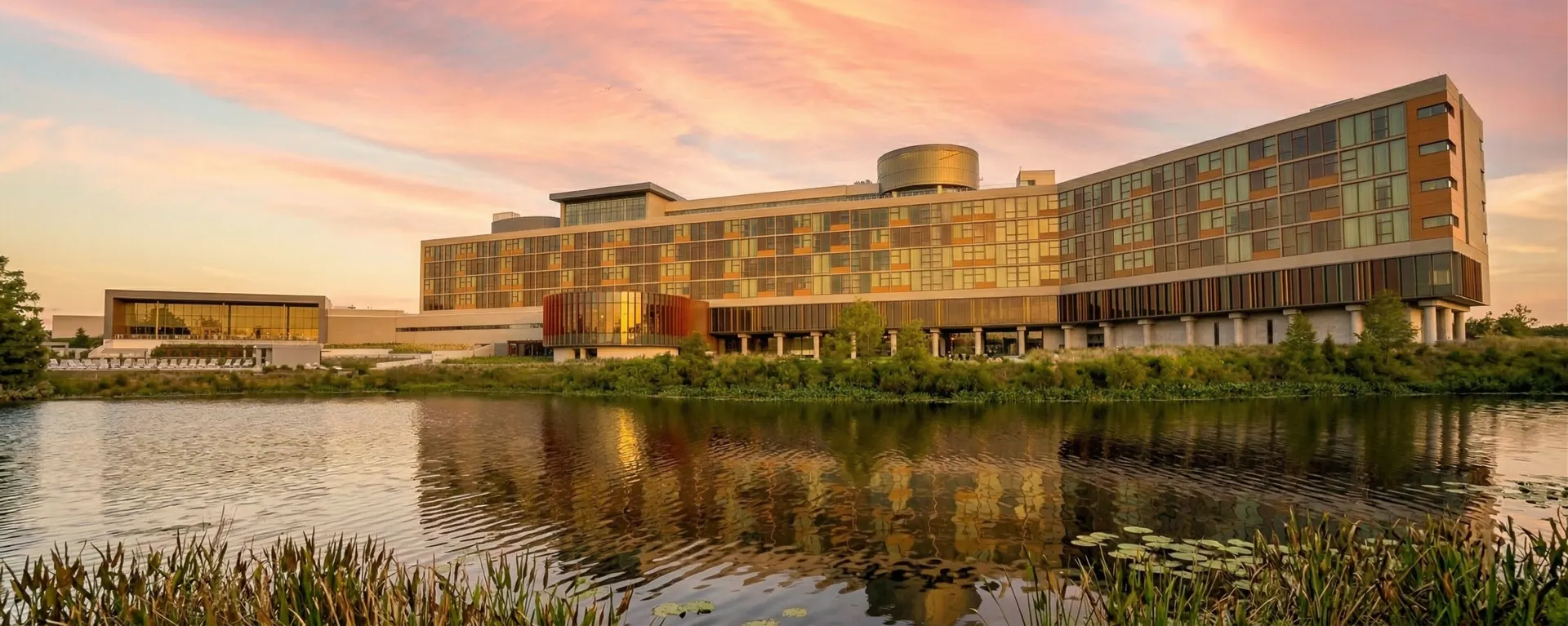
The Lodge at Streamsong ($300–$600 per night) is the primary resort hotel with 216 rooms, multiple dining options from SottoTerra’s upscale Italian to Canyon Lake Steakhouse at the Red/Blue clubhouse, and a limited number of clubhouse rooms directly above the first tee for early-morning convenience. Staying off-property is not recommended given the isolation.
Streamsong’s sibling courses complete the trip. Tom Doak’s Blue shares the same clubhouse and features wider fairways with wilder green contours. Gil Hanse’s Black plays to a par 73 across expansive Sandbelt-inspired terrain. The Chain, a 19-hole Coore and Crenshaw walking-only short course, handles arrival days and bet-settling. A fourth championship layout, Bone Valley, designed by David McLay Kidd, is scheduled to open in 2027. That addition will make Streamsong the only resort in the world featuring original designs by Coore and Crenshaw, Doak, Hanse, and McLay Kidd.
Why the Middle of Nowhere Is Exactly the Point
Streamsong Red sits an hour from anything. No beach towns. No theme parks. No nearby restaurants offering alternatives to resort pricing. The isolation is real, and it is the reason the course works.
Strip mining left behind a landscape that bears no resemblance to the state surrounding it. Coore and Crenshaw built a course that bears no resemblance to the golf surrounding it. The combination produced something Florida, a state with more than 1,300 courses, had never offered: a reason for serious golfers to book the flight specifically for the golf.
The terrain shouldn’t exist. Neither should the course. Book the trip anyway.