Central Florida shouldn’t have 75-foot sand dunes. It shouldn’t have a links-style golf course where wind howls across treeless ridgelines and terrain heaves like the coast of County Down. And it definitely shouldn’t have Tom Doak building holes on what was, until recently, a phosphate strip mine.
Streamsong Blue exists because the Mosaic Company spent decades extracting phosphate from 16,000 acres in Polk County, then couldn’t figure out what to do with the aftermath. What the miners left behind (massive sand ridges, deep depressions, terrain that resembled coastal Scotland more than subtropical swamp) turned out to be the most dramatic golf canvas in the Southeastern United States. Doak saw it in 2007, drew his proposed routing on a topographical map with a blue marker while Coore and Crenshaw drew theirs in red, right next to him on the same sheet of paper. The colors were never formally decided. They were simply never undecided.
The course opened in 2012 and now ranks #26 on Golf Digest’s “America’s 100 Greatest Public Courses” and #19 on GOLF Magazine’s “Top 100 Courses You Can Play.” The 2016 U.S. Women’s Amateur Four-Ball validated it as championship caliber. The course that shouldn’t exist in Florida has become one of the most compelling arguments for visiting the state with golf clubs.
The Holes the Miners Left Behind
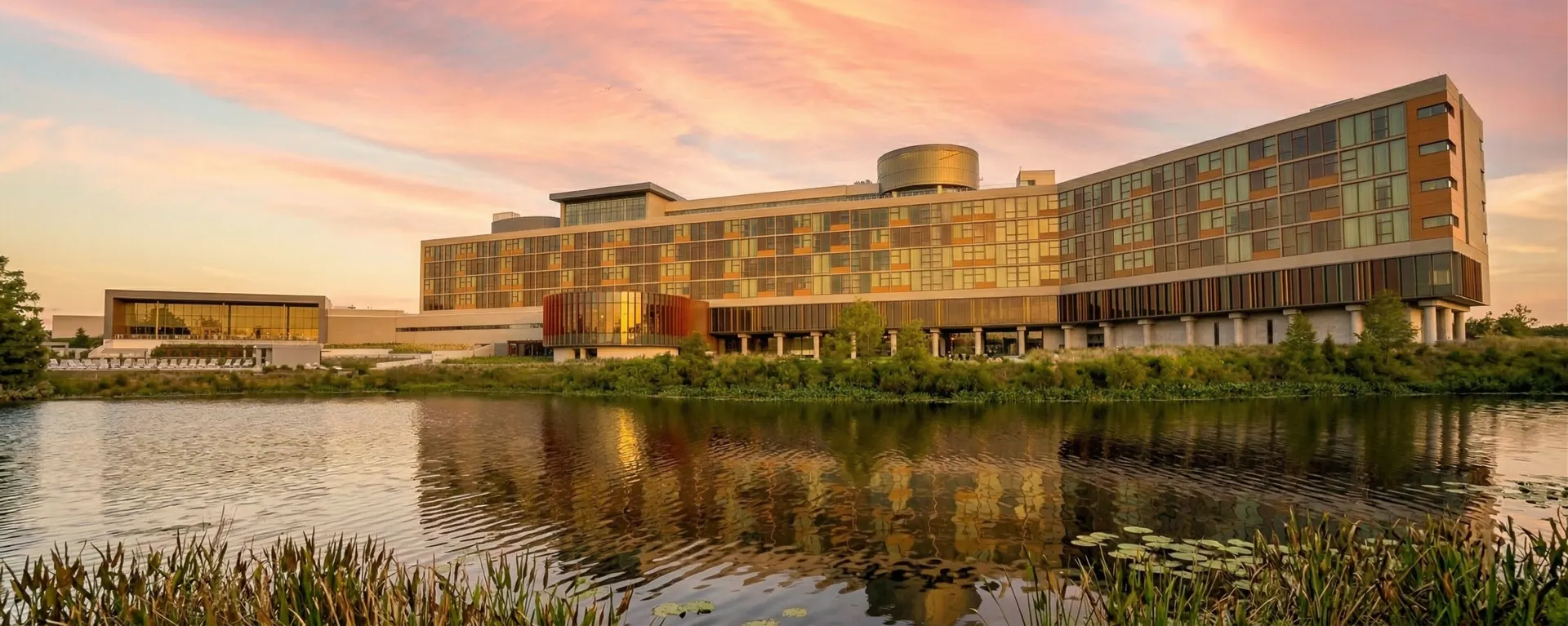
The round begins with a hike. Players climb 50 to 60 feet up a massive sand dune from the staging area to reach the first tee, the highest point on the property. The panoramic view from the summit takes in the full scope of the resort: the modernist clubhouse, the sprawl of the Red course, the lakes and ridgelines stretching toward every horizon. It is an extraordinary way to start a golf round, and it is not an accident.
The 1st (par 4, 330 yards from the Silver tees) plays downhill from that perch, a driveable half-par designed to ease players into the round with a question rather than a punishment. The wide landing area invites a driver, but the green hides behind offset bunkers, and the pitch from short of the putting surface is steeply uphill to a blind target. Players who drive close feel clever. Players who then three-putt the heavily contoured green feel something else entirely. Doak’s thesis is established before the second tee: the fairways are forgiving, and the greens are not.
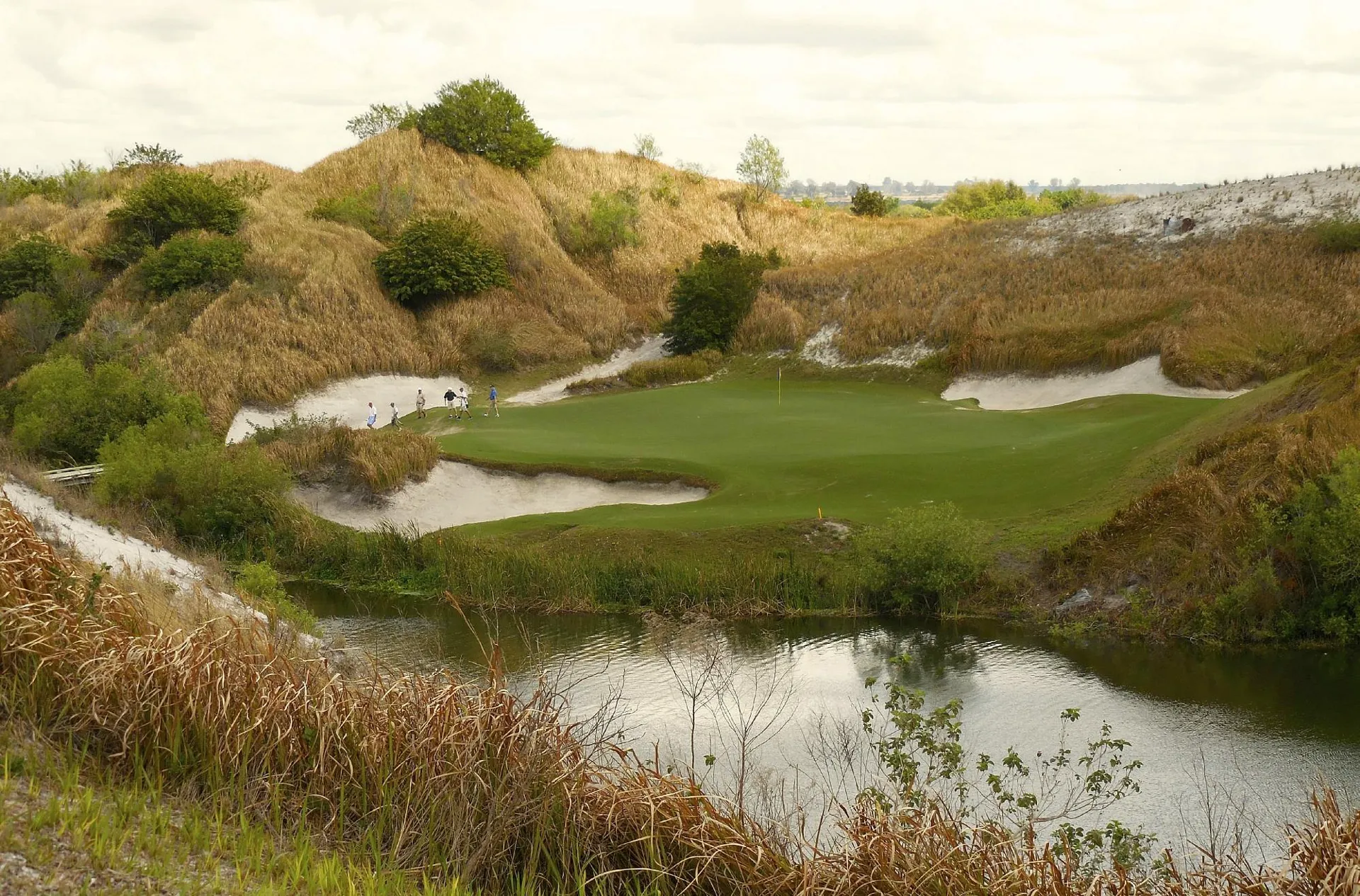
The 7th (par 3, 176 yards from the Silver tees) is the course’s signature and its most visually arresting moment. It plays steeply downhill over a deep, water-filled hazard to a green nestled in a valley of sand dunes. The tee perches on an exposed ridge; a wooden bridge spans the water below, framed by native grasses and towering dunes. Bunkers guard front-left and wrap to the back-right. The wind swirls in the depression. Most players, distracted by the elevation drop and the scenic drama, choose too much club or too little and find sand or water. The right play is one or two clubs less than the yardage suggests, aimed at the center of the green, ignoring any pin tucked on the treacherous back shelf.
The 18th (par 4, 439 yards from the Silver tees) closes the round with a demanding uphill approach back toward the clubhouse. The right side of the fairway shortens the hole but introduces a massive waste area. The green slopes severely left to right; approaches from the wrong angle roll off the putting surface into collection areas. Good players challenge the right-side bunkers off the tee to secure the optimal angle, then use the ground contours to feed their approach onto the green. Everyone else bails left and watches their ball trickle away.
Between the signature moments, Doak’s design reveals a consistent philosophy: generous width off the tee, then genuinely punishing green complexes. The course plays 7,276 yards from the Green tees (slope 134, rating 74.0) and a more approachable 6,285 from the Silver tees that most resort guests choose. The greens are massive, heavily contoured, and divided into distinct tiers, shelves, and false fronts. Landing on the wrong tier guarantees a three-putt. Straight putts essentially do not exist. The fairways are the invitation. The greens are where the course collects.
The turf is Bermuda, firm and fast, promoting a ground game that most Florida courses actively discourage. Wind blows consistently across the treeless terrain, particularly in the afternoon, transforming manageable par-4s into genuine tests of nerve. Morning rounds often play calm; by afternoon, the same holes play two clubs different. The routing never returns to the clubhouse at the turn, instead wandering deeper into the property’s interior before the triumphant climb back on 18.
Walking this course is physical. The elevation changes, the scale of the dunes, and the psychological toll of the greens can stretch rounds past five hours. The difficulty is genuine but fair: mid-to-high handicappers will rarely lose a ball off the generous fairways, but they will lose their patience on putting surfaces that reject imprecision with absolute efficiency.
Planning the Trip
Green fees vary by season and guest status.
| Item | Cost |
|---|---|
| Resort guest green fee (peak, mid-Jan–Apr & Oct–mid-Dec) | $375 |
| Day guest green fee (peak) | $425 |
| Resort guest green fee (summer, late Jun–mid-Sep) | $150 |
| Day guest green fee (summer) | $200 |
| Cart fee (Mar–Dec 23 only, per person) | $35 |
| Walking caddie, double bag (before tip) | $100 per player |
| Walking caddie, single bag (before tip) | $120 per player |
| Group forecaddie, cart riders (before tip) | $45 per player |
| Club rental (Callaway or TaylorMade, per day) | $100 |
Caddies are the right call here. Walking is strongly encouraged year-round and mandatory from late December through February, when the course goes walking-only. During cart-eligible months (March through December 23), any player riding must hire a group forecaddie. Caddie fees are paid directly in cash, with gratuity expected on top of the base rate. Request caddie assignment in advance through the resort’s caddie services department; the resort will match players with a caddie for the duration of a multi-round stay.
Booking strategy matters. Day guests can book exactly 30 days in advance. Resort guests secure tee times when they book their room, which means prime morning slots disappear months ahead of arrival. The isolation of the resort makes off-site lodging impractical (the nearest budget hotel is 20 miles away), and resort guests get the only guaranteed access to early tee times before the afternoon wind picks up. Book a stay-and-play package. It is not optional in practice.
When to Go
| Window | Why |
|---|---|
| Jan–Apr ☀️ Prime | Firm turf, low humidity, ideal walking weather; course is walking only through February |
| May 🌤️ Good | Humidity builds and afternoon thunderstorms begin threatening late rounds |
| Jun–Sep 🌧️ Avoid | Oppressive heat, daily lightning storms, soft turf; resort closes Mon–Tue in Jul–Aug |
| Oct 🌤️ Good | Humidity breaks mid-month; solid shoulder-season value |
| Nov–Dec ☀️ Prime | Cool, dry conditions return; November is the driest month of the year |
Aeration schedules vary annually; confirm with the resort before booking peak-season visits.
Tampa International Airport (TPA) sits 57 miles northwest, roughly 75 minutes by car. Orlando International (MCO) is 86 miles northeast, about 1 hour 45 minutes. A rental car or pre-arranged private car service is essential. Rideshare apps will deliver players to Streamsong but cannot pick them up from the resort’s remote location; arrange departure transport through the concierge.
The resort is self-contained: Streamsong Red (Coore & Crenshaw) and Streamsong Black (Gil Hanse) share the property, both ranked among America’s best public courses. The Chain, a 19-hole walking-only short course by Coore & Crenshaw, is ideal for settling afternoon bets. A fifth course, Bone Valley (David McLay Kidd), is under construction. On-site dining ranges from upscale Italian at SottoTerra to excellent oysters at Bone Valley Tavern to the Blue course’s turn stand, which serves street tacos that have earned their own following.
Why the Blue Marker Stuck
Tom Doak drew a routing in blue ink on a topographical map of land that nobody wanted. The phosphate was gone. The terrain was scarred. The location was an hour from the nearest city, surrounded by cattle ranches and citrus groves. Nothing about the proposition made obvious sense.
The course that emerged from those blue lines now hosts USGA championships, ranks among the 30 best public courses in the country, and anchors a resort that fundamentally changed what Florida means to serious golfers. Doak didn’t build a Florida course. He built a course that happens to be in Florida, on terrain that happens to have been shaped by industrial mining, in a place that happens to be exactly nowhere.
The blue marker stuck because the golf earned it.