Florida golf means cart paths, palm trees, and water hazards designed to swallow rental clubs. Streamsong Black has none of these things. What it has is 300 acres of reclaimed phosphate mine, greens exceeding 20,000 square feet, and an architect who considers the most polarizing course he’s ever built to be a point of personal pride.
Gil Hanse and Jim Wagner opened the Black Course in 2017, the third layout at Streamsong Resort in Bowling Green. Ranked 33rd among America’s best public courses by Golf Digest, Black shares its phosphate-mine origins with siblings Red (Coore & Crenshaw) and Blue (Tom Doak) but shares almost nothing of their temperament. Where Red rewards precision and Blue demands elevation management, Black operates at a scale that borders on geological. The fairways are oceans of Celebration Bermudagrass. The greens are continents of MiniVerde. Rough does not exist.
“It’s either number one or three,” Hanse has said of how golfers rank Streamsong’s trio. “Never number two.” He designed a course that demands a verdict, and the verdicts have been arriving at full volume ever since. The USGA validated the architecture by hosting U.S. Open Sectional Qualifying on Black in 2019, where Callum Tarren shot a course-record 64 to earn medalist honors, then drove nine hours through the night to a Web.com Tour event in South Carolina, collecting a speeding ticket from Georgia police en route. The course had already given everything it had. Tarren kept going anyway.
A Six-Mile Argument with the Ground Game
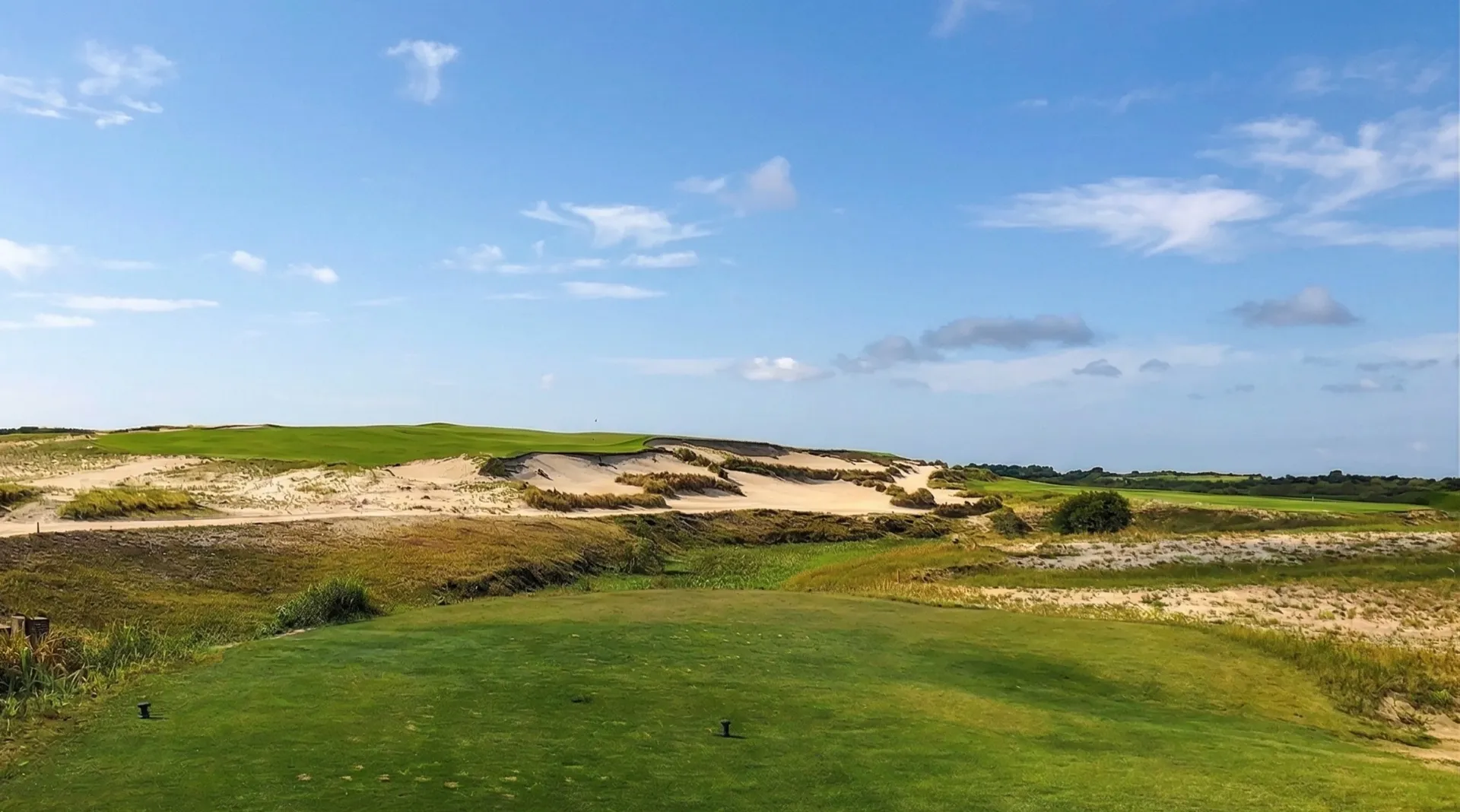
Streamsong Black’s defining architectural move is visible from the first fairway: there is no boundary between fairway and green. The MiniVerde Bermudagrass of the putting surfaces extends seamlessly into surrounding chipping areas and collection zones, eliminating the collars and visual borders that define green edges on virtually every other course in America. Players putt from 20 yards off the surface. Texas wedges become essential equipment. The aerial, spin-dependent target golf that dominates American course design is not merely discouraged here; it is systematically punished.
The course stretches 7,320 yards from the championship Green tees (rating 74.7, slope 135), though most visitors play the Silver tees at 6,226 yards, where the strategic geometry remains fully intact. Set on a massive, treeless tract, Black is exposed to wind that reshapes the playing character of the firm fairways throughout the day as Florida’s thermal currents build. The routing shifts personality at the turn. The front nine unfolds as a slow, continuous roll across open terrain with severe elevation changes and fairway corridors wide enough to land small aircraft. The back nine, which Hanse calls “The Glove,” tightens into sharper, more intimate dunesland: a double green on the 13th that requires checking which putting surface is in play, a drivable par 4 on the 14th with a volcanic green that repels everything except the perfectly weighted approach, and a tiny par 3 at the 15th inspired by C.B. Macdonald’s “Short” template, where a ridge bisects the wide green into two sloping halves.
The 4th (par 5, 550 yards from the Silver tees) presents the round’s first major strategic reckoning. A central hazard splits the fairway into two distinct paths. The higher left fairway demands a 300-yard carry from the back tees but delivers a flat, direct approach into the green. The lower right fairway offers a generous landing area but leaves a blind, uphill second shot over a waste area to an elevated putting surface. The hole separates the brave from the sensible, and both groups arrive at the green convinced they chose wrong.
The 9th (par 4, 360 yards from the Silver tees) culminates in the course’s most discussed architectural feature: a massive punchbowl green entirely invisible from the fairway. The approach is blind. On the tee, players consult a sign equipped with a movable magnet indicating which quadrant holds the day’s pin position. The iconic Streamsong windmill serves as backdrop and aiming point. After launching the approach over a ridge, the player walks up the hill to discover where the gathering slopes have delivered the ball. The contours do most of the work, funneling well-aimed shots toward the flagstick and sending careless ones on 80-foot detours across the bowl.
The 18th (par 5, 495 yards from the Silver tees) closes the round with one of Florida’s finest finishing holes. A blind tee shot gives way to a panoramic downhill descent as the fairway sweeps left, then wraps around a lake on the right. Roughly 175 yards from the green, the right side drops into a valley of water and sand, guarded by fifty bunkers that look more like a geological event than a design feature. Three precise shots produce birdie. Any miscalculation toward the water produces numbers that ruin scorecards and dinner conversation alike.
The greens are the course’s defining glory and its most honest drawback. Surreal contours, steep false fronts, and massive tiers mean that hitting a green in regulation and three-putting is a design feature, not a misfortune. Speeds are kept deliberately moderate; at tour pace, multiple holes would become unplayable. Hanse has compared the greens to faces in a portrait, quoting C.B. Macdonald, and the analogy holds: these putting surfaces are the course’s identity, the feature that draws both admiration and contempt in equal measure. First-time visitors will three-putt frequently. Whether that frustration converts to fascination determines which side of the argument a golfer ultimately occupies.
The course also demands physical respect. The routing covers six miles on foot with no shade and no shelter from wind that averages 8 to 9 mph during winter months. Walking is mandatory from Christmas Day through the end of February to protect dormant Bermuda. Outside that window, carts are available but require a group caddie. Bring water, sunscreen, and the willingness to earn every par.
Planning the Trip
| Item | Cost |
|---|---|
| Green fee, peak season (Jan 15–Apr 30 / Oct 1–Dec 14) | $375 (resort) / $425 (day guest) |
| Green fee, summer (Jun 26–Sep 14) | $150 (resort) / $200 (day guest) |
| Caddie, single bag (before tip) | $120 |
| Caddie, double bag (before tip, per player) | $100 |
| Group caddie, per player (required with cart) | $45 |
| Cart fee (outside walking-only window) | $35 |
| Pull cart (rickshaw style) | $16 |
Caddies are not mandatory on Black outside the walking window, but they are worth every dollar for first-time visitors. On greens this large and this contoured, local knowledge prevents the kind of four-putts that turn fascination into resentment. Budget $50–$60 per bag above the base fee for gratuity. Request caddies through the pro shop when booking tee times.
Day guests without a resort stay are limited to a 30-day booking window. Resort guests at the Lodge ($300–$600+ per night) or Cabins ($800+) receive priority access months in advance, making a stay-and-play package effectively mandatory during peak winter months. Singles have better odds of grabbing late cancellations. The resort’s online notification system flags openings as they appear.
When to Go
| Window | Why |
|---|---|
| Jan–Apr ☀️ Prime | Firm, fast conditions; cool mornings; walking mandatory through February |
| May ☀️ Good | Shoulder season; heat building but conditions still firm |
| Jun–Sep 🌧️ Avoid | Oppressive heat, daily thunderstorms, soft turf that strips the course of its strategic edge |
| Oct 🌤️ Good | Rain recedes; turf firming; shoulder pricing returns |
| Nov–Dec ☀️ Prime | Clear skies, comfortable temperatures; mandatory walking begins Christmas Day |
Tampa International Airport (TPA) and Orlando International Airport (MCO) are each roughly 90 minutes by car. A rental car is non-negotiable. Streamsong sits in the agricultural heartland of Polk County, where rideshare apps are unreliable and public transit does not exist.
The resort’s sibling courses make Black the centerpiece of a multi-day destination trip. Streamsong Red (Coore & Crenshaw) deploys steep dunes and deep bunkers in a precision-first test. Streamsong Blue (Tom Doak) features dramatic elevation changes and pins tucked behind false fronts. The Chain, a 19-hole short course by Coore and Crenshaw, makes an ideal warm-up or cool-down loop. A fifth course, Bone Valley by David McLay Kidd, is expected to open in 2027; with it, Streamsong becomes the only resort in the world with side-by-side layouts from Doak, Coore & Crenshaw, Hanse, and McLay Kidd.
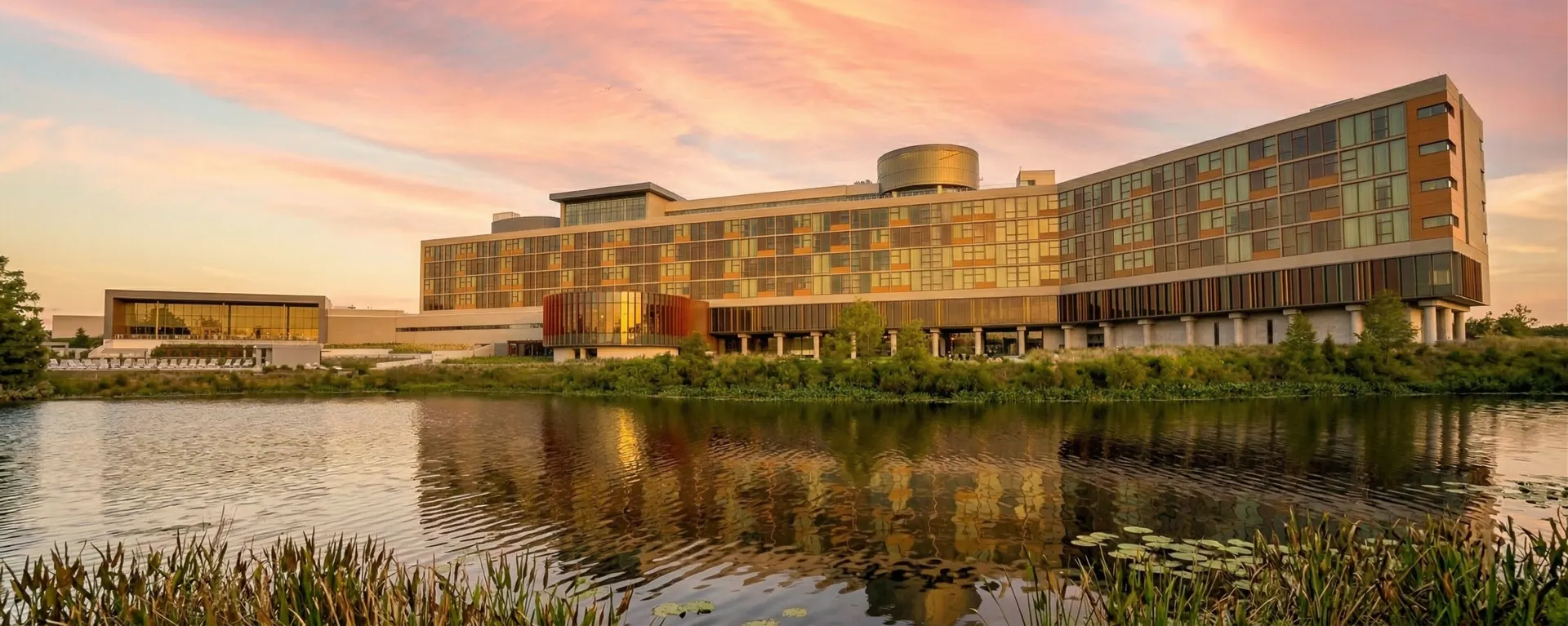
Bone Valley Tavern in the Black Course clubhouse serves the best tuna nachos in Central Florida alongside panoramic views of the course. The Tin Can at the turn serves lobster rolls, shrimp rolls, and Florida-inspired specialties. SottoTerra at the Lodge handles fine-dining Italian for the night before a big round. Rooftop 360 occupies the top of the Lodge for sunset drinks overlooking 16,000 acres of reclaimed mining land that turned out to be worth far more than the phosphate underneath it.
Why Nobody’s Neutral
Gil Hanse did not build a consensus course. He built a course that makes consensus impossible. The greens are too large to ignore, too contoured to dismiss, and too inventive to forget. Players who crave precision find the punchbowls and volcano greens maddeningly unpredictable. Players who embrace imagination find strategic depth that rivals anything in American public golf.
That polarization is the point. Most great courses aim for admiration. Hanse aimed for a reaction, and the Black Course delivers one by the 3rd green. Whether that reaction is love or exasperation depends entirely on whether the golfer can surrender the aerial game and trust the ground. The ground at Streamsong Black has been making its own arguments since 2017. It shows no signs of backing down.