For twenty-eight years, Poppy Hills Golf Course had a nickname, and it wasn’t a kind one. “Sloppy Hills,” the pros called it during its run in the AT&T Pebble Beach Pro-Am rotation: a course so waterlogged by Monterey winters that mud was as much a hazard as any bunker. Paul Azinger, after grinding through a third-round 73 during the course’s 1991 debut, told reporters the best hole on the property was the 19th. He wasn’t entirely wrong.
Then Robert Trent Jones Jr. did something architects almost never do: he demolished his own work.
The 2014 renovation, a $13 million, thirteen-month overhaul with design partner Bruce Charlton, didn’t tweak Poppy Hills. It reinvented it. Jones buried the clay under five inches of sand, ripped out every blade of rough, replaced it with pine-straw waste areas and hardpan forest floor, rebuilt the greens in bentgrass, reversed the 11th hole entirely, straightened the 12th to reveal ocean views, and dropped the par from 72 to 71. What emerged was a course that plays more like Pinehurst than Pebble Beach: firm, fast, and merciless to anyone who can’t control trajectory.
Owned and operated by the Northern California Golf Association since 1986, Poppy Hills holds a unique distinction as the first course in the United States built, owned, and operated by an amateur golf association. It sits inside the Del Monte Forest, accessed through the 17-Mile Drive gates, and co-hosts the PURE Insurance Championship on the PGA Tour Champions. The green fee runs $350 for non-members, roughly half the price of Pebble Beach down the road.
Eighteen Holes Without a Blade of Rough
The first thing players notice at Poppy Hills isn’t what’s there. It’s what’s missing. There is no rough. Anywhere. Lush fairway bleeds directly into brown dirt, pine needles, and sandy waste areas. A missed fairway means the ball sits on hardpan or pine straw, demanding a clean strike from a tight lie rather than a hack from thick grass.
The greens compound the challenge. Large, glassy, and heavily contoured with steep false fronts, they reject shallow approach shots into collection areas that can turn a confident wedge into a scrambling bogey. Players who can work the ball along the ground, using kicker slopes and banking angles to feed approaches toward pins, thrive here. Those who rely exclusively on aerial attack will spend the afternoon chipping from collection areas they didn’t know existed.
The routing moves through three loops inside the Del Monte Forest. The front nine winds deep into the pines, claustrophobic and quiet, with a forced carry over a river gorge at the 2nd (165 yards from the Blue tees) and elevation shifts that keep the walk engaging. The middle stretch opens up at the 12th, a 390-yard par 4 where the renovation straightened a severe dogleg and rewarded accurate drivers with a panoramic view of Monterey Bay and the Santa Cruz Mountains. Then the trees close in again for the final push home.
The 11th hole captures the renovation’s philosophy in miniature. Originally the course’s longest par 3, Jones reversed it entirely, turning it into the shortest: 132 yards from the Blue tees, a drop shot to a green squeezed between a towering Gowen cypress and a ravine that swallows anything short. The margin for error is measured in feet. Club selection is simple; executing is not.
The 18th provides the finish the routing earns. A 479-yard par 5 from the Blue tees, it offers longer hitters a legitimate shot at the green in two, but the approach demands a carry over a creek and sandy waste area fronting the putting surface. A hillside right of the green funnels bail-out shots down toward the pin — a design choice that rewards course knowledge over brute force.
Planning the Trip
| Item | Cost |
|---|---|
| Green fee (non-NCGA) | $350 |
| NCGA member green fee | $95–$125 |
| Cart fee | $25 per rider (cart-path only) |
| Caddie (single bag) | $155 + gratuity |
| Forecaddie (foursome) | $210 + gratuity |
| Club rental | $115 |
Non-members can book tee times up to 90 days in advance online or by phone. Guests staying at Pebble Beach Resorts can book further out through stay-and-play packages. The smartest move for anyone planning a Monterey Peninsula trip: join the NCGA. Membership costs less than the savings on a single round, and it unlocks priority booking plus a green fee that drops to roughly $100.
Morning tee times are essential. The course is public, the tee sheet fills quickly, and rounds can stretch past five hours on busy days. Early starts also mean smoother greens and calmer air before the afternoon breeze picks up above the tree line.
Where to Stay
| Property | Rate (per night) | Notes |
|---|---|---|
| The Lodge at Pebble Beach | $1,000+ | Five-star luxury, 5 min from Poppy Hills |
| Hyatt Regency Monterey | $300+ | Off-resort option with stay-and-play packages |
| Carmel Village Inn | $200+ | Budget-friendly base in downtown Carmel |
When to Go
| Window | Why |
|---|---|
| Jan–Feb 🌧️ Avoid | Heavy winter rains, limited daylight, soft turf |
| Mar–Apr 🌤️ Good | Weather clears, recovering greens, afternoon winds |
| May–Jun ☁️ Good | Marine fog holds mornings; cooler than inland |
| Jul–Aug ☁️ Good | Fog persists but no rain; excellent turf conditions |
| Sep–Oct ☀️ Prime | Warm, clear, firm conditions; no marine layer |
| Nov 🌤️ Good | Shoulder rates, cooling temps, occasional rain |
| Dec 🌧️ Avoid | Short days, cold winds, returning seasonal rains |
Aeration windows typically fall in early March and mid-August. Avoid these weeks if firm, fast greens are the priority.
Getting There
Monterey Regional Airport (MRY) is a 15-minute drive. San Jose (SJC) is 90 minutes; San Francisco (SFO) is two hours. A rental car is essential for the peninsula. The course sits inside the 17-Mile Drive gates; the standard gate fee is waived with a confirmed tee time.
What Else to Play
This is the Monterey Peninsula, and the density of quality golf within a ten-minute drive is unmatched in American public golf. Pebble Beach Golf Links ($695) and Spyglass Hill ($550) are both five minutes away. The Links at Spanish Bay (closed for renovation through spring 2027), another RTJ Jr. design, sits ten minutes north. For a budget round with genuine ocean views, Pacific Grove Golf Links ($80+) delivers one of the best back nines on the California coast.
Why the Pine Straw Is the Point
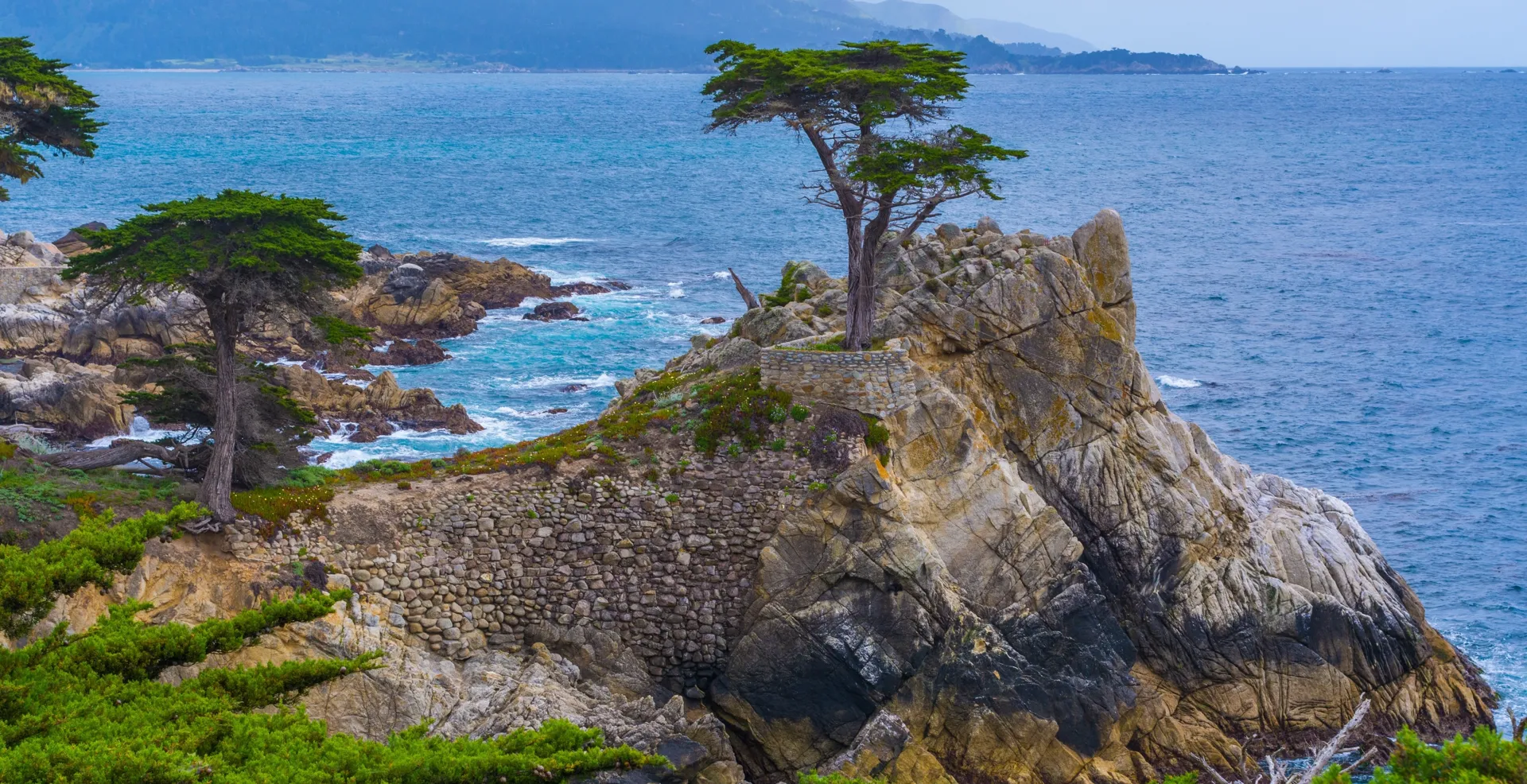
Poppy Hills will never have the cliffside drama of its famous neighbor. No waves crash against its greens. No photographers line up at sunset to capture the approach shot. What the 2014 renovation gave it is something harder to manufacture: an identity.
A course that once blurred into the peninsula’s background now stands apart from it — an inland forest test built on firmness and strategy in a zip code famous for ocean spectacle. The walk is quiet. The turf is honest. The greens ask questions that length alone cannot answer. Poppy Hills spent its first three decades trying to be something it wasn’t. The renovation finally let it become what it is.