Bobby Jones played both Pebble Beach and Cypress Point in 1929, ahead of the U.S. Amateur. His verdict was concise and consequential: “Pebble Beach is more difficult, but Cypress Point is more fun.” That assessment carried enough weight to convince Jones to hire Alister MacKenzie for Augusta National.
MacKenzie and his associate Robert Hunter had completed Cypress Point Club a year earlier, in 1928, on a stretch of the Monterey Peninsula that offered something no other property in golf could match: three distinct landscapes compressed into a single routing. The opening five holes thread through the fragrant Del Monte pine forest. Holes six through thirteen explode into wild, undulating sand dunes. Then the course reaches the Pacific, and holes fifteen through seventeen deliver the most visually devastating stretch in the sport.
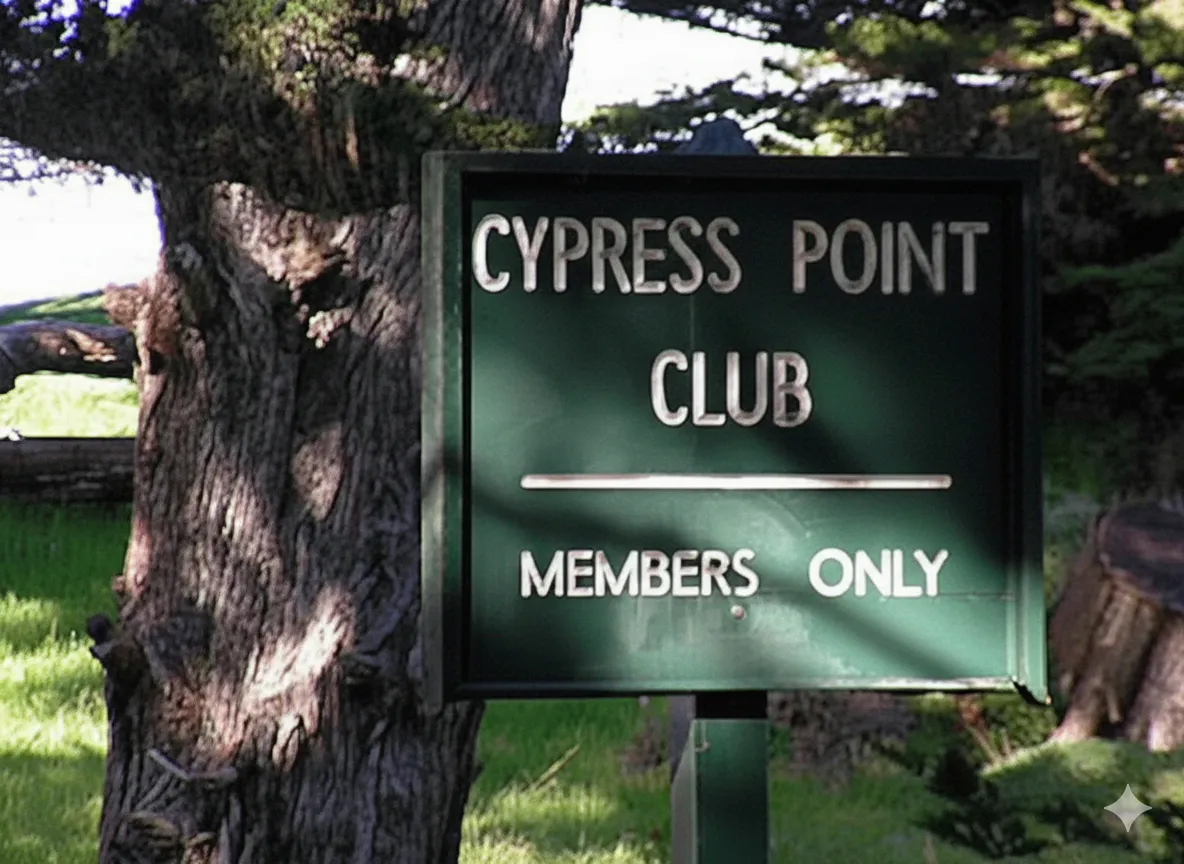
Ranked among the top three courses in America and the top five in the world, Cypress Point operates with roughly 250 members, no website, no published phone number, and no apparent interest in being found. The club co-hosted the Bing Crosby National Pro-Am from 1947 until 1990, then left the rotation after the 1990 event. Host of the 1981 and 2025 Walker Cups, the course has otherwise removed itself from competitive golf’s public stage.
The exclusivity is not the point. The point is the sequencing: a round that builds like a three-act play, each landscape distinct in character and challenge, the Pacific reveal arriving precisely when MacKenzie intended the pulse to quicken. The course measures just 6,524 yards from the Blue tees. It doesn’t need length. The land itself is the weapon.
Where the Forest Meets the Sea
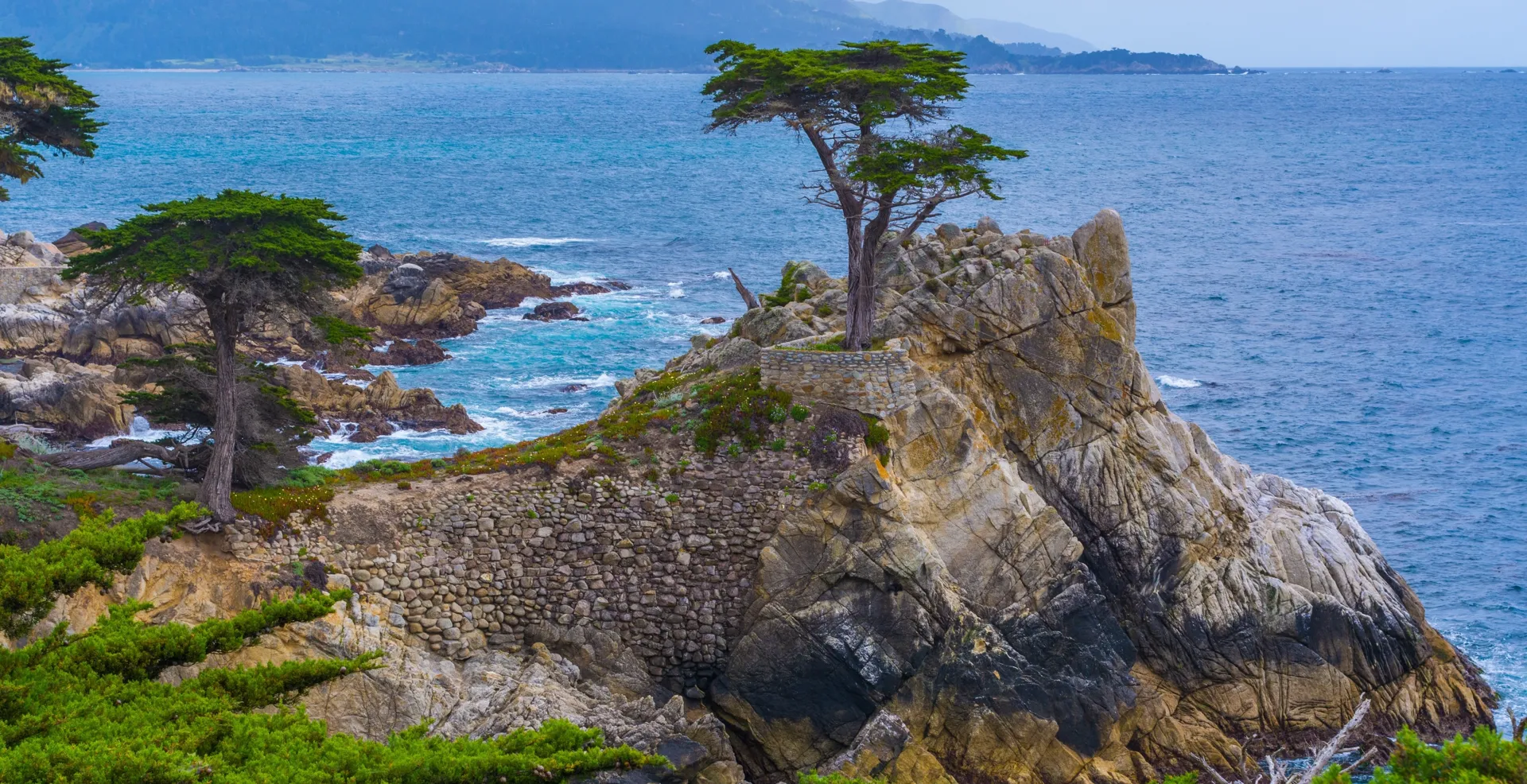
The genius of Cypress Point lives in the transitions. The forest holes (1–5) are claustrophobic and strategic, lined with Del Monte pines that lean inland as if retreating from the wind. The dune holes (6–13) open into vast, tumbling sandscapes where the ground game replaces precision and creativity is rewarded. Then, after crossing 17-Mile Drive, the course reaches the Pacific cliffs for three holes that redefine the relationship between golf and landscape.
The dune section carries its own distinct rhythm. Between holes six and thirteen, the terrain rolls through sandy ridges and native scrub, rewarding bump-and-run approaches, low punch shots under the wind, and angles manufactured rather than prescribed. Blind tee shots on eight and nine demand local knowledge. By the time the routing reaches the 14th, the last inland hole, it has taught three different kinds of golf without the Pacific ever coming into view.
MacKenzie broke conventions that most architects still follow. Back-to-back par 5s on five and six. Back-to-back short par 4s on eight and nine, the latter a drivable 292 yards from the Blue tees that tempts and destroys in equal measure. And back-to-back par 3s on fifteen and sixteen, a pairing so audacious it would get a modern architect dismissed from the project. The greens average just 4,500 square feet (roughly half the size of modern tournament greens), and the Poa annua putting surfaces roll fast and true in the morning but turn bumpy by afternoon. Every design choice serves the same principle: the course asks for imagination, not power.
The 15th hole (par 3, 135 yards from the Blue tees) is a short pitch over a rocky Pacific inlet that delivers the course’s most dramatic transition. Emerging from the inland routing, players cross 17-Mile Drive and encounter the open ocean for the first time. The tee is elevated, looking down at a small, heavily contoured green framed by the vastness of the Pacific. The yardage suggests a simple wedge. The swirling ocean wind, the crashing surf, and the sudden sensory overload suggest otherwise. Short or right means coastal rock and ruin. The hole exists partly as a test and partly as a preamble: the next hole will be worse.
The 16th hole (par 3, 233 yards from the Blue tees) is the most famous par 3 in golf, played directly over the churning Pacific. The tee box sits on one rocky outcropping; the green sits on another. Between them: nothing but violent swells, sea spray, jagged rock, and a barking seal colony that provides the only sympathetic audience for a misfire.
Two choices define the hole. The heroic line carries the full distance over the ocean to a peninsula green that accepts a well-struck long iron or fairway wood. The safer line aims left to a narrow strip of fairway, leaving an awkward pitch to a green that still has ocean on three sides. Most golfers choose the safer line and still struggle to make bogey.
Marion Hollins, the U.S. Women’s Amateur champion and developer who brought MacKenzie to the property, conceived this hole. When MacKenzie questioned whether the carry was feasible, Hollins teed up a ball and drove it across the water to prove the point. Bing Crosby later aced the hole, one of only a handful of holes-in-one recorded here before modern equipment.
The 17th hole (par 4, 386 yards from the Blue tees) is a Cape-style dogleg right along the ocean cliffs. A cluster of cypress trees sits precisely in the center of the fairway, forcing a decision off the tee. The safe line left leaves the approach long and blind, over the trees. The aggressive line right, flirting with the cliff edge, rewards with a short pitch to the green.
From the elevated tee, the fairway looks impossibly narrow, pinched by ocean on the right and dunes on the left. The risk-reward calculus produces eagles and disasters in equal measure, and the hole is, by some accounts, harder than the 233-yard ocean carry that precedes it.
Jimmy Demaret famously called Cypress Point “the best 17-hole course in the world,” a dry acknowledgment that the uphill, blind 18th (343 yards from the Blue tees, back toward the clubhouse) cannot match the drama of what comes before it. He had a point. The course peaks at seventeen and knows it.
Planning the Trip
Cypress Point does not accept inquiries. There is no tee sheet available to the public, no reservation system, no concierge to call. Play is strictly by invitation from one of the approximately 250 members, and even member guests operate under strict protocols.
Access and Costs
| Item | Cost | Notes |
|---|---|---|
| Green fee (hosted guest) | $0 | Host member covers all fees for accompanied guests |
| Green fee (unaccompanied) | ~$350 | Monday–Friday, 7:30–8:30 AM only; requires member sponsorship |
| Caddie (per bag) | ~$200 | Mandatory for all players; no yardage markers on course |
| Caddie gratuity | $175–$200+ | Cash, paid directly to caddie |
| Cart | N/A | Walking only; no exceptions |
The course plays 6,524 yards from the Blue tees (slope 141, rating 73.1), though Blue tees are reserved for single-digit handicaps. Most guests play from the White tees at 6,294 yards (slope 136, rating 71.3), which is still enough golf course to expose every weakness in a game.
Unaccompanied guests are limited to 18 holes, cannot use the driving range, and are forbidden from the main clubhouse dining room. Cell phones are prohibited outside the parking lot. Rangefinders are banned. These are not suggestions.
A caddie is the only way to navigate a course with no distance markers and greens that read differently depending on the time of day. A good Cypress Point caddie reads the wind transitions between forest and coast, knows which greenside misses are survivable, and understands that the difference between the right club and the wrong club on the 16th tee is the difference between a story and a swimming lesson.
When to Go
| Window | Why |
|---|---|
| Jan–Mar 🌧️ Good | Cooler temps and occasional Pacific storms, but minimal crowds and crisp conditions |
| Apr–May ☀️ Prime | Rain subsides, firm turf, clear skies before summer fog arrives |
| Jun–Aug ☁️ Good | Marine fog (“June Gloom” through “Fogust”) obscures ocean views until midday; pack layers |
| Sep–Oct ☀️ Prime | The best window: warm, clear, firm conditions with no marine layer |
| Nov–Dec 🌤️ Good | Cooling temps and increasing rain, but dramatic low-angle light through the dunes |
September and October deliver the ideal combination: temperatures in the upper 60s, fog-free mornings, and turf at its firmest.
What Else to Play Nearby
The Monterey Peninsula offers one of the densest concentrations of elite golf in the world, and unlike Cypress Point, most of it is accessible.
| Course | Green Fee | Access | Drive Time |
|---|---|---|---|
| Pebble Beach Golf Links | $695 | Resort | 5 min |
| Spyglass Hill | $550 | Resort | 5 min |
| The Links at Spanish Bay | $425 (closed for renovation through spring 2027) | Resort | 10 min |
| Pasatiempo Golf Club | $425 | Semi-private | 50 min |
| Monterey Peninsula CC (Shore/Dunes) | Invitation only | Private | 5 min |
Pebble Beach is the obvious companion round, sharing the same coastline and connected to Cypress Point through Bobby Jones and MacKenzie. Spyglass Hill starts in the dunes and finishes deep in the Del Monte Forest, essentially reversing Cypress Point’s routing. Pasatiempo, 50 minutes north in Santa Cruz, is MacKenzie’s other California masterpiece and one of the few places where his strategic philosophy can be experienced without a member invitation.
Getting There
Monterey Regional Airport (MRY) is a 15-minute drive and handles regional service from United, American, and Alaska Airlines. San Jose (SJC) is 90 minutes away; San Francisco (SFO) is two hours and better for international arrivals. Guests reach Cypress Point through the guarded gates of 17-Mile Drive; the entry fee is waived for those on the tee sheet.
Why the Impossible Round Still Matters
On January 10, 1956, Ben Hogan, Byron Nelson, Ken Venturi, and Harvie Ward played a private four-ball match at Cypress Point that became golf mythology. No cameras. No grandstands. Just four extraordinary players and a course that matched the occasion. The event endures because the setting was the story: a course so perfectly suited to the moment that it became a character, not a backdrop.
Cypress Point doesn’t have members. It has custodians. The course Bobby Jones played in 1929 is essentially the course that exists today; each generation has preserved what MacKenzie and Hunter laid across the pines, the dunes, and the cliffs. A plaque near the 17th tee captures the ethos: “Very few of us are privileged to pass this way.” The course does not need to be played to matter. It needs only to exist, reminding the game of what becomes possible when an architect has the wisdom to let the land speak.