Most courses on the Monterey Peninsula were built to attract tourists. Bayonet was built to punish soldiers.
In 1954, General Robert B. McClure, commanding officer at Fort Ord, decided the Army base needed a proper golf course. Rather than hire a professional architect, McClure drew up the routing himself with the help of local pro Robert “Boots” Widener. The general was a decorated veteran of three wars, a left-handed golfer cursed with an uncontrollable slice, and a man who evidently believed that if he couldn’t fix his swing, he could at least fix the course. So he did. The back nine bends relentlessly right, hole after hole shaped to accommodate a left-hander’s fade, creating a gauntlet that soldiers quickly named “Combat Corner.” The course itself was named for the 7th Infantry Division, the “Bayonet Division,” the first and last major unit stationed at Fort Ord.
A decade later, General Edwin Carnes and course superintendent Merle Russill added Black Horse, a second eighteen named for the 11th Cavalry Regiment. When the Army closed Fort Ord in 1994, the City of Seaside acquired both courses. Gene Bates’s $13 million renovation in 2008 ripped out the invasive Kikuyu grass, replaced it with wall-to-wall Jacklin T1 bentgrass, rebuilt every green and bunker, and opened ocean views that the overgrown trees had hidden for decades. What emerged was good enough to host the 2012 and 2018 PGA Professional Championships, validating a military relic as a legitimate championship venue, all of it open to the public at prices that would barely cover a sleeve of Pro V1s at Pebble Beach.
Combat Corner and the Corridors That Test You
Bayonet’s character lives in its corridors. Dense rows of cypress, oak, and pine press in from both sides, creating a claustrophobic march that rewards precision and punishes spray. The heavy, sea-level air restricts ball flight, so the course plays longer than the scorecard suggests. Gene Bates kept the greens relatively tame on purpose: the tee-to-green examination is demanding enough that severe putting surfaces would have rendered the place unplayable.
The front nine warms up with two reachable par 5s before the routing tightens. The 8th (par 5, 613 yards from the Black tees) is the longest hole on the course, a true three-shotter guarded by three staggered fairway bunkers that dictate lay-up yardage with surgical precision. The narrow, 40-yard-deep green accepts only well-calibrated approaches. It carries a top-five handicap ranking for good reason.
The 9th (par 4, 476 yards from the Black tees) was built entirely during the Bates renovation, an uphill dogleg right where transplanted cypress pinches the corner and a cluster of pristine white bunkers guards the approach. The green sits cut into the hillside, seemingly suspended against the sky. It ranked as the third most difficult hole during the 2012 PGA Professional Championship, averaging 4.465 strokes across four rounds.
Then the back nine arrives, and with it, the stretch that gives Bayonet its reputation.
The 11th (par 4, 387 yards from the Black tees) opens Combat Corner, a five-hole sequence where General McClure’s left-handed slice became permanent architecture. A suffocatingly narrow chute of mature oaks and cypress frames a sharp dogleg that punishes anyone who tries to overpower it. Smart players hit long irons off the tee, playing for position rather than distance. From here through the 15th, the routing bends right at every turn, the fairways narrow further, and the trees get closer. The 13th (par 4, 479 yards) is the statistical monster: during the 2012 championship, it yielded only thirteen sub-70 scores across four rounds, making it the single hardest hole in the field.
Black Horse offers a different examination. Where Bayonet isolates and intimidates, Black Horse opens up, running fescue-framed fairways toward sweeping Pacific views. Its greens are more contoured, its corridors wider, and its par-3 15th plays directly toward Monterey Bay. Bates gave it serrated-edged bunkering and a gentler routing that rewards shotmaking over sheer power. Playing both in a day is the way to experience the full range of what this property offers: the inland grind, then the coastal reward.
Planning the Trip
| Item | Cost |
|---|---|
| Green fee (dynamic pricing) | $50–$125 |
| Twilight rate (after 1:30 PM DST) | From $60 |
| Golf cart | $20–$25 per rider |
| 36-hole combo rate | Discounted (variable) |
| Junior rate (walking) | $50 |
Tee times open 120 days in advance, and rates fluctuate based on demand, time of day, and weather. Booking early and targeting weekday mornings locks in the best combination of price and pace. Twilight rates after 1:30 PM drop significantly, though finishing 18 holes in daylight requires brisk play during shorter months.
Walking is permitted and popular on both courses. The terrain is manageable, and push carts are available. There is no formal caddie program, though players in competitive amateur events may bring their own.
Where to Stay
| Property | Rate (per night) | Notes |
|---|---|---|
| Embassy Suites Monterey Bay | $200–$350 | Official partner hotel with stay-and-play packages; two blocks from the beach |
| Hyatt Regency Monterey | $250–$450 | Full-service resort adjacent to Del Monte Golf Course |
| Hotel Abrego | $150–$250 | Quiet boutique option in downtown Monterey |
When to Go
| Window | Why |
|---|---|
| Jan–Feb 🌧️ Avoid | Wettest months; heavy rain makes the course play brutally long |
| Mar–Apr 🌤️ Good | Clearing skies, wildflowers, and peak afternoon winds |
| May–Jul ☁️ Good | Summer fog burns off late; dry turf, comfortable temperatures |
| Aug ☀️ Prime | Sunniest skies of summer, but Monterey Car Week crowds the peninsula |
| Sep–Oct ☀️ Prime | The “Secret Season”: warmest, clearest weather; firm conditions; light winds |
| Nov–Dec 🌧️🌬️ Good | Crowds thin and rates drop, but cooling temps and returning rain lengthen the course |
Getting There
Monterey Regional Airport (MRY) is a 10-minute drive. San Jose (SJC) is 75 minutes; San Francisco (SFO) is two hours. A rental car is the most practical way to navigate the peninsula, though ride-sharing is readily available in Seaside. The course sits just north of the Del Monte Forest gates, making it an easy geographic anchor for a broader Monterey trip.
What Else to Play
The density of quality golf within fifteen minutes of Bayonet is staggering. Pebble Beach Golf Links ($695) and Spyglass Hill ($525) are both a short drive south. Poppy Hills ($175), another public option inside the Del Monte Forest, plays firm and fast through the pines. Pacific Grove Golf Links ($66+) delivers genuine ocean views at municipal pricing. For a full trip itinerary covering all the peninsula’s courses, lodging, and dining, the Monterey Peninsula destination guide maps out the complete picture.
Why the Army’s Course Is Worth the Detour
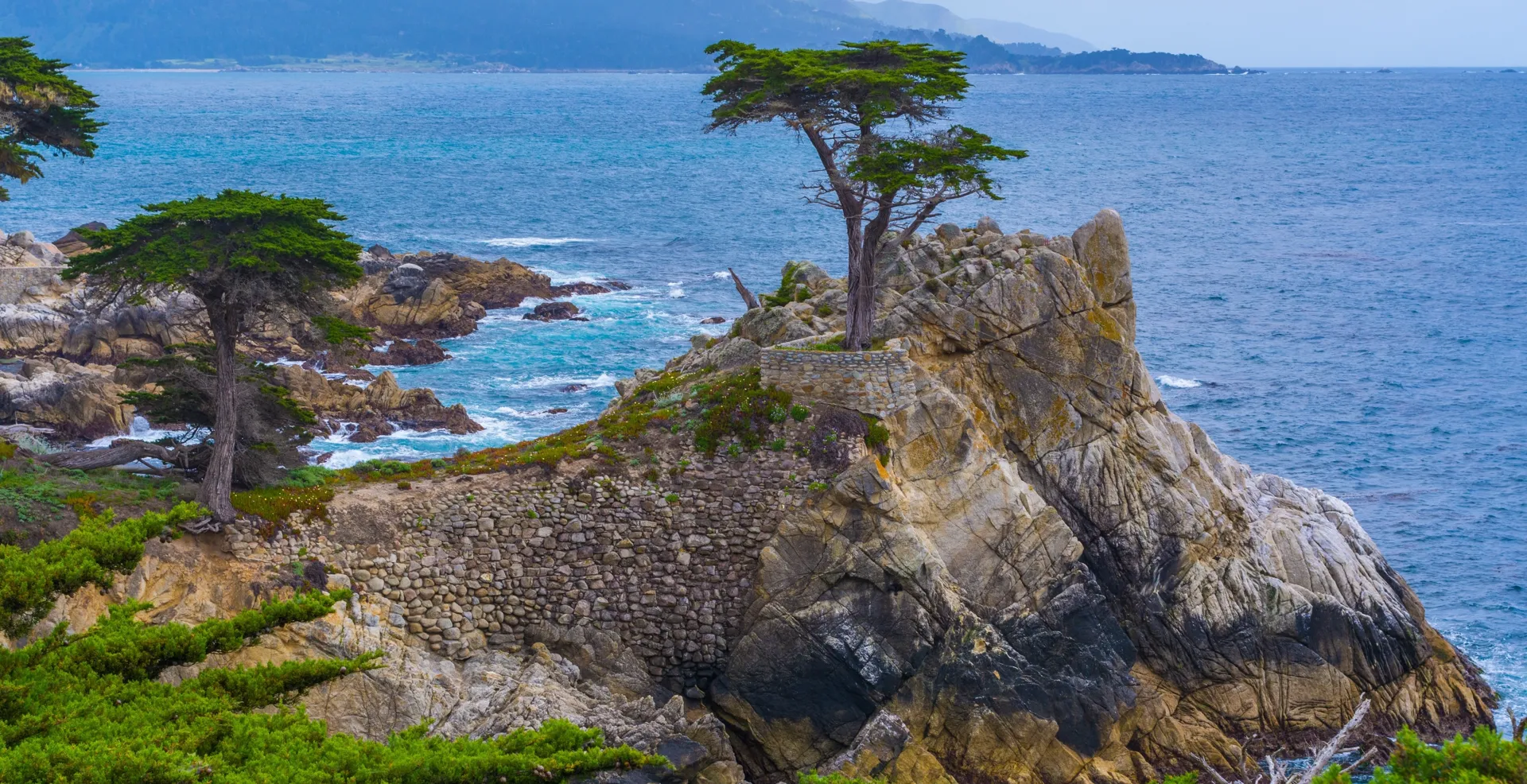
Bayonet will never compete with its neighbors on scenery. There are no crashing waves, no iconic cliffside par 3s, no sunset photo ops that sell calendars. What it offers instead is a test with a personality that no landscape architect could manufacture, one that grew out of a general’s stubborn slice and an Army base’s competitive culture. The corridors are tight. The pricing is honest. The 13th hole doesn’t care about your handicap.
Visitors come to the Monterey Peninsula for Pebble Beach. The ones who play Bayonet on the way tend to remember which course actually tested them.