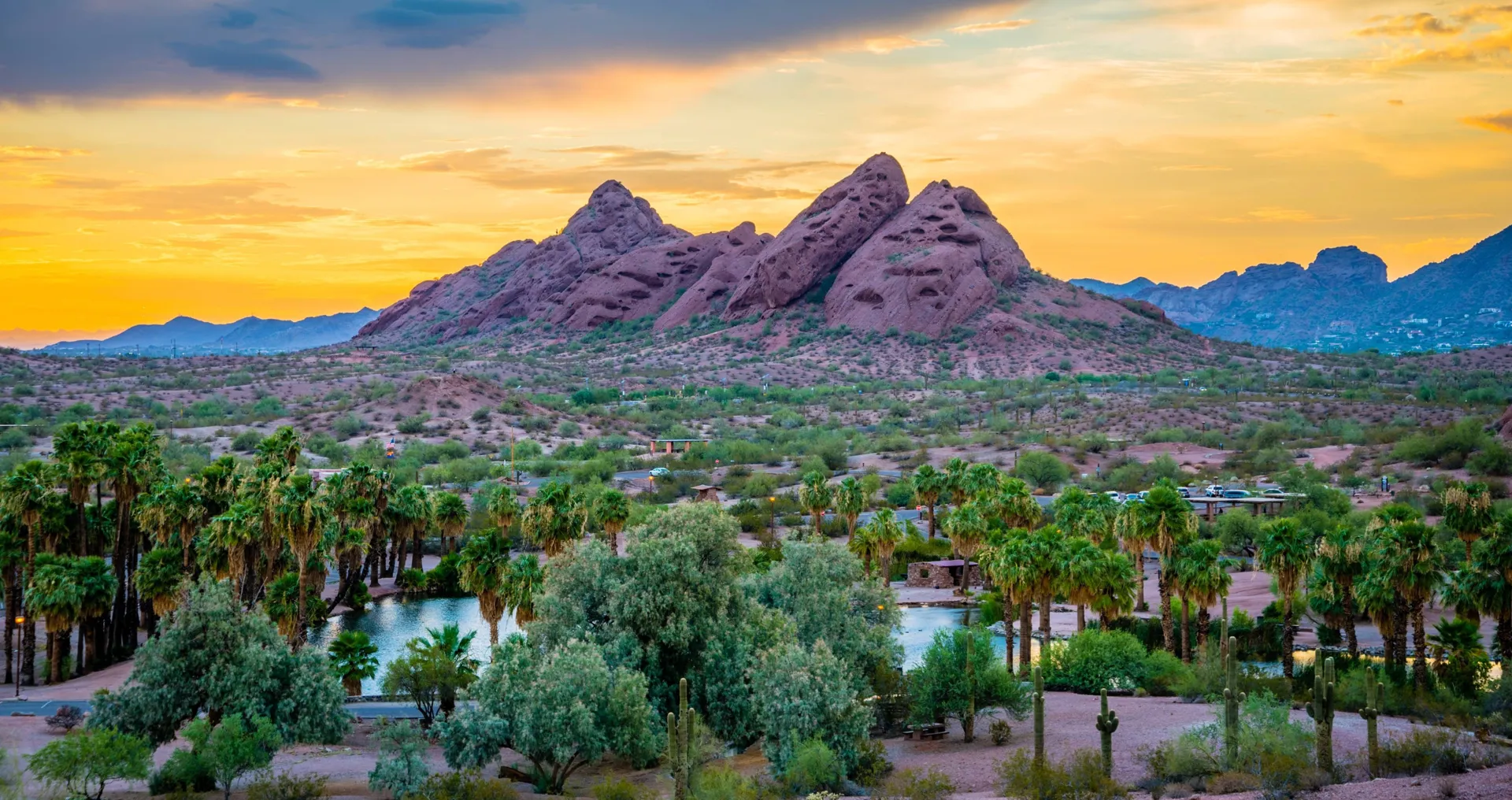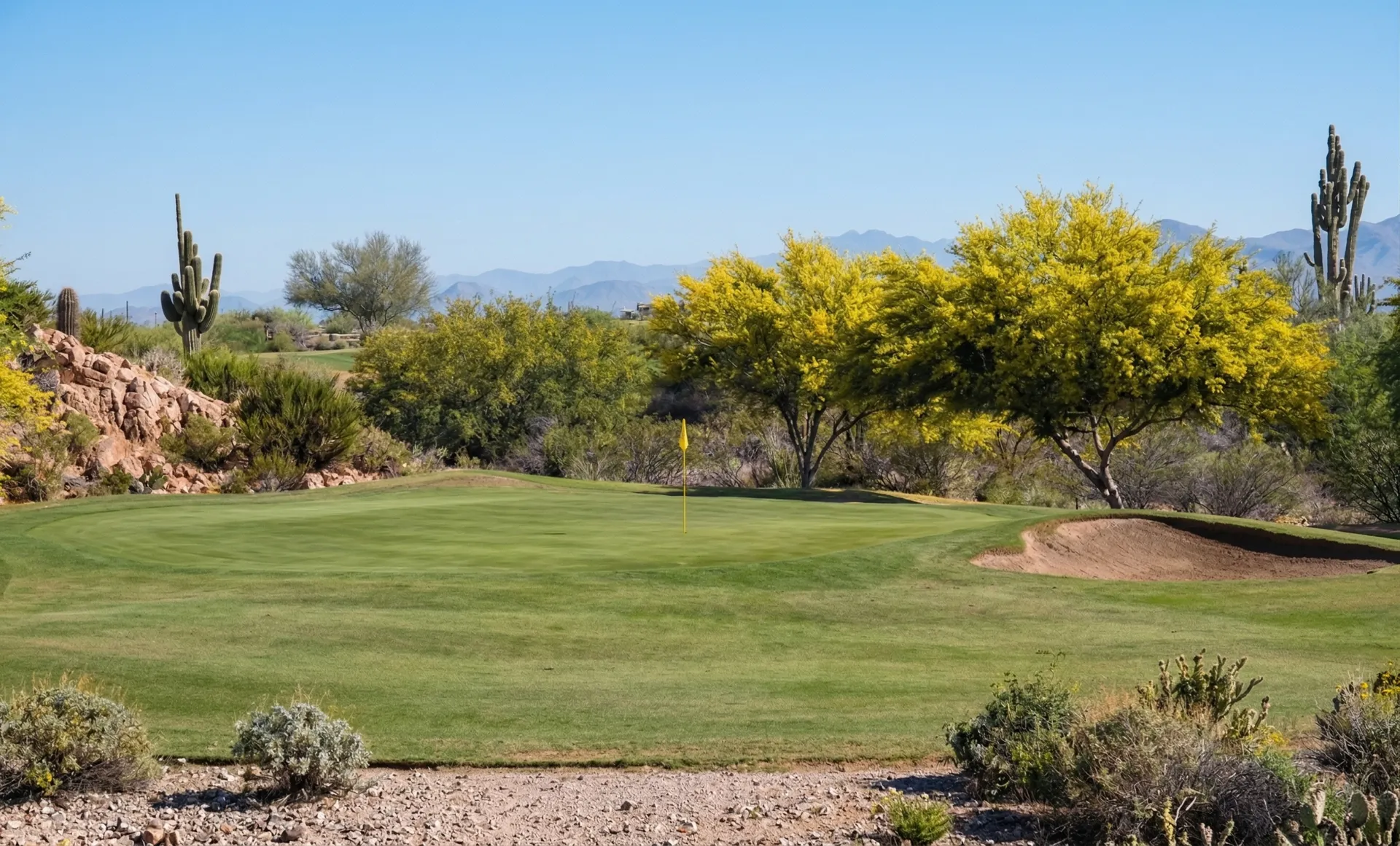
Something happened in the Sonoran Desert in 2006 that shouldn’t have worked. Bill Coore and Ben Crenshaw, architects who’d built their reputation on links-inspired courses where the ground does the talking, looked at 450 acres of tribal land northeast of Scottsdale and saw Scotland. Not the grass. Not the weather. The movement. The ancient, boney rolls of terrain that invited a golf ball to run, chase contours, and find trouble without ever being forced to fly.
They moved less than 30,000 cubic yards of earth. A typical modern resort course displaces millions. What opened on December 16, 2006, on the Fort McDowell Yavapai Nation reservation was a walking-friendly, housing-free, links-in-the-desert routing that broke every rule Arizona golf had written for itself. No cart paths snaking between luxury homes. No forced carries demanding aerial target precision. No real estate. Just a course that looked like it had been there for centuries, waiting for someone to put a flag in the ground.
Golfweek has named it the number-one public course in Arizona. Golf Magazine placed it 61st on its Top 100 You Can Play. A plaque at the first tee carries Ben Crenshaw’s fair warning: “This ol’ boney ground has some sting to it.”
The Holes That Earn the Reputation
The front nine eases through subtler terrain, wide fairways rolling over natural ridgelines with greens tucked into folds that reward observation over power. The back nine climbs into the desert foothills, and the personality sharpens. Elevation changes become dramatic. Tee shots go blind. Vistas of the McDowell Mountains open wide enough to make a golfer forget the scorecard, which is convenient, because the scorecard is about to take damage.
What defines Saguaro across all eighteen holes is the insistence on choice. Coore and Crenshaw give width off the tee but demand position. The fairways camber hard, draining toward native desert scrub, so a shot that finds the “wrong” side of a 70-yard-wide fairway can bounce into trouble that looks nothing like the generous landing zone it appeared to be from the tee. The TiffDwarf Bermuda greens carry serious internal contour, with false fronts and back-to-front slopes that reject careless approaches into deep collection areas. Staying below the hole is not a suggestion.
The 14th (par 5, 538 yards from the Saguaro tees) presents the most memorable strategic decision on the course. A rugged desert wash bisects the fairway into two distinct corridors: the right side is narrow but short, setting up a legitimate chance to reach the green in two; the left is wide and safe but longer, demanding an awkward uphill carry back over the wash on approach. From the tee, the rocky creek bed dividing the lush grass forces an immediate, anxiety-inducing commitment. Average players bail left and struggle with the subsequent layup. Skilled players challenge the right side and give themselves a shot at eagle. Both corridors make the golfer earn it.
The 15th (par 3, 255 yards from the Saguaro tees) is the most photographed hole on the property, and it deserves the attention. A massive downhill drop from tee to green creates the sensation of endless hang-time, with panoramic views of the entire valley stretching behind the putting surface. The green slopes severely right to left, and the front is open, allowing the smart play: land a controlled draw short and right, let gravity feed it toward the pin. Under-clubbing because of the elevation change is the standard mistake. Missing left into the deep collection areas is the standard result.
Afternoon thermal winds add a dimension the morning calm conceals. On holes like the par-4 12th (476 yards from the Saguaro tees, with a 180-yard forced carry to reach the fairway) and the par-4 13th (470 yards with a 70-yard-wide fairway that only rewards one side), the wind turns difficult holes into near-unreachable ones for players without distance. The bunkering throughout has an old-style character: raw, furrowed brows with wispy grasses hanging over the edges, the kind of sand traps that look carved by weather rather than machinery.
One honest caveat: the winter overseeding changes the experience. From November through April, aggressive ryegrass transforms the fairways from firm, fast Bermuda into lush, soft, sticky ground that neutralizes the intended ground game. The ball stops where it lands instead of chasing the contours Coore and Crenshaw designed for. Peak season visitors get the prettiest version of Saguaro, but architecture purists argue they miss the truest one.
Planning the Trip
What It Costs
| Item | Cost | Notes |
|---|---|---|
| Green fee (peak: Feb–Apr) | $309 | Includes shared cart and practice balls |
| Green fee (shoulder: Oct–Jan) | $239 | Before peak winter crowds arrive |
| Green fee (summer: Jun–Aug) | $109 | Extreme heat; excellent value for firm Bermuda |
| Push cart | Included | Sun Mountain Speed carts available at the 1st tee |
| Club rental | $75 | Callaway MAVRIK set with logo balls |
Booking Strategy
Public golfers can book 90 days in advance, generous compared to the 30- or 60-day windows common elsewhere in Scottsdale. Mark the calendar and book at the 90-day mark for peak-season mornings. Arizona residents should wait for the 7-day window, when presenting an AZ driver’s license unlocks discounts of $35 to $90 off the posted rate. The 36-hole package (Saguaro plus its sister course Cholla within 72 hours) offers additional savings and provides a masterclass in the two schools of desert architecture: Coore and Crenshaw’s wide, walking-friendly minimalism against Scott Miller’s dramatic, target-style Cholla.
When to Go
| Window | Why |
|---|---|
| Jan–Mar ☀️ Prime | Peak snowbird season; pristine ryegrass, temperatures in the 60s–70s |
| Apr 🌤️ Good | Warming but comfortable for morning rounds; tail end of peak pricing |
| May 🌤️ Good | Hot afternoons; ryegrass dying off as Bermuda returns for firm conditions |
| Jun–Sep ☀️ Avoid | Dangerous midday heat exceeding 100°F; play only at dawn if at all |
| Oct 🌤️ Avoid | Course closed for overseeding (typically mid-to-late October) |
| Nov–Dec ☀️ Prime | Cool, clear walking weather; ryegrass establishing, conditions solid |
Saguaro undergoes aerification in late July and closes for winter overseeding in October (typically the 12th through the 29th). Upon reopening, expect cart-path-only conditions for several weeks.
Where to Stay
| Property | Nightly Rate | Notes |
|---|---|---|
| We-Ko-Pa Casino Resort | $219–$300+ | On-site; spa, casino, seamless golf packages |
| Talking Stick Resort | $250–$400 | 11 miles; tribal resort with its own golf courses |
| Fountain Hills vacation rental | $150–$300 | 5 miles; ideal for buddy trips needing space |
Getting There
Phoenix Sky Harbor International Airport (PHX) is a 30-minute drive via AZ-202 Loop East and AZ-87 North (the Beeline Highway). A rental car is essential for the Scottsdale golf circuit. The drive up the Beeline Highway transitions quickly from urban sprawl into open Sonoran Desert, the Four Peaks rising ahead like a preview of what the course has in store.
What Else to Play
We-Ko-Pa’s sister course, Cholla ($109–$309, on-site), offers the inverse experience: visually dramatic target-style desert golf that demands aerial precision. The contrast makes a compelling 36-hole day. Troon North Monument ($100–$300, 35 minutes) routes through massive granite boulders. TPC Scottsdale Stadium ($150–$637, 25 minutes) provides the PGA Tour arena experience. For something truly remote, Quintero ($200–$350, 60 minutes) delivers dramatic elevation drops through a high-desert canyon with no housing in sight. For the full trip-planning framework, see the Scottsdale destination guide.
Why the Rebellion Was Worth Walking
The Fort McDowell Yavapai Nation had a choice. Lease the land to developers, carve green ribbons through gated communities, and collect checks. That is what Arizona golf looked like in 2006. That is largely what it still looks like.
Instead, the tribe hired two architects who move less dirt than most landscapers, told them to build something worth protecting, and kept the housing developers on the other side of the reservation boundary. Coyotes roam the fairways. Hawks circle overhead. Rattlesnakes occasionally remind everyone whose land this actually is.
Saguaro does not look like Arizona golf. It looks like golf that happened to find the right piece of ground, in a place where nobody built a cul-de-sac on top of it. That is rarer than it should be. And it is worth every step of the walk.