Tom Watson has played every significant links course on the planet. Before the 2024 Open Championship at Royal Troon, he took the CalMac ferry from Ardrossan to the Isle of Arran specifically to play twelve holes at Shiskine Golf & Tennis Club. Not eighteen. Twelve. Watson knew what he was looking for.
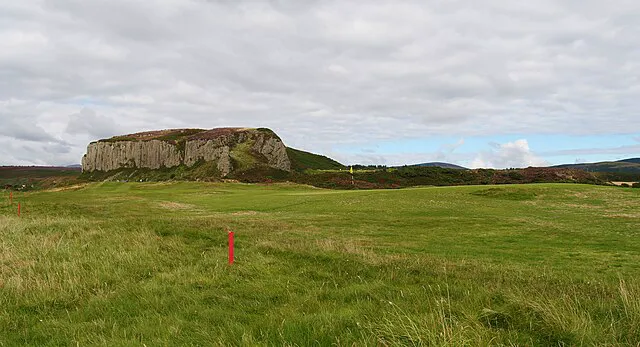
Shiskine is the world’s most celebrated twelve-hole course. Willie Fernie, the 1883 Open Champion, laid out the original routing in 1896 beneath the Drumadoon Cliffs on Arran’s western shore; Willie Park Jr. designed the current twelve-hole routing between 1925 and 1928. The course features seven par 3s, one par 5, and more blind shots than any golfer should reasonably tolerate. There is a rope-and-pulley system to signal when a hidden green is clear. The whole thing takes just over two hours to play, and most visitors walk straight back to the first tee and do it again.
Shiskine makes no concession to modern golf’s obsession with distance, analytics, or perfect conditioning. It wasn’t designed so much as found, the routing following natural terrain of beach, dune, and cliff face with minimal interference from earthmovers or agronomists. What it offers in return is something championship courses with seven-figure maintenance budgets struggle to produce: pure, unfiltered joy.
A Topographical Rollercoaster with a Pulley System
Shiskine’s routing is an exercise in vertical drama. The course starts near sea level, climbs to nearly 40 meters by the 4th green, and descends again with the kind of elevation changes that would give a planning committee heart palpitations. Nearly every hole features a blind tee shot, a blind approach, or both. This is links golf at its most ancient and unapologetic.
The 3rd, “Crow’s Nest” (par 3, 128 yards from the White tees), is one of Scotland’s most famous short holes, and it begins with a stare at a wall of sand and fescue rising straight up from the tee. The green sits atop a massive dune, entirely invisible from below. A black-and-white marker post provides the line; a red signal flag confirms safety, not direction. Players aim at the post, commit to a wedge, and climb. Those who crest the hill to find their ball on the putting surface are rewarded with a panoramic view of the Mull of Kintyre that briefly makes the score irrelevant. Those who missed left into the gorse are rewarded with a walk to the pro shop for replacement balls.
The 7th, “Himalayas” (par 3, 172 yards from the White tees), demands a mid-iron over a rugged hill into complete blindness. Before hitting, golfers must consult Shiskine’s most charming anachronism: a rope-and-pulley signal system that clanks and rattles to confirm the green is clear. The mechanical noise adds a layer of vintage theater that modern courses, with their GPS-enabled cart screens and automated sprinklers, couldn’t manufacture if they tried. Committing to a full swing over a hill when the target is pure imagination separates those who trust the game from those who need to see where they’re going.
Between these famous par 3s, the routing builds a rhythm no eighteen-hole course can match. The 4th, “The Shelf” (par 3, 146 yards from the White tees), plays steeply downhill to an infinity green that appears to dissolve into the Kilbrannan Sound. The 5th, “The Point” (par 3, 243 yards from the White tees), can demand anything from a 5-iron to a driver depending on the southwest wind. The lone par 5, the 9th, “Drumadoon” (par 5, 506 yards from the White tees), twists through rumpled terrain with a burn cutting across the green’s face, rewarding patience and punishing ambition in equal measure. Seven of the twelve holes are par 3s, which sounds like a pitch-and-putt until the wind starts blowing and the 5th hole requires a fairway wood.
The turf is genuine links: firm fescue that promotes a running ground game and rejects the high, spinning approaches that work on manicured resort courses. Prevailing winds off the Kilbrannan Sound regularly reach 20 to 30 mph and turn club selection into negotiation. Shiskine rewards creativity and imagination over power. The player who can bump a 7-iron under the wind and let the contours do the work will outscore the bomber every time.
Honesty demands noting that Shiskine polarizes. Scratch golfers who prefer visible landing zones and predictable bounces may find the blind shots more gimmicky than charming. The greens, while beautifully contoured, feature mixed grasses that roll with less consistency than championship surfaces. And because the course sits on an exposed island, there is no shelter from sideways rain. When Arran decides to be miserable, Shiskine offers nothing but endurance and humor.
Planning the Trip
Getting to Shiskine is half the experience. The CalMac ferry from Ardrossan Harbour to Brodick takes 55 minutes, with sailings roughly five times daily and more in summer. A passenger fare runs £4 to £6 each way; bringing a car costs £21 to £26. From Brodick, the drive across the island to Blackwaterfoot takes about 25 minutes. Book the car deck well in advance during summer: spaces sell out weeks ahead.
| Item | Cost |
|---|---|
| Green fee (weekday) | £40 |
| Green fee (weekend) | £42 |
| Double round, 24 holes (weekday) | £65 |
| Double round, 24 holes (weekend) | £75 |
| Weekly ticket | £185 |
| Arran Golf Pass (all 7 island courses) | £175 |
| Trolley hire | £3 |
| Buggy hire | £25 |
Tee times are released 14 days in advance through the club website. Summer weekends fill quickly, but the two-hour pace of play means steady turnover. Twilight rates (£32 weekdays, £35 weekends, after 5 PM April through September) offer excellent value on shorter notice. One essential rule: never book a tee time within three hours of your scheduled ferry departure from the mainland. Ferry delays are routine, and rushing to Shiskine defeats the point.
The double round is the play. At £65 for 24 holes on a weekday, looping the course twice is one of Scottish golf’s best bargains. Just over two hours per loop, a scone and tea at the clubhouse Tee Room between rounds, and an entirely different wind angle the second time through.
When to Go
| Window | Why |
|---|---|
| Jan–Feb 🌬️ Avoid | Peak winds, cold, limited daylight; ferry cancellations likely |
| Mar–Apr 🌤️ Good | Course firms up, winds ease; twilight golf viable from April |
| May–Aug ☀️ Prime | Driest months, calmest winds, longest daylight; book August ferries early |
| Sep–Oct 🌧️🌬️ Good | Shoulder-season value; winds and rain return, especially late October |
| Nov–Dec 🌧️🌬️ Avoid | Frequent gales, ferry disruptions, soft turf |
For golfers building an Ayrshire coast itinerary around Royal Troon, Turnberry, and Prestwick, Shiskine makes a perfect counterpoint. A day trip from the mainland is technically possible, but rushing is antithetical to Arran’s rhythm. Two nights on the island allows time to play Shiskine twice, sample Brodick or Lamlash (both solid 18-hole tracks at £40 to £50), and ride out any weather delays without panic. The Kinloch Hotel in Blackwaterfoot sits walking distance from the course at £120 to £180 per night. The Arran Golf Pass (£175) covers one round at each of the island’s seven courses and represents exceptional value for golfers who want to explore beyond Shiskine.
Why the Ferry Is Worth It
Shiskine operates on an honor system. There is an honesty box at the clubhouse for walkers. There is a rope-and-pulley system for blind greens. There are twelve holes instead of eighteen because a world war needed the farmland and nobody saw any reason to get it back. The course doesn’t test a golfer’s handicap so much as their imagination, their willingness to aim at a marker post and trust a hill they cannot see over.
Modern golf has spent decades adding yards, adding technology, adding complexity. Shiskine quietly argues that the game was already complete before any of that. Two hours, twelve holes, forty pounds, and a ferry ride to an island the Scots call “Scotland in Miniature.” Tom Watson understood. Most golfers who make the crossing do too.