
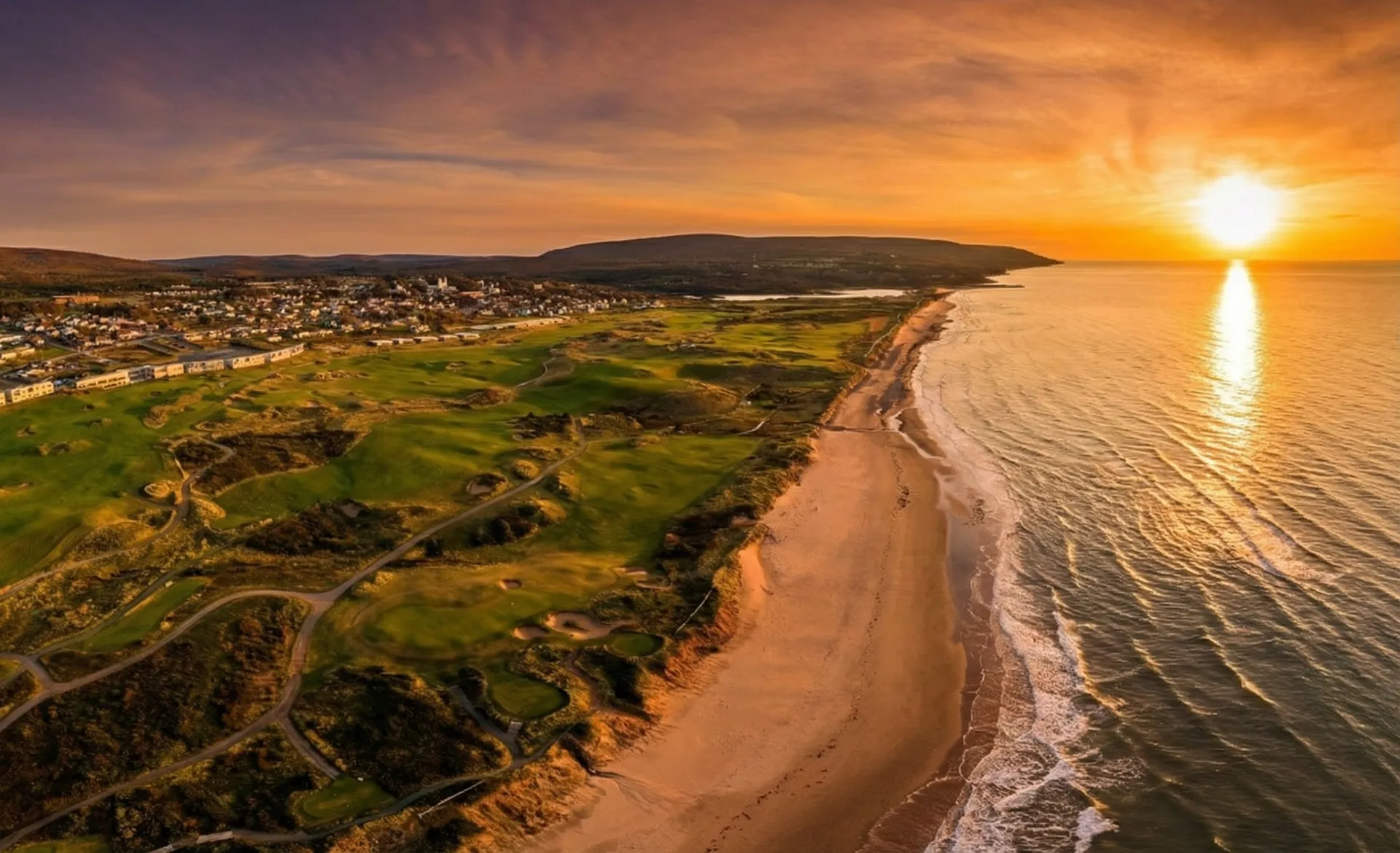
Cabot Links: The Course That Changed Canadian Golf
If you want to understand Cabot, you don’t look at the cliffs. You look at the coal.
For a century, Inverness, Nova Scotia, was a town defined by what it pulled from the earth. When the mines closed, the town started to close with them. Windows were boarded up. The young left. The ocean remained, crashing against a shoreline that looked like a jagged scar.
Then came a vision that seemed, to the locals, like a hallucination: a golf course. Not just a golf course, but a walking-only, true links course on a remote island in the North Atlantic, built on the very ground where the mines once stood.
Ben Cowan-Dewar and Mike Keiser didn’t just build a resort. They performed a resurrection. And while its younger, louder sibling Cabot Cliffs gets the magazine covers, Cabot Links is the one that steals your heart.
The Soul of the Place
Cabot Cliffs is a spectacle; Cabot Links is a conversation.
The Cliffs shouts at you with drama—peaking dunes, terrifying drops, camera-ready moments at every turn. The Links speaks in a lower register. It sits right against the town, integrated into the grid of streets like the Old Course in St Andrews. You don’t drive through a gate to get here; you just turn off the main drag and there it is.
This proximity matters. It grounds the experience. You aren’t sequestered in a luxury bubble; you are playing golf in a living, breathing community. The first hole plays away from the pro shop, but the 18th green sits so close to the pub you can hear the clinking of glasses as you line up your putt.
The Golf: Subtlety Over Shouting
Designed by Rod Whitman, Cabot Links is Canada’s first authentic links course. That term gets thrown around loosely by marketing departments, but here it is a geological fact. Fescue turf, sandy soil, rolling terrain, and the ever-present wind.
The brilliance of Whitman’s design is in its restraint. He didn’t move earth to create fake dunes; he revealed the contours that were already there.
The Ocean is Everywhere
At most seaside courses, you see the water occasionally. At Cabot Links, you see the Gulf of St. Lawrence from every single hole. Five holes play directly along the beach. The rest play on upland terrain that tilts toward the sea, ensuring the horizon is always part of your read.
This exposure means the wind is not a factor; it is the primary adversary. It dictates the club, the line, and the mood. A 150-yard shot can be a pitching wedge or a 4-iron depending on the whims of the breeze.
The Standout Holes
The 2nd (Par 3, 247 yards): A rude awakening. A Biarritz green that demands a long iron or wood run along the ground. It teaches you the rules of engagement early: the air is dangerous, the ground is your friend.
The 14th (Par 3, 102 yards): The shortest hole on the course and often the most terrifying. The green sits on a knob, exposed to the wind, with a pot bunker that eats golf balls and dignity. It is a nod to the 7th at Pebble Beach, but with a Canadian accent.
The 16th (Par 4, 457 yards): The Cape hole. The fairway curves around the coastline, daring you to bite off more than you can chew. The safe play is right, but the hero play is left, over the beach, flirting with disaster.
Practicalities: Getting There and Staying There
The Journey: It is not easy to get to Inverness, and that is the point. It is a three-hour drive from Halifax International Airport, or two hours from Sydney. The drive takes you through the winding roads of Cape Breton Island, a preamble that sheds the stress of the city mile by mile.
The Stay: The resort accommodations are modern, minimalist, and designed to frame the view. Floor-to-ceiling windows ensure you never forget where you are. But don’t just stay in the room. Walk into town. Eat at the Coal Miners Cafe. Talk to the locals. They are the ones who kept this place alive long enough for the golfers to find it.
The Walk: Cabot Links is walking-only (unless you have a medical note). This is non-negotiable for the purist. The terrain is gentle, the walks between greens and tees are short, and the rhythm of the game is preserved. Get a caddie. They know the winds, the breaks, and the stories.
The Verdict
Cabot Cliffs is the course you fly to Canada to play. Cabot Links is the course you want to play every day once you get there.
It doesn’t rely on visual tricks or artificial drama. It relies on the timeless interplay of ball, ground, and wind. It is a course that respects your intelligence and demands your creativity.
In a world of manufactured luxury, Cabot Links feels earned. It is a testament to the idea that if you build something true, people will come—even to the edge of the world.