
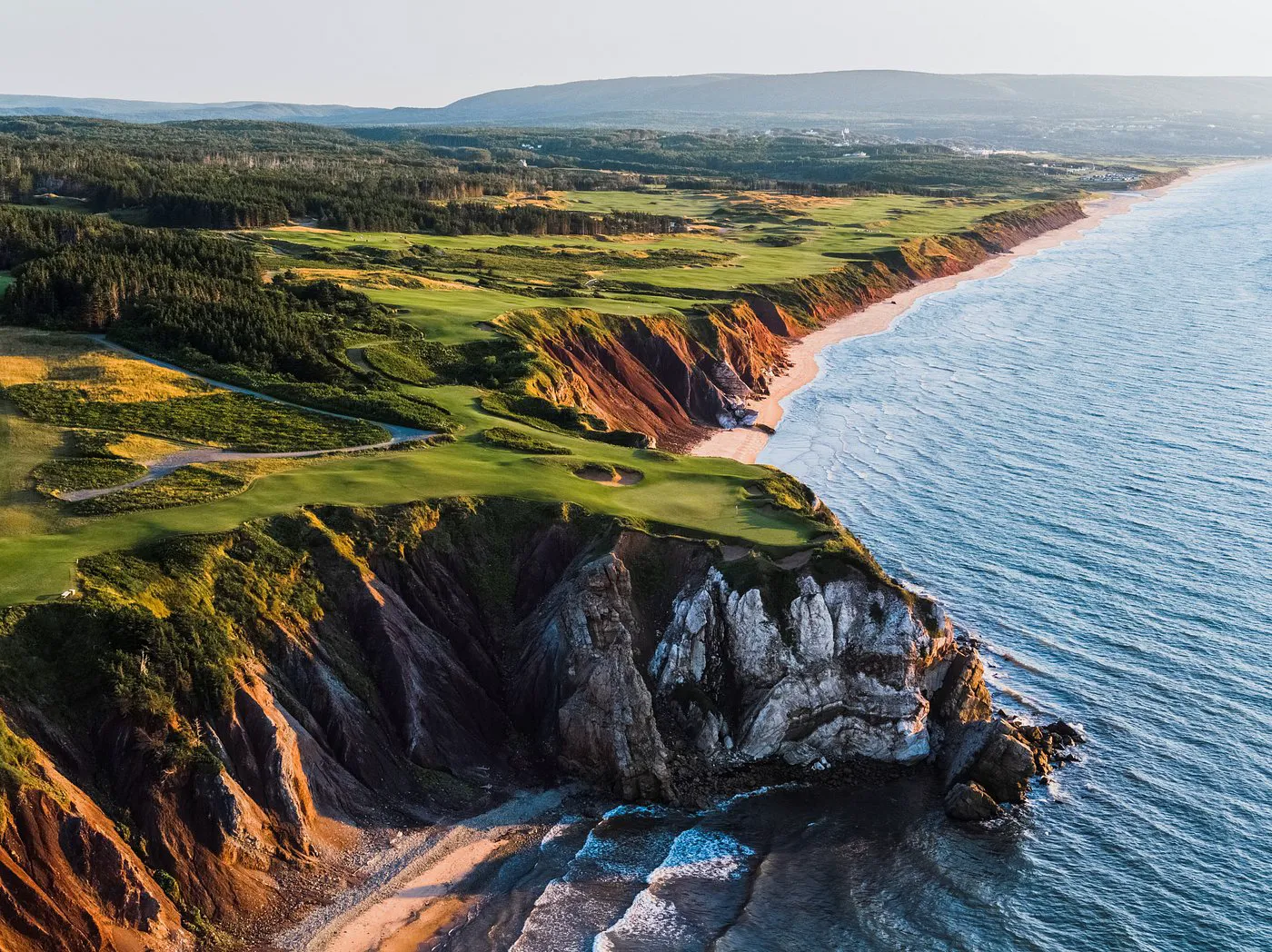
Sixteen holes play directly along ocean cliffs. Not near the water. Not with water views. Along cliffs where the Gulf of St. Lawrence crashes against Nova Scotia’s coast and every hole demands executing shots while scenery fights for your attention. Bill Coore and Ben Crenshaw were given ideal property and unlimited resources. They built something that belongs in conversations with Cypress Point and Pebble Beach.
Cabot Cliffs opened in 2016 as the second course at Cabot Cape Breton resort. The original Cabot Links—designed by Rod Whitman—had already established the property as worthy destination. Coore and Crenshaw took adjacent land along the coast and created golf that makes the resort essential pilgrimage for serious golfers.
The comparisons to Cypress Point are immediate and warranted. Both feature dramatic ocean holes. Both showcase brilliant architecture on stunning terrain. The difference: Cypress Point is essentially impossible to access. Cabot Cliffs welcomes daily-fee play. Anyone willing to travel to Cape Breton and pay green fees can experience Coore and Crenshaw’s clifftop masterpiece.
The course measures 6,752 yards from the tips—not long by modern standards. Length doesn’t matter when wind howls off the Gulf and firm fairways demand ground game strategy. The test comes from strategic complexity, firm conditions, and psychological pressure of playing golf along cliffs where wayward shots disappear into the Atlantic.
Golf architecture enthusiasts rank Cabot Cliffs among the world’s top 50 courses. It appears on multiple top-10 lists of courses built in the 21st century. These aren’t participation-trophy rankings. The course earned recognition through architectural excellence, strategic depth, and setting that rivals any coastal golf in the world.
What Coore and Crenshaw Built
Bill Coore and Ben Crenshaw are golf architecture’s modern masters of minimalism. They route courses through natural terrain with minimal earth-moving, preserve existing contours, and create golf that feels discovered rather than manufactured. Cabot Cliffs showcases this philosophy applied to ideal property.
The opening holes ease players toward the ocean. The 1st and 2nd play slightly inland, establishing rhythm without overwhelming. The 3rd begins the coastal stretch—475 yards along clifftops with the Gulf visible throughout. This is where Cabot Cliffs announces its character: strategic golf in spectacular setting where focus on competition competes with temptation to admire views.
The 4th through 17th play mostly along or near the coast. Each hole presents different strategic questions. The 4th demands accurate drive to have clear approach. The 5th—a short par-3—plays to a green perched near cliff edge. The 6th stretches to 613 yards, using terrain and wind to create three-shot challenge even for long hitters.
The 8th might be Cabot Cliffs’ signature hole—a par-3 of 174 yards playing along the cliff to a green that seems to hover above the water. Miss right and you’re searching for a new ball. The hole creates pressure through beauty and danger simultaneously. Champions execute despite distraction. Everyone else takes pictures and hopes.
The back nine continues the clifftop journey. The 14th plays 520 yards mostly uphill with ocean providing constant backdrop. The 16th—a 520-yard par-5—offers risk-reward decisions on every shot, with aggressive play rewarded but mistakes punished severely. The 18th returns to the clubhouse with one final view of the Gulf before the round ends.
What separates Cabot Cliffs from typical resort courses is architectural sophistication. Coore and Crenshaw didn’t just route holes through pretty property. They created strategic golf where angles matter, where firm conditions demand ground game thinking, where every hole offers multiple ways to play depending on conditions and courage. The scenery makes it memorable. The architecture makes it great.
The Setting That Rivals Anything
Pebble Beach has the 18th. Cypress Point has the 16th. Turnberry has the lighthouse. Cabot Cliffs has sixteen consecutive holes along cliffs overlooking the Gulf of St. Lawrence. The cumulative effect of that much ocean golf creates experiences that single spectacular holes can’t match.
The cliffs aren’t towering like Big Sur or Oregon coast—they’re more intimate, with fairways and greens perched maybe 50-100 feet above water. But the proximity creates constant awareness of the Atlantic. Wind howls off the water. Shots that look safe can catch gusts and move toward edges. The psychological pressure is real even during casual rounds.
The natural vegetation enhances rather than distracts. Fescue grasses, native plants, and minimal landscaping let the property speak for itself. This is Coore and Crenshaw’s minimalist philosophy—let great property be great rather than decorating it with unnecessary features.
The Gulf provides ever-changing backdrop. Morning fog rolls in from the water. Afternoon sun creates dramatic shadows. Storm clouds gather on the horizon. The setting is constantly dynamic in ways that landlocked courses can’t replicate. Playing Cabot Cliffs three times in three days means experiencing three different courses as weather and light change everything.
The remoteness adds to the appeal. Cape Breton sits at Nova Scotia’s northeast corner, hours from major cities. Getting there requires commitment—flights to Sydney or Halifax, rental cars, hours of driving through rural landscapes. This filters out casual tourists. The people who make the journey want to be there, which creates atmosphere that golf tourism destinations often lack.
Why It Matters
Cabot Cliffs proved that modern architects could build courses worthy of comparison to golf’s golden age masterpieces. The course opened in 2016—a century after Cypress Point and Pine Valley established what great golf courses could be. Coore and Crenshaw demonstrated that contemporary architecture, applied to ideal property with proper resources and minimal constraints, can produce comparable excellence.
The accessibility matters enormously. Cypress Point is essentially impossible to play. Pebble Beach costs $600+ and books months ahead. Cabot Cliffs charges around $400 CAD and accepts daily-fee play. This doesn’t diminish the experience—it enhances it by making world-class coastal golf achievable for golfers willing to travel rather than requiring elite connections.
The resort model works. Cabot Links opened first, establishing demand and reputation. Cabot Cliffs followed, elevating the property to destination status. Together, they create multi-day experience that justifies travel to remote location. The model has been studied by developers worldwide looking to create similar destinations.
The strategic architecture challenges assumptions about what modern courses should be. Cabot Cliffs measures just 6,752 yards but defeats long hitters regularly. The course proves that firm conditions, strategic bunkering, intelligent green complexes, and routing that uses terrain create more interesting golf than simply adding yardage. Distance matters. Strategy matters more.
The Practical Reality
Cabot Cape Breton operates as resort destination, not private club. The property features two championship courses (Cliffs and Links), accommodations, dining, and infrastructure that supports multi-day golf trips. Booking requires advance planning—summer tee times fill months ahead.
Green fees: Around $400 CAD during peak season (June-September). This includes caddie, which is mandatory. The cost is high but reasonable for course quality and Canadian resort standards. Off-season rates drop significantly but weather becomes unpredictable.
Travel logistics: Sydney airport is nearest (75 minutes). Halifax is alternative (4+ hours). Rental cars are necessary. The drive through Cape Breton is scenic but remote—plan accordingly. Most visitors book multi-night packages combining golf, lodging, and meals.
Weather: Cape Breton’s weather is unpredictable. Summer offers best conditions but still features wind, rain, and temperature swings. Pack for Scottish conditions—layers, rain gear, acceptance that weather will change during rounds.
Play both courses: Cabot Links and Cabot Cliffs are different experiences. Links is more traditional links golf. Cliffs is dramatic clifftop journey. Both are worth playing. Budget at least three days to experience both courses properly.
Firm conditions: The courses play fast and firm, particularly late summer. Ground game matters. Bump-and-run shots work better than high, spinning approaches. This is strategic golf that rewards creativity and punishes one-dimensional games.
Appreciate the setting: Cabot Cliffs provides ocean views and strategic golf simultaneously. Taking time to appreciate scenery doesn’t diminish the golf—it enhances the experience. This is destination golf where memories extend beyond scores.
What Cape Breton Offers
Cabot Cliffs proves that great golf courses can still be built when developers commit to quality over quantity, hire brilliant architects, and accept that excellence requires time and resources. The course opened eight years ago but already ranks among the world’s best modern courses and Canada’s finest golf.
Bill Coore and Ben Crenshaw created something that honors golf’s greatest coastal courses while establishing its own identity. The comparisons to Cypress Point are inevitable and warranted. Both feature spectacular ocean holes, brilliant architecture, and settings that make golf memorable regardless of scores. The critical difference: Cabot Cliffs is accessible.
That accessibility means serious golfers worldwide can experience clifftop golf that previously existed only at courses requiring elite connections. The journey to Cape Breton requires commitment, but the destination rewards it with ocean golf that rivals anything in the world. Sixteen holes along the cliffs. Strategic complexity that defeats power players. And architecture that proves modern designers can create courses worthy of comparison to golf’s greatest venues.
The Gulf of St. Lawrence keeps crashing against Nova Scotia’s coast. Bill Coore and Ben Crenshaw routed eighteen holes along those cliffs, creating golf that’s beautiful, strategic, and achievable for anyone willing to make the journey. That combination—architectural excellence, spectacular setting, and democratic access—makes Cabot Cliffs more than just great golf course. It makes it proof that modern golf architecture can still produce masterpieces when given proper property, resources, and vision. Cape Breton has all three. Cabot Cliffs is the result.